![The [RE]Search Co.](https://re-search.co/wp-content/uploads/2025/02/The-RE-Search-Co-Orange_Grey-png-350x51.avif)

In the world of office furniture, the Aeron chair stands as a symbol of innovation, design excellence, and ergonomic mastery. Introduced by Herman Miller in 1994, the Aeron chair has not only revolutionised the way people sit at work but has also become an icon of modern design, featured in museums and embraced by multi-national corporations and home offices alike.
The Genesis of the Aeron Chair
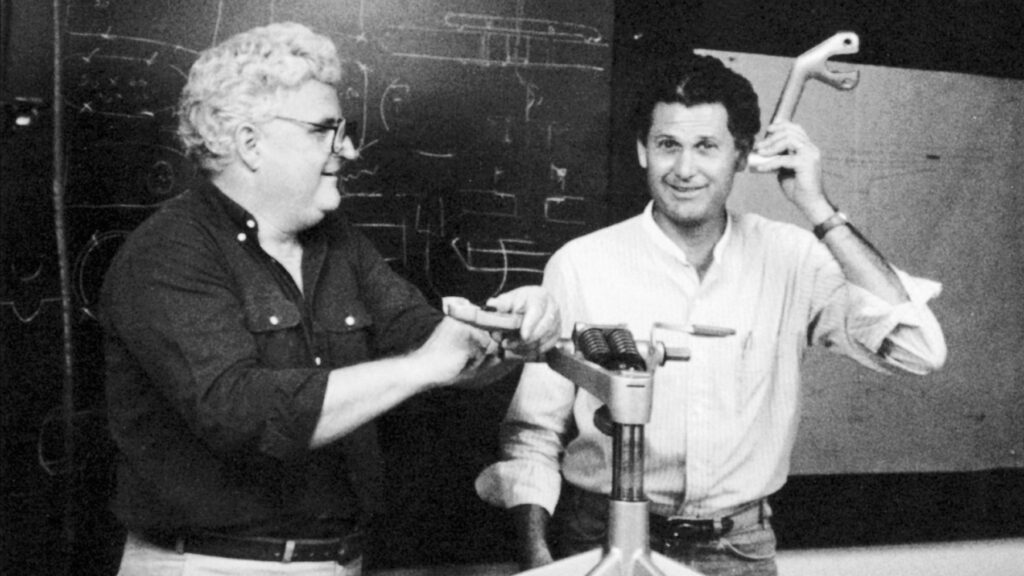
The story of the Aeron chair begins in the early 1990s when Herman Miller, a company already well-known for its pioneering office furniture, sought to create a chair that would redefine comfort and functionality in the workplace. Tasked with this challenge were designers Bill Stumpf and Don Chadwick, who had previously collaborated on the Equa chair, another successful Herman Miller project.
Stumpf and Chadwick’s vision for the Aeron chair was to create a seat that adapted to the natural contours of the human body, providing support and comfort for extended periods. This concept was groundbreaking at a time when traditional office chairs were more often than not designed for aesthetic appeal rather than true ergonomic benefit.
Design Innovations and Features
One of the most striking aspects of the Aeron chair was its distinctive design, which eschewed the typical padded upholstery for a mesh-like material called Pellicle – common these days but groundbreaking at that time. This innovative fabric allowed for air circulation, keeping users cool and comfortable, while also providing flexible support that adapted to different body shapes and movements. The use of Pellicle was a radical departure from conventional office chair materials and has since become a hallmark of the Aeron chair’s design.
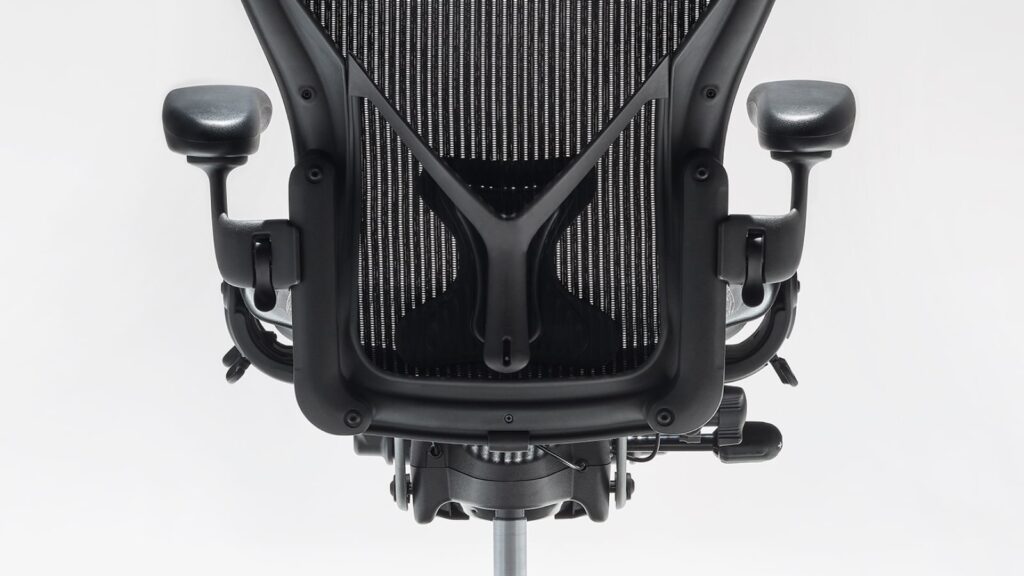
Ergonomics was at the forefront of the Aeron chair’s development. Stumpf and Chadwick incorporated a range of adjustable features to ensure that the chair could accommodate a wide variety of users. The chair included adjustable armrests, lumbar support, seat height, and tilt tension, allowing individuals to customise their seating experience to their specific needs. This adaptability made the Aeron chair a popular choice in diverse office environments.
Cultural Impact and Recognition
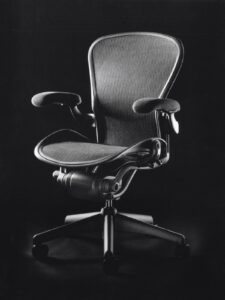 Upon its release, the Aeron chair was met with acclaim but also skepticism. Its futuristic design was polarising, with some critics questioning its unconventional appearance. However, the chair quickly gained a following among those who appreciated its comfort and ergonomic benefits. As Silicon Valley companies in particular began to adopt the Aeron chair, it became a symbol of the modern, forward-thinking workplace.
The Aeron chair’s cultural significance was cemented when it was included in the permanent collection of the Museum of Modern Art (MoMA) in New York. This recognition affirmed the chair’s status as not just a piece of office furniture, but a work of art and design. Over the years, the Aeron chair has also appeared in numerous films, television shows, and advertisements, further embedding it in popular culture.
The Dot-Com Boom and Silicon Valley Status
The timing of the Aeron chair’s release coincided with the rapid growth of the dot-com boom in the late 1990s and early 2000s. As tech startups flourished in Silicon Valley, the demand for modern, ergonomic office furniture surged. The Aeron chair, with its cutting-edge design and superior comfort, quickly became a status symbol for fast-rising tech companies.
In the competitive and image-conscious environment of Silicon Valley, having an office furnished with Aeron chairs was a sign of success and forward-thinking management, helping in turn to attract the best talent.
The chair’s association with the innovative spirit of the tech industry helped cement its reputation as a modern classic. Tech giants like Google, Apple, and Facebook furnished their offices with Aeron chairs, reinforcing the chair’s iconic status and driving its popularity among other companies aiming to emulate the success of these industry leaders.
Evolution and Sustainability
Herman Miller has not rested on its laurels with the success of the original Aeron chair. In 2016, the company released a remastered version of the chair, incorporating new materials and technologies to improve its performance and sustainability. The updated Aeron chair features enhancements such as a more refined tilt mechanism, better lumbar support, and the use of more environmentally friendly materials.
Sustainability also become a key focus for Herman Miller, and the Aeron chair reflects this. The remastered version uses recycled materials and is designed for longevity, reducing the environmental impact of manufacturing and disposal. This approach aligns with contemporary values of sustainability and corporate responsibility.
The Aeron Chair as a Modern Classic
Today, the Aeron chair is widely regarded as a modern classic in both design and functionality. Its blend of ergonomic innovation, distinctive aesthetics, and cultural resonance has ensured its lasting appeal. Unlike many pieces of office furniture that fade into obscurity as styles and technologies change, the Aeron chair has remained relevant and desirable.
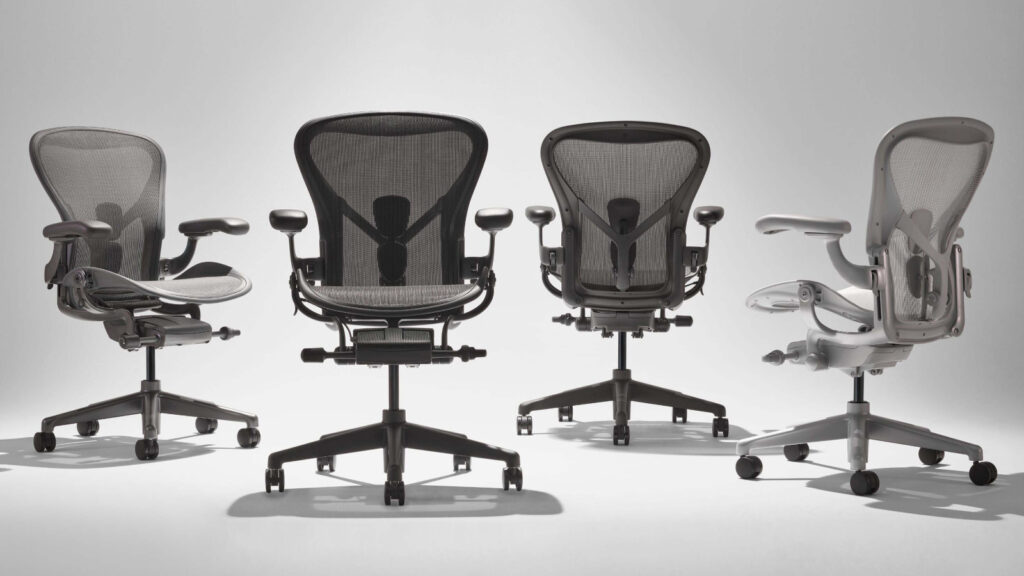
The chair’s presence in various settings—from corporate offices to home workspaces, and from movies to museum exhibits—underscores its versatility and timelessness. It continues to be a preferred choice for those who prioritise health, comfort, and style in their work environments.
The Aeron chair’s journey from a radical concept to a design icon underscores the impact of thoughtful innovation in everyday objects.
By prioritising ergonomics and embracing unconventional design, Bill Stumpf and Don Chadwick created a chair that not only transformed office seating but also became a symbol of modernity and progress.
Its association with the dot-com boom and Silicon Valley further propelled it to iconic status, making it a staple in tech offices around the world. As the Aeron chair continues to evolve, it remains a testament to the enduring importance of design that serves both function and form.
Aeron now competes with a multitude of top-grade ergonomic task chairs from around the world, and design, comfort, performance and value are of course subjective. But it is undeniably still the most iconic task chair of them all.