![The [RE]Search Co.](https://re-search.co/wp-content/uploads/2025/02/The-RE-Search-Co-Orange_Grey-png-350x51.avif)
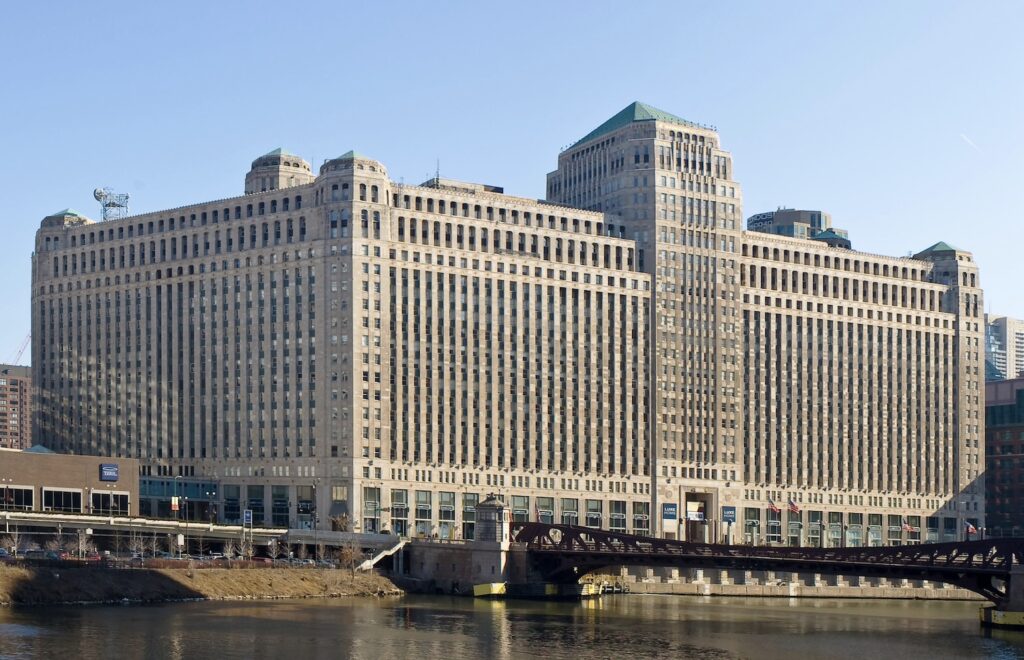
NeoCon 2024 opens its doors next week and if you have ever visited the vast Commercial Interiors show you will of course have visited The Merchandise Mart, the incredible historical building that hosts NeoCon.
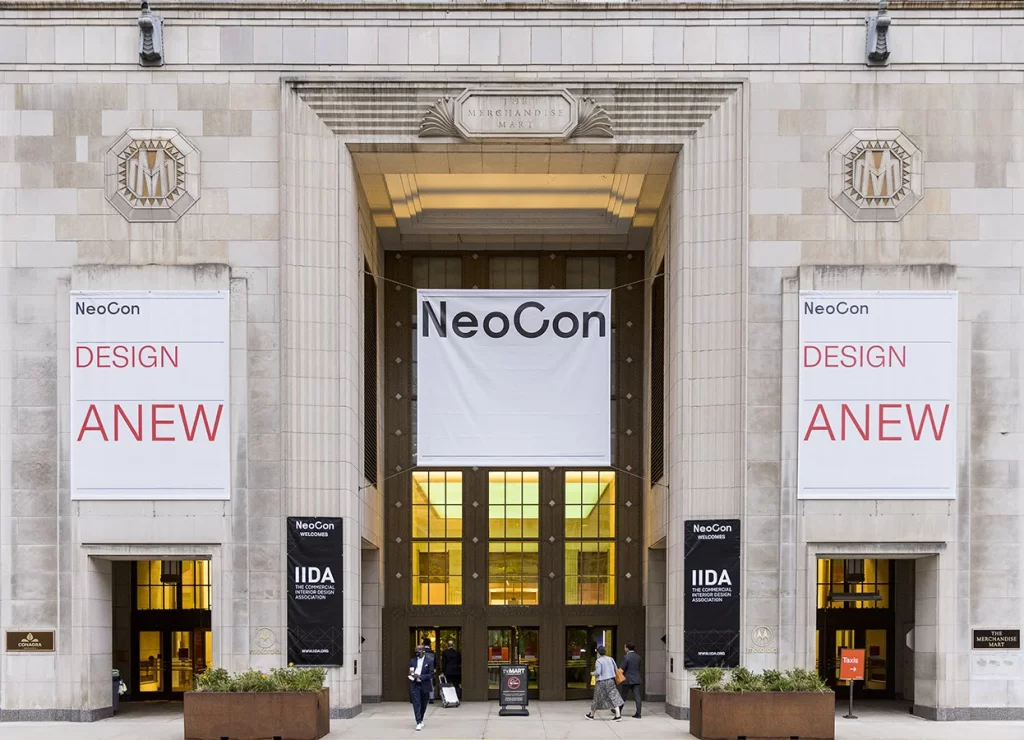
Nestled along the banks of the Chicago River, the Merchandise Mart stands as a colossal testament to America’s commercial ambition and architectural prowess in the early part of last century.
While many know the Mart as the bustling venue for NeoCon, its historical significance and contribution to American commerce deserve a spotlight of its own. The Merchandise Mart’s story is one of innovation, transformation, and enduring legacy, making it a true landmark.
A Monumental Beginning
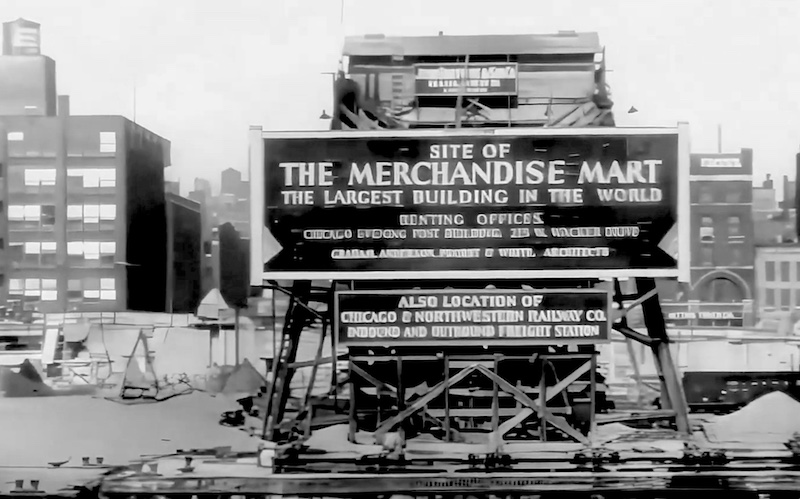
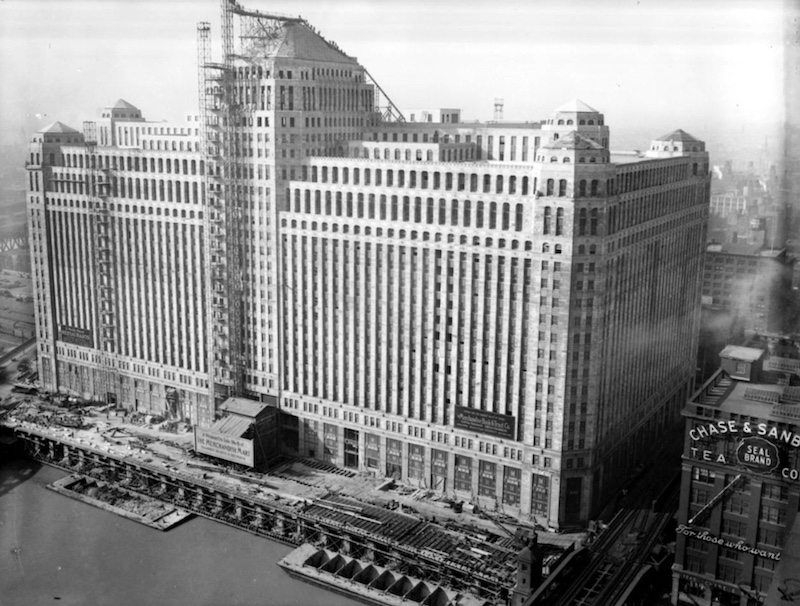
The Merchandise Mart, often referred to simply as “the Mart,” was envisioned by Marshall Field & Company as a centralised marketplace for wholesalers. Completed in 1930, the Mart was the largest building in the world by floor space at the time, spanning 4 million square feet.
Its imposing Art Deco facade, designed by Graham, Anderson, Probst & White, symbolised the zenith of commercial architecture, a fortress of trade rising majestically in the heart of Chicago.
Architectural Marvel and Cultural Icon
The Mart’s design was a marvel of its time, blending functionality with grandeur. Its construction required over 4 million cubic feet of limestone and granite, and it was equipped with the most advanced technologies of the era, including air conditioning, a pneumatic tube system for mail delivery, and vast freight elevators.
The building’s scale and sophistication reflected the optimism and industrial might of the early 20th century United States.
Hub of Commerce
The Merchandise Mart was more than a building; it was a commercial hub that transformed how business was conducted. By consolidating showrooms for manufacturers and wholesalers under one roof, it streamlined the buying process for retailers. This innovation reduced costs and increased efficiency, fostering a more dynamic and interconnected marketplace.
The Mart played a crucial role in the growth of Chicago as a national center for wholesale trade, particularly in the furniture, housewares, and apparel industries.
Catalyst for Mail Order Shopping
One of the lesser-known but significant roles the Merchandise Mart played was in the birth and rise of mail order shopping across America. The Mart’s centralisation of manufacturers and wholesalers enabled mail-order companies like Sears, Roebuck & Co., and Montgomery Ward to source a wide variety of goods efficiently.
Chicago’s strategic location as a railroad hub allowed these companies to distribute catalogs nationwide, reaching customers in even the most remote areas. The Mart’s infrastructure supported this burgeoning industry by providing a reliable and expansive supply chain, thereby helping to revolutionise American retail.
The Kennedy Legacy
In 1945, the Merchandise Mart was purchased by Joseph P. Kennedy, father of future President John F. Kennedy. The acquisition marked one of the Kennedy family’s most significant business ventures.
Under Kennedy’s ownership, the Mart continued to thrive, adapting to changing market conditions and expanding its influence. The Kennedy family’s stewardship ensured that the Mart remained a vital part of Chicago’s economic landscape for decades.
A City Within a City
With its vast array of amenities, the Merchandise Mart was more than just a commercial building; it was a self-contained city. It housed banks, post offices, restaurants, a medical clinic and more. The Mart’s design included expansive exhibition halls and flexible showroom spaces, accommodating a diverse range of industries and events. Its corridors bustled with activity, reflecting the vibrancy and dynamism of American commerce.
The Rise of NeoCon
In 1969, the Merchandise Mart became the home of NeoCon, an annual event that quickly grew into the largest commercial interiors show in North America. NeoCon attracted thousands of designers, architects, and industry professionals, transforming the Mart into a global stage for innovation in commercial design.
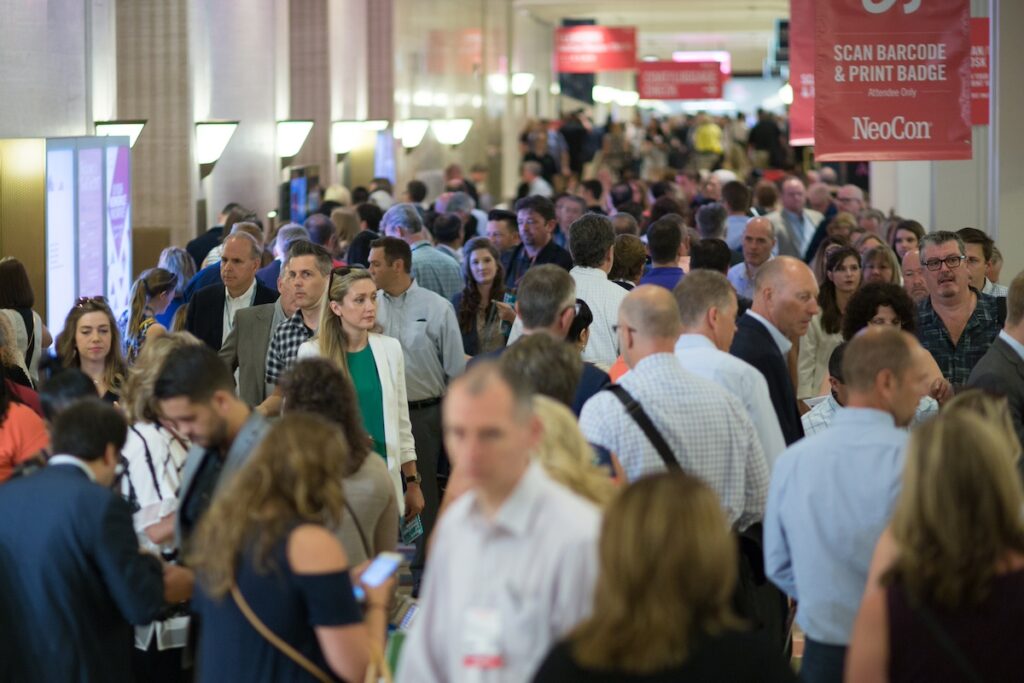
However, while NeoCon brought international attention to the Mart, it is the building’s rich history and multifaceted role in commerce that truly set it apart.
A Symbol of Resilience and Innovation
Throughout its history, the Merchandise Mart has demonstrated remarkable resilience and adaptability. It has weathered economic downturns, shifts in the retail landscape, and changes in ownership.
Each challenge was met with innovation, from modernizing its facilities to embracing new industries and technologies. The Mart’s ability to evolve while preserving its core function as a commercial hub underscores its significance in American commerce.
Contemporary Relevance
Today, the Merchandise Mart continues to be a vital part of Chicago’s economic and cultural fabric. It remains a premier destination for trade shows, including NeoCon, and has expanded its role to include office spaces and tech startups.
The Mart’s ongoing relevance is a testament to its enduring design and strategic location, as well as its capacity to adapt to the needs of the modern economy.