![The [RE]Search Co.](https://re-search.co/wp-content/uploads/2025/02/The-RE-Search-Co-Orange_Grey-png-350x51.avif)

In our never-ending quest for increased productivity, we often turn to time management techniques, ergonomic office setups, and of course caffeine.
However, one powerful yet frequently overlooked factor is light. Both natural and artificial light significantly influence our productivity, mood, and overall well-being. Here we unpack the science behind light and its impact on productivity, ‘shedding light’ on how we can harness its benefits to optimise our work environments.
The Role of Natural Light
Natural light is a fundamental aspect of human biology. Our bodies are inherently programmed to respond to the natural light-dark cycle, known as the circadian rhythm. This internal clock regulates various physiological processes, including sleep-wake cycles, hormone release, and body temperature.
When exposed to natural light, particularly in the morning, our circadian rhythm is synchronised, promoting alertness and energy during the day and facilitating restful sleep at night.

A study conducted by researchers at Northwestern University in the USA found that employees working in environments with ample natural light reported a 173% increase in exposure to white light and slept an average of 46 minutes more per night than those without access to natural light. And these individuals exhibited higher levels of productivity and overall well-being.
Natural light exposure boosts serotonin levels, a neurotransmitter associated with mood regulation, leading to enhanced focus and motivation.
The Science of Artificial Light
While natural light is ideal, it’s not always feasible, especially in the majority of workplaces where many employees work indoors for extended periods. This is where artificial lighting comes into play. However, not all artificial light is created equal. The colour temperature and intensity of light can profoundly impact our cognitive functions and productivity.
Colour Temperature
Light colour temperature is measured in Kelvin (K). Lower temperatures (2000K-3000K) emit a warm, yellowish light, similar to that of a sunrise or sunset. Higher temperatures (5000K-6500K) produce a cool, bluish light, akin to daylight at noon.
Cool light, often referred to as “blue light,” is particularly effective in stimulating the brain, enhancing alertness, and improving performance on tasks requiring sustained attention and concentration.
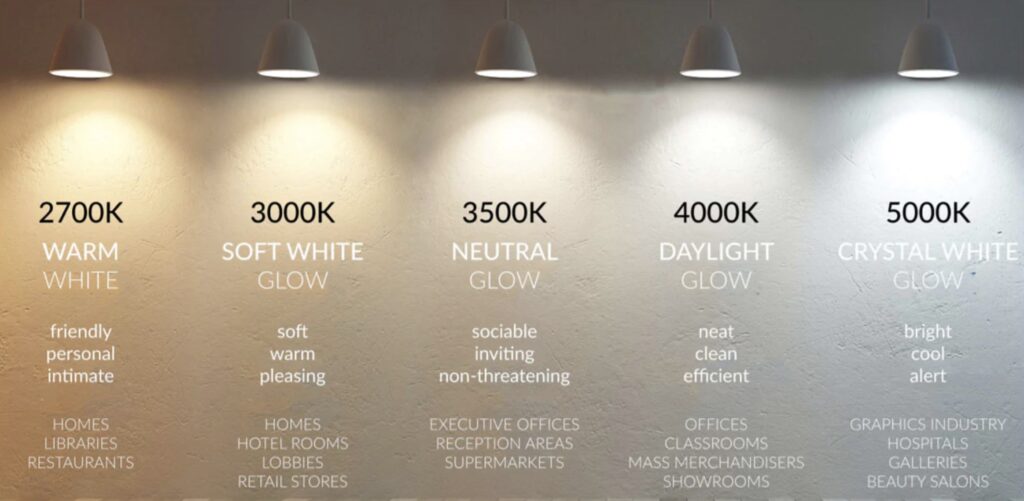
Research indicates that exposure to blue-enriched white light during the daytime can improve cognitive performance and elevate mood.
A study published in the Journal of Environmental Psychology revealed that participants exposed to blue-enriched light performed better on cognitive tasks and reported feeling more alert than those exposed to standard white light. This is because blue light suppresses the production of melatonin, the hormone responsible for sleepiness, thereby keeping us more awake and focused.
Light Intensity
The intensity of light, measured in lux, also plays a crucial role in productivity. Brighter lighting conditions generally enhance alertness and performance, particularly in tasks that require attention to detail. However, excessively bright light can cause discomfort and glare, leading to eye strain and reduced productivity.
A balanced approach is essential. Adjustable lighting systems that allow individuals to customise the light intensity to their preference can create a more comfortable and productive work environment.
Task lighting, which provides focused light for specific activities, can also be beneficial, ensuring that the workspace is adequately illuminated without overwhelming the eyes.
Practical Applications
To optimise productivity through lighting, consider the following practical applications:
-
- Maximise Natural Light: Arrange workspaces to take advantage of natural light. Position desks near windows and use sheer blinds or curtains to diffuse harsh sunlight while maintaining brightness.
-
- Use Blue-Enriched Lighting: Incorporate blue-enriched white light, particularly in the morning, to boost alertness and cognitive function. This can be achieved through specialised light bulbs or LED panels designed to mimic daylight.
-
- Adjustable Lighting Systems: Invest in lighting systems that allow for adjustments in colour temperature and intensity. This enables individuals to tailor their lighting environment to their specific needs and preferences.
-
- Implement Task Lighting: Use task lighting to provide focused illumination for specific activities. Adjustable desk lamps with dimming features can help create an optimal lighting environment for detailed work.
-
- Consider Light Breaks: Encourage regular breaks that include exposure to natural light. A short walk outside or time spent near a window can help reset the circadian rhythm and improve overall well-being.
Understanding the science behind light and its impact on productivity should be a significant factor in the way we approach the planing and design of work environments.
By harnessing the benefits of natural and artificial light, we create spaces that not only enhance productivity but also promote overall well-being. And where using natural light is not a practical consideration then we need to be very deliberate about the specification and application of artificial lighting.