![The [RE]Search Co.](https://re-search.co/wp-content/uploads/2025/02/The-RE-Search-Co-Orange_Grey-png-350x51.avif)

Today (June 28th, 2024) marks the 100th anniversary of the Singapore-Malaysia Causeway, a vital infrastructure link that has been pivotal in shaping the economies and societies of both Singapore and Johor Bahru. As we commemorate this milestone, it’s important to reflect on the significant role the Causeway has played in fostering economic interdependence, enhancing mobility, and providing new opportunities in the age of remote and hybrid work.
A Historic Link
The Causeway, completed in 1924, was originally constructed to facilitate the movement of goods and people between the two regions.
Built with the vision of connecting two flourishing territories, the Causeway has witnessed and adapted to the tides of change over the decades. It has evolved into a crucial artery that supports the daily commutes of thousands, linking the bustling city-state of Singapore with the vibrant Malaysian city of Johor Bahru.
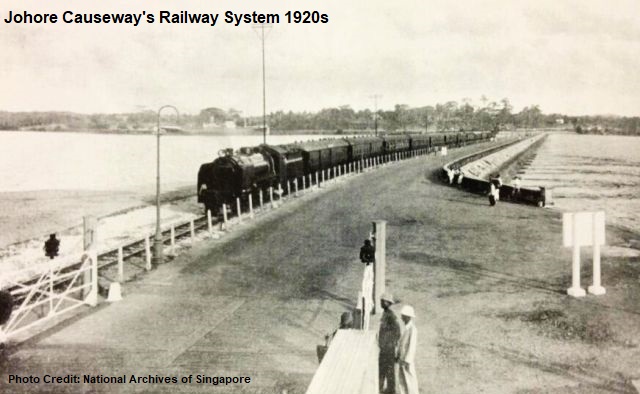
In the early years, the Causeway primarily served as a route for transporting goods such as rubber and tin from the Malaysian hinterlands to Singapore’s ports. This facilitated not just trade but also cultural exchange, bringing together people from diverse backgrounds.
The Causeway became more than a physical link; it symbolised the interconnectedness of two burgeoning economies and the shared aspirations.
Economic Interdependence
From an economic perspective, the Causeway has been a lifeline for both economies. It has enabled seamless trade, with goods flowing efficiently between the ports and industries of Singapore and the markets and manufacturing hubs of Johor. This interdependence has spurred growth, with businesses on both sides benefiting from the ease of access to labor, raw materials, and markets.
Singapore, with its limited land and natural resources, has relied heavily on the Causeway for essential supplies from Malaysia. This includes not only raw materials but also agricultural produce and water.
Conversely, Johor Bahru has benefited immensely from Singaporean investments. Many Singaporean companies have set up factories and offices in Johor, taking advantage of the lower operational costs while maintaining close proximity to their headquarters in Singapore.
For Singapore, the Causeway has provided a steady supply of workers from Johor Bahru, contributing to the labor force needed for its robust economy.
Johor Bahru has benefited from Singaporean investments and the spillover of economic activities, transforming it into a thriving city in its own right. The real estate market in Johor Bahru, for example, has seen significant growth, with many Singaporeans investing in properties there, drawn by the lower prices and promising returns.
Commutability and Workforce Dynamics
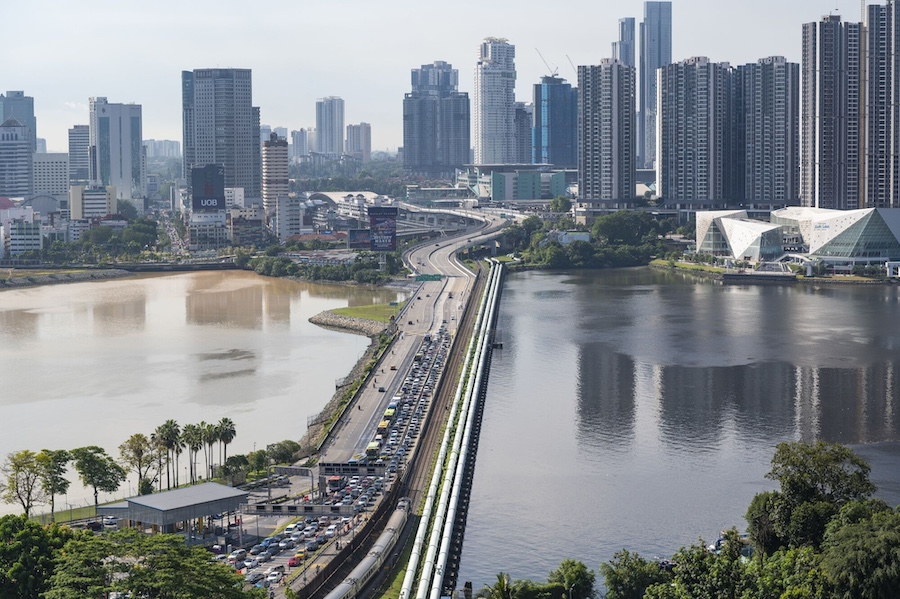
One of the most significant impacts of the Causeway has been on the daily commutes of thousands of Malaysians who work in Singapore. This has not only provided job opportunities for Malaysians but also helped Singapore address its labor shortages. The seamless connectivity has made it feasible for workers to live in Johor Bahru, where the cost of living is lower, while earning competitive wages in Singapore.
In recent years, the rise of hybrid and remote work has further highlighted the potential of the Causeway in promoting a balanced lifestyle. Workers can now choose to reside in Johor Bahru, enjoying more affordable housing and a more relaxed pace of life, while working for companies based in Singapore. This arrangement offers a win-win situation, reducing congestion in Singapore and boosting the economy of Johor Bahru through increased spending.
The daily commute across the Causeway, while often challenging due to traffic congestion, has become a routine for many. Advances in transport technology and infrastructure improvements have eased some of these challenges, making the commute more manageable.
Social and Cultural Impact
Beyond the economic benefits, the Causeway has also had profound social and cultural impacts. It has enabled families to stay connected despite the geographical divide. Many Singaporeans have family ties in Johor Bahru, and the Causeway makes it easier for them to visit their relatives regularly. This has helped maintain strong family bonds and cultural ties across the border.
Educational exchanges have also been facilitated by the Causeway. Students from Johor Bahru often attend schools and universities in Singapore, benefiting from the high-quality education system. This cross-border educational movement has contributed to a well-educated workforce that serves the needs of both regions.
The cultural exchange facilitated by the Causeway has enriched the social fabric of both Singapore and Johor Bahru. Festivals, food, and traditions flow freely across the border, creating a vibrant, shared cultural landscape.
Future Developments and Prospects
Looking ahead, the Causeway’s role is set to become even more significant with planned infrastructure developments. Proposals for new land links, such as the Johor Bahru-Singapore Rapid Transit System (RTS) Link, promise to further enhance connectivity, making cross-border commuting more efficient. These developments are expected to attract more residents and businesses to Johor Bahru, leveraging its lower living costs and strategic location.

As technology continues to reshape work environments, the Causeway could become a model for cross-border living and working arrangements. The combination of enhanced connectivity and the flexibility of remote work will likely make it a more viable option for those seeking a balanced lifestyle without compromising on career opportunities.
Additionally, initiatives to improve the efficiency of border controls and reduce traffic congestion will play a crucial role in maximising the potential of the Causeway.
The potential for economic zones and collaborative industrial parks near the Causeway could further boost economic ties. By fostering innovation and providing shared resources, these zones could attract international businesses looking for strategic locations in Southeast Asia. This would not only create jobs but also spur technological advancements and economic diversification.