![The [RE]Search Co.](https://re-search.co/wp-content/uploads/2025/02/The-RE-Search-Co-Orange_Grey-png-350x51.avif)

Power delivery remains the greatest technology infrastructure challenge in planning and building workplaces. Data transfer has largely been resolved through fast and secure WiFi networks but connecting to power still has us tethered to some degree, despite advances in battery technology and also inductive charging. Wireless power could well be the next technology revolution in the modern office environment, offering a glimpse into a future free of tangled cords and cluttered desks.
The feasibility of integrating wireless charging solutions in office spaces is becoming more apparent. So where are we on this journey and what are the benefits, and potential challenges?
Types of Wireless Power Technologies
1. Inductive Charging
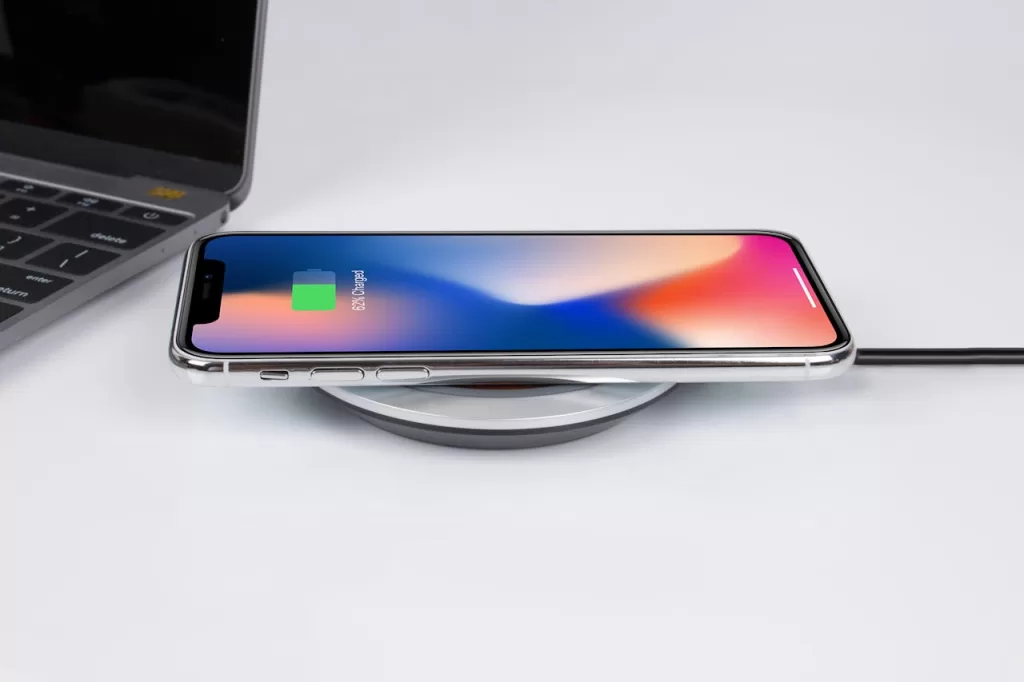
Inductive charging is the most prevalent form of wireless power transfer. It allows devices such as smartphones and laptops to charge by being placed on a charging pad. Many contemporary office furniture designs now incorporate these charging pads into desks and tables, offering seamless integration.
2. Resonant Inductive Coupling
This technology extends the range of wireless power beyond direct contact, using magnetic fields to transfer energy over short distances (typically a few centimetres to a few metres). This capability allows for the charging of multiple devices within a designated area, such as a meeting room table.
3. RF (Radio Frequency) Charging
RF charging transmits power over longer distances using radio waves. Though still in its early stages, this technology holds potential for providing continuous power to low-power devices like sensors, keyboards, and mice, eliminating the need for batteries.
Benefits of Wireless Power in the Office
Cable Management: Wireless power reduces the need for extensive wiring, creating a cleaner and more flexible workspace.
Mobility: Employees can move devices and equipment more freely without worrying about plugging and unplugging cables.
Aesthetics and Design: Integrating power solutions into furniture and surfaces enhances the office design and eliminates unsightly cables.
Health and Safety: Minimises tripping hazards and potential electrical risks associated with loose cables.
Challenges and Considerations
Efficiency: Wireless power transfer is generally less efficient than wired connections, leading to energy loss.
Cost: Initial setup and integration of wireless power solutions can be more expensive compared to traditional wired systems.
Compatibility: Ensuring all devices are compatible with wireless charging standards can be challenging and may require additional investment.
Health Concerns:
– Inductive Charging: Typically safe due to low-frequency, weak electromagnetic fields (EMFs), though some concerns about prolonged exposure persist.
– Resonant Inductive Coupling: Uses stronger, low-frequency EMFs over larger areas, raising questions about long-term exposure effects.
– RF Charging: Higher-frequency EMFs may pose more significant health concerns, although current exposure levels are deemed safe.
Current Use Cases
Conference Rooms: Integrated wireless charging pads in tables facilitate easy device charging during meetings.
Hot Desking: Desks equipped with wireless chargers accommodate various employees’ devices, promoting a flexible workspace.
Common Areas: Lounge areas with wireless charging stations provide convenience for both visitors and employees.
Wireless power is already making its mark in the office environment, and its prevalence is expected to grow as technology advances and becomes more cost-effective. While there are challenges to address, such as efficiency, cost, and health concerns, the benefits of a clutter-free, flexible workspace are undeniable and will therefore continue to be the holy grail that many are seeking to find.
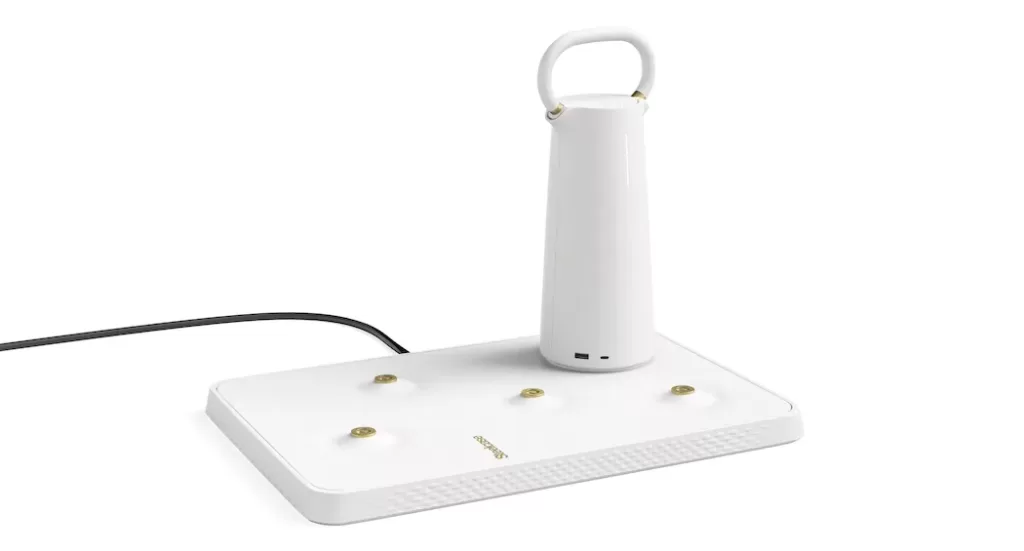
In the meantime, localised, personal power storage solutions are becoming more common with portable power banks being provided within office or workplace environments. One example of this is Steelcase’s Flex Mobile Power, demonstrating how power and mobility product solutions are becoming increasingly important for flexible workplace planning.