![The [RE]Search Co.](https://re-search.co/wp-content/uploads/2025/02/The-RE-Search-Co-Orange_Grey-png-350x51.avif)

Attracting and retaining top talent goes beyond competitive salaries and benefits. The design of your workplace plays a crucial role in ensuring employee satisfaction, productivity, and well-being.
A well-designed office can serve as a powerful tool for boosting employee engagement and performance, ultimately leading to better business outcomes.
The following explores the top five office design elements that have been proven to significantly contribute to employee attraction, retention, productivity, and well-being. Backed by data and research, these elements are not just trends but essential components of a well-designed workplace.
1. Air Quality
Air quality is often overlooked in office design, yet it is one of the most critical factors influencing employee health and productivity. According to research by the World Green Building Council, indoor air quality is typically 2-5 times worse than outdoor air, which can lead to various health issues such as headaches, fatigue, and respiratory problems. Health concerns can severely hinder employee performance and increase stress levels.
Improving indoor air quality by reducing CO2 levels and pollutants, and increasing ventilation, can lead to an 11% improvement in productivity. This is a significant gain, especially in environments where high cognitive function is required. Moreover, companies that have made air quality a priority have seen reductions in absenteeism and staff turnover, further highlighting its importance in workplace design and management.
Key Takeaways:
- Invest in high-quality ventilation and air filtration systems.
- Continuously monitor indoor air quality to ensure a healthy work environment.
- Consider plants that purify the air as part of your office’s biophilic design (discussed further below).
2. Natural Light and Lighting Quality
Natural light is generally a coveted feature in any office space. A study by the University of Oregon revealed that 78% of employees feel that access to natural light and views improves their overall well-being. This is not just a matter of preference; natural light regulates the body’s circadian rhythms, which control sleep patterns, mood, and overall energy levels.

Inadequate lighting, on the other hand, can lead to eye strain, fatigue, and reduced focus, all of which can negatively impact productivity. In situations where natural light is limited, it is essential to use high-quality artificial lighting that mimics natural daylight. Such lighting should be adjustable, allowing employees to customise their workspaces according to their individual needs.
Key Takeaways:
- Maximise natural light through large windows and strategic desk placement.
- Use artificial lighting that mimics natural light, with minimal glare and flicker.
- Implement task lighting options that allow employees to adjust light levels to their preference.
3. Acoustic Design
Noise pollution is recognised as one of the biggest environmental stressors in the workplace. The European Environment Agency has identified noise as the second-largest environmental stressor after air pollution. In an office setting, high noise levels can disrupt concentration and increase stress, leading to lower productivity and job satisfaction.
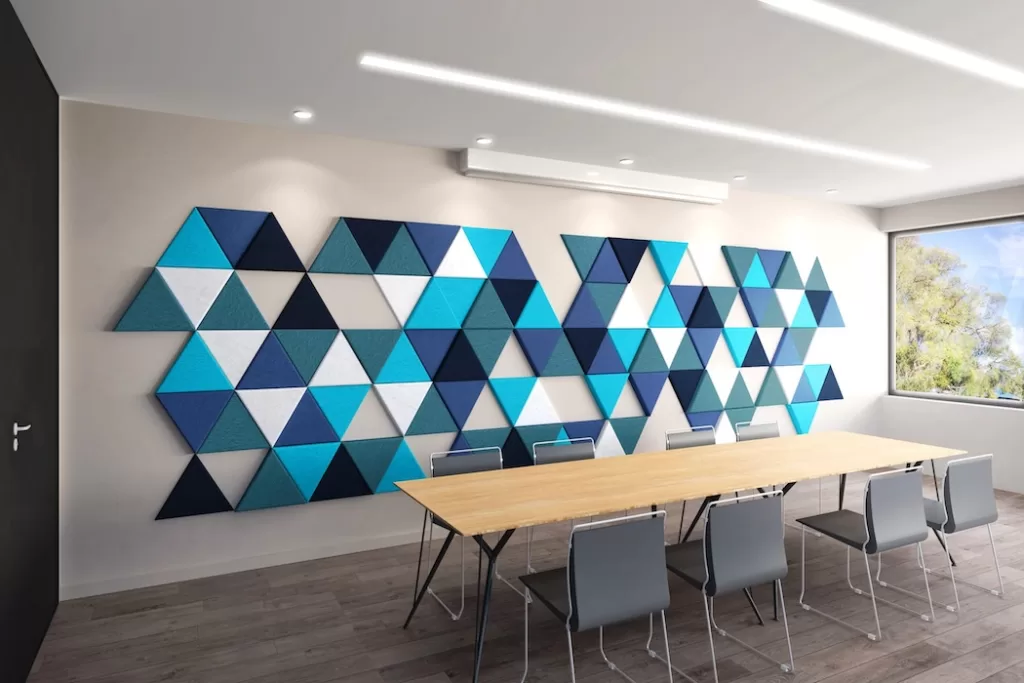
Despite the widespread adoption of open-plan offices, research by Leesman indicates that only 33% of employees find noise levels in their workplace satisfactory. Acoustic design solutions, such as sound-absorbing materials, quiet zones, and noise-cancelling technology, can significantly reduce noise levels, creating a more conducive environment for focus and productivity.
Key Takeaways:
- Implement sound-absorbing materials in walls, ceilings, and floors.
- Designate quiet zones where employees can work without disruptions.
- Provide noise-cancelling headphones to help employees manage noise in open-plan areas.
4. Ergonomic Furniture
Ergonomics is another critical aspect of office design that directly impacts employee well-being and productivity. According to the Chartered Institute of Ergonomics and Human Factors, effective ergonomic design can reduce musculoskeletal problems by 61% and decrease lost workdays by 88%. These statistics underscore the importance of providing employees with furniture that supports good posture and reduces physical strain.
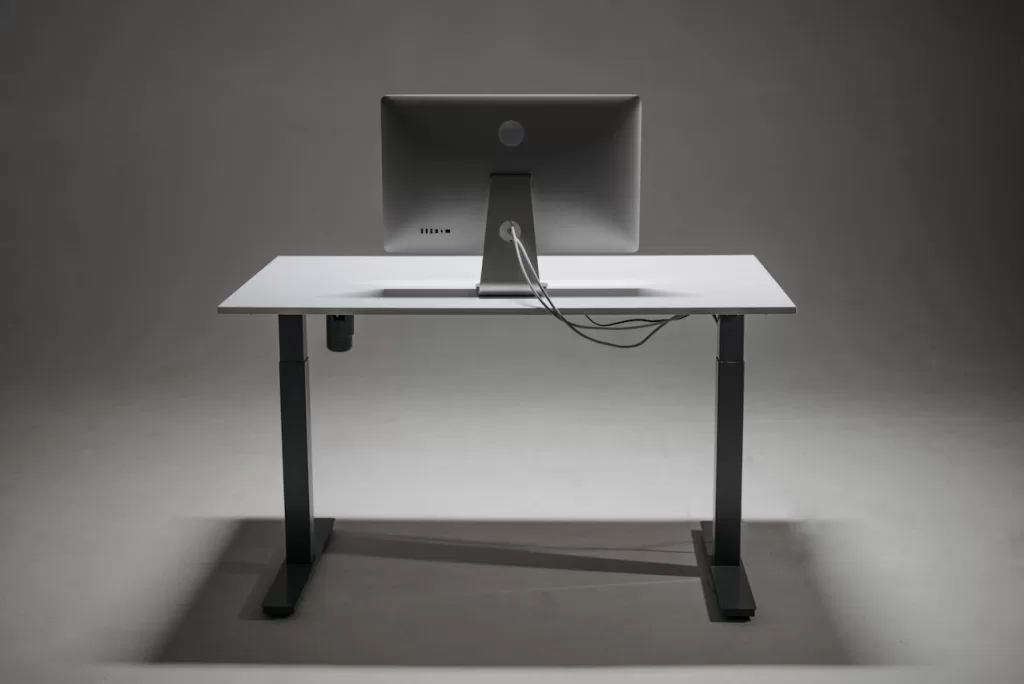
Ergonomic office furniture, such as adjustable chairs, sit-stand desks, and properly positioned monitors, is not just a luxury but a necessity in modern workplaces. Employees who work in ergonomically designed spaces are less likely to suffer from repetitive strain injuries, which can lead to long-term health issues and decreased productivity.
Key Takeaways:
- Invest in adjustable chairs that provide lumbar support.
- Offer sit-stand desks to encourage movement and reduce sedentary behaviour.
- Ensure that monitors are positioned at eye level to prevent neck and back strain.
5. Biophilic Design
Biophilic design, which integrates natural elements into the office environment, has been shown to have profound effects on employee well-being and productivity. A study by the University of Exeter found that adding just one plant per square metre of office space improved employees’ cognitive function and memory retention. Beyond plants, biophilic design can include natural materials, water features, and even views of nature.
The benefits of biophilic design extend beyond aesthetics. Natural elements create a calming environment, reducing stress and improving mood. Employees in biophilic workplaces report higher levels of job satisfaction and engagement, making it a powerful tool for retention and attraction.

Key Takeaways:
- Incorporate plants, natural materials, and water features into the office design.
- Create views of nature, either through windows or through artwork that depicts natural scenes.
- Use biophilic elements to create a calming and inspiring work environment.
Designing for Success
The design of your office space is more than just a reflection of your company’s brand; it is a strategic tool that can significantly impact employee attraction, retention, productivity, and well-being. By prioritising air quality, natural light, acoustic design, ergonomic furniture, and biophilic elements, you can create a workplace that not only meets the needs of your employees but also drives business success.
As the workplace continues to evolve, especially in the post-pandemic era, these design elements will become increasingly important. Companies that invest in creating healthy, productive, and inspiring work environments will be better positioned to attract and retain top talent, ultimately leading to greater innovation and growth.