![The [RE]Search Co.](https://re-search.co/wp-content/uploads/2025/02/The-RE-Search-Co-Orange_Grey-png-350x51.avif)
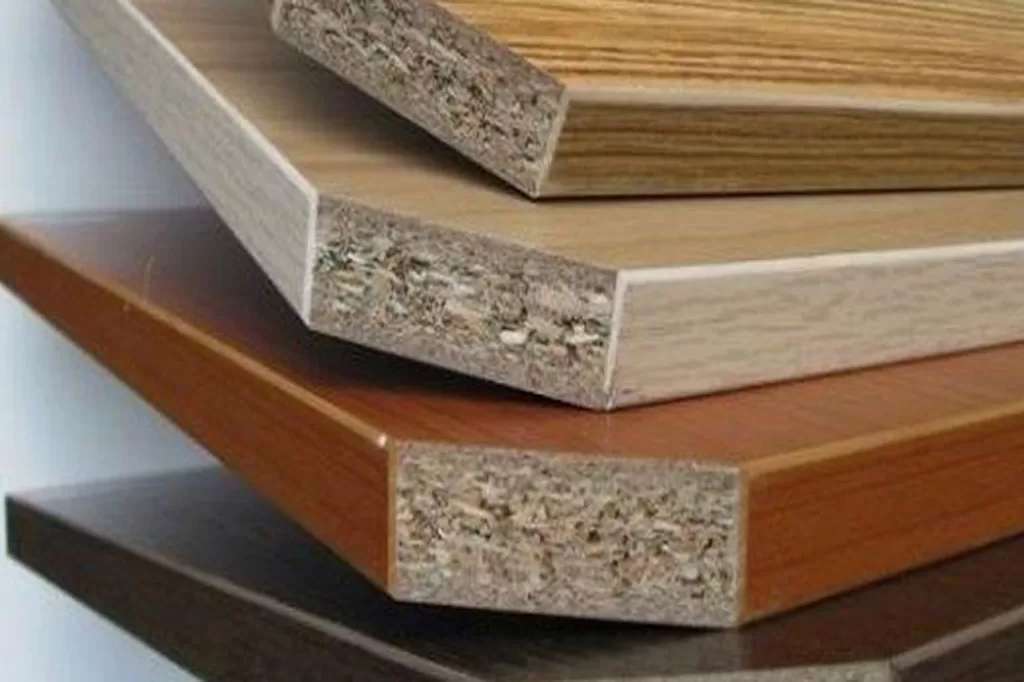
Choosing the right core material for office desk worktops is crucial for creating an aesthetically pleasing, environmentally friendly yet functional workspace. The material not only affects the desk’s appearance but also its durability, maintenance, cost, and environmental impact.
Here we explore the best man-made board options for office desks, explaining their properties, benefits, environmental considerations, cost, and recommendations for specification.
PLYWOOD
Description: Plywood is made by gluing together thin layers (plies) of wood veneer with the grain of each layer at right angles to the adjacent layer. This cross-graining technique gives plywood its strength and stability.
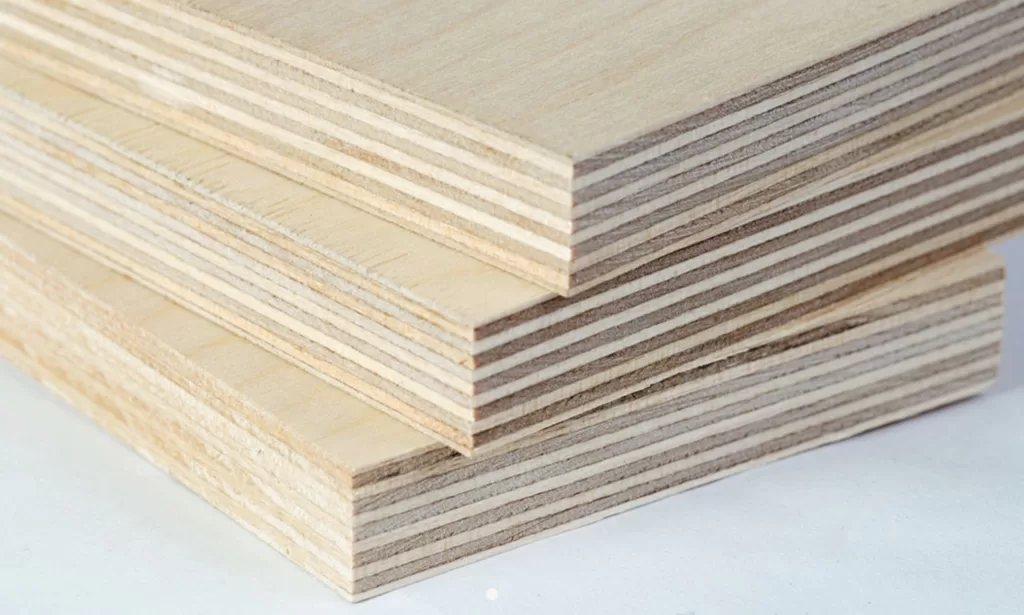
Properties: Plywood is renowned for its durability and resistance to warping, shrinking, and cracking. It has a smooth surface, making it suitable for painting, staining, or veneering. It is also relatively lightweight compared to other man-made boards.
Environmental Considerations: Plywood can be environmentally friendly if sourced from sustainably managed forests. Look for plywood with certifications like FSC (Forest Stewardship Council) or PEFC (Programme for the Endorsement of Forest Certification) to ensure responsible sourcing. Plywood manufacturing generates fewer emissions than some other man-made boards.
Cost: Plywood tends to be on the higher end of the cost spectrum compared to other man-made boards. The price reflects its strength, durability, and aesthetic versatility.
Benefits: Plywood’s strength and stability make it ideal for high-end office desks that require a durable and long-lasting worktop. Its ability to hold screws and fasteners well ensures that the desk remains sturdy over time. Additionally, plywood can be finished with various veneers to match any office décor.
Considerations: Plywood can be more expensive than other man-made boards. When specifying plywood for office desks, ensure that the edges are properly finished or covered to avoid splintering.
MEDIUM-DENSITY FIBREBOARD (MDF)
Description: MDF is made from wood fibres glued under heat and pressure to create a dense, uniform board. It has a smooth surface that is ideal for painting or applying veneers.
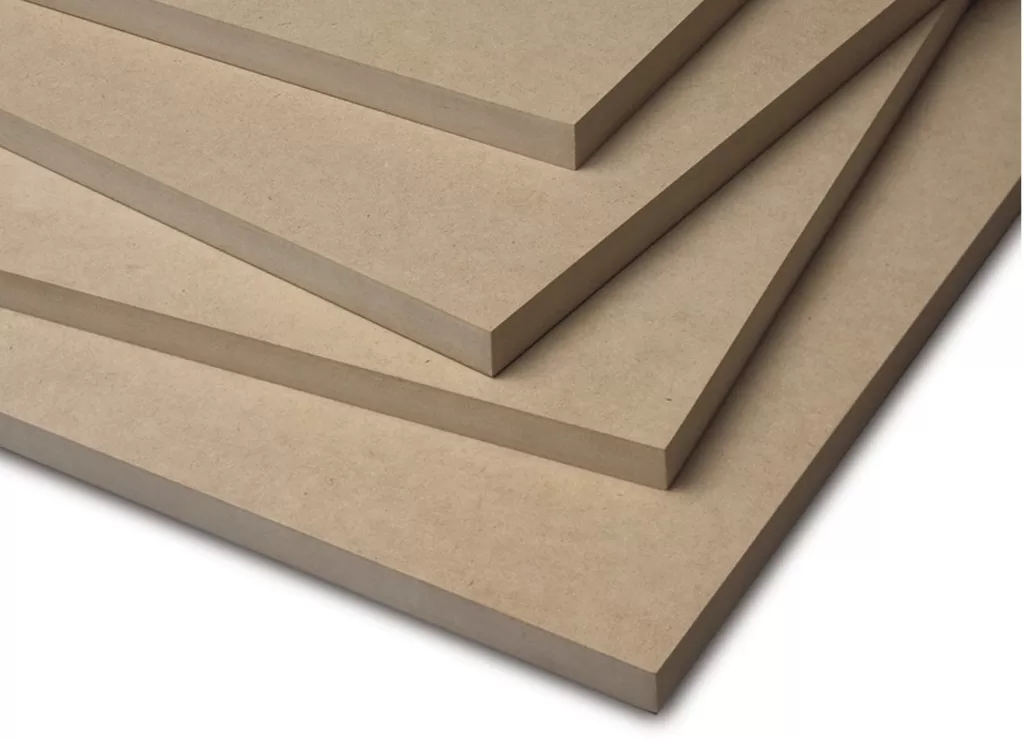
Properties: MDF is dense and heavy, offering a smooth and even surface. It is easy to machine and shape, making it versatile for various design applications. However, MDF is susceptible to moisture damage and can swell if exposed to water.
Environmental Considerations: MDF production involves using resins that may contain formaldehyde, a volatile organic compound (VOC) that can off-gas into indoor air. Look for MDF with low or no added formaldehyde to minimise indoor air pollution. Additionally, MDF can be made from recycled wood fibres, enhancing its eco-friendliness.
Cost: MDF is moderately priced, making it more affordable than plywood but slightly more expensive than particleboard. Its cost-effectiveness combined with its versatility makes it a popular choice for office furniture.
Benefits: MDF is an excellent choice for mid-range office desks. Its smooth surface allows for a high-quality paint finish or the application of a decorative veneer. MDF is also relatively affordable, making it a cost-effective option for creating stylish and functional office furniture.
Considerations: Ensure that MDF desks are properly sealed and protected from moisture. Edge banding or veneer application can help protect the edges from damage.
PARTICLEBOARD (Chipboard)
Description: Particleboard is made from wood chips, sawmill shavings, and sawdust bound together with synthetic resin. It is often covered with a veneer or laminate to improve its appearance and durability.
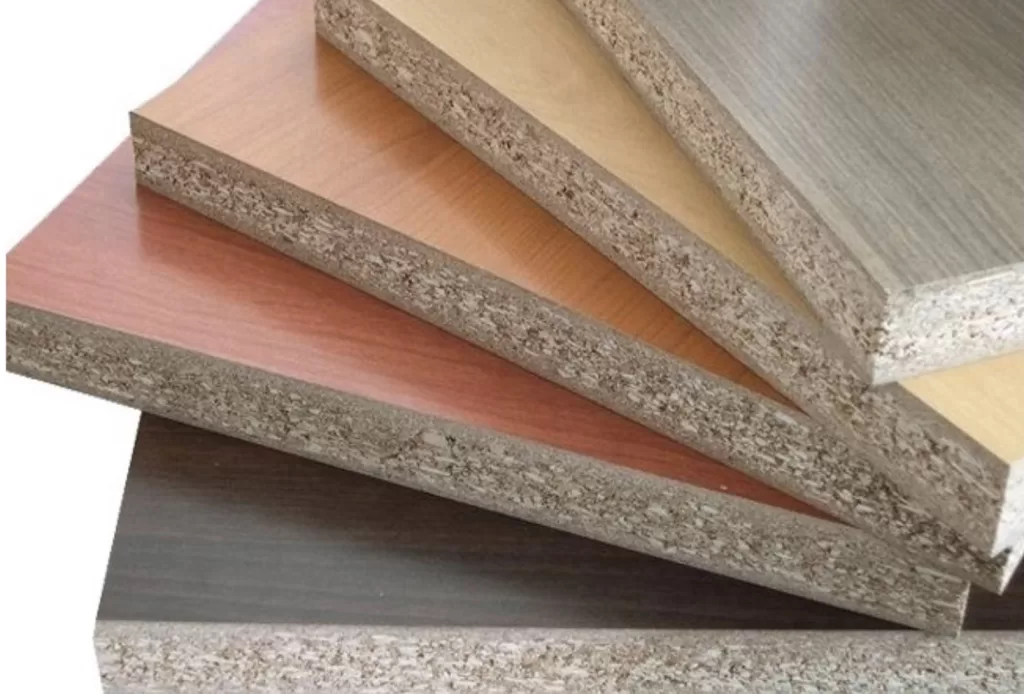
Properties: Particleboard is lightweight and affordable, but it is not as strong or durable as plywood or MDF. It can swell and deteriorate if exposed to moisture and is less capable of holding screws and fasteners securely so not an ideal choice if a desk is likely to be dismantled and reassembled more than once.
Environmental Considerations: Particleboard can be made from recycled wood waste, making it a resource-efficient option. However, like MDF, it may contain formaldehyde-based resins. Opt for particleboard with low or no added formaldehyde for a healthier indoor environment.
Cost: Particleboard is one of the most economical options available. Its low cost makes it an attractive choice for budget-conscious buyers, though it lacks the durability and strength of higher-end materials.
Benefits: Particleboard is a budget-friendly option for office desks, making it suitable for lower-end furniture. When covered with a high-quality veneer or laminate, it can achieve a similar appearance to more expensive materials.
Considerations: Particleboard desks should be used in dry environments and protected from heavy use. Reinforcing edges and using high-quality finishes can improve their longevity.
ORIENTED STRAND BOARD (OSB)
Description: OSB is made from large wood strands oriented in specific directions and bonded with adhesives. It has a rough texture and a distinct appearance.
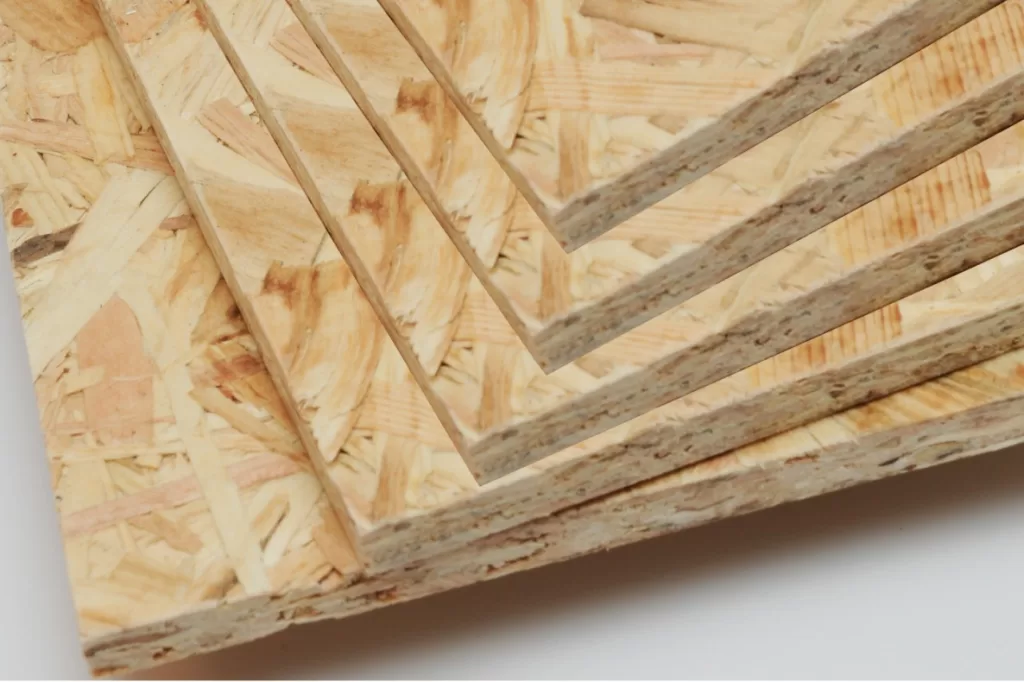
Properties: OSB is strong and durable, making it suitable for structural applications. However, its rough surface and lower aesthetic appeal limit its use in fine furniture.
Environmental Considerations: OSB can be made from fast-growing, small-diameter trees, making it a more sustainable option compared to boards requiring large, old-growth timber. Ensure that the OSB is certified by FSC or PEFC for responsible sourcing.
Cost: OSB is relatively low-cost, similar to particleboard, making it an economical choice for specific applications, particularly where aesthetics are less of a concern.
Benefits: OSB can be used for office desks where a rugged, industrial look is desired. It is strong and cost-effective, making it a practical choice for certain design aesthetics.
Considerations: OSB is generally not recommended for standard office desks due to its rough texture and lower visual appeal. If used, it should be finished with a durable coating to protect the surface and improve its appearance.
IN SUMMARY
When specifying materials for office desk worktops, consider the balance between cost, durability, aesthetics, and environmental impact. Also, the lowest emitting Formaldehyde boards are categorised as ‘EO’ Board. Always look for and specify this grade where possible for any type of board.
– Plywood: Ideal for high-end desks due to its strength and aesthetic versatility, though it is more expensive.
– MDF: A versatile and cost-effective option for mid-range furniture, balancing affordability and quality.
– Particleboard: The most economical choice, suitable for budget-conscious buyers but less durable.
– OSB: An economical option with specific uses, particularly where aesthetics are less important.
By understanding the properties, benefits, environmental considerations, and cost of these man-made boards, you can make informed decisions and specify the best material that alignes with your priorities.