![The [RE]Search Co.](https://re-search.co/wp-content/uploads/2025/02/The-RE-Search-Co-Orange_Grey-png-350x51.avif)

As modern office environments evolve, the concepts of biophilia and biomimicry are increasingly being integrated into workplace design. These approaches, which emphasise the connection between humans and nature, aim to create more harmonious, productive, and healthy workspaces.
But what exactly do biophilia and biomimicry entail, and how can they transform the office? This article explores these innovative concepts and their potential to revolutionise the workplace.
Understanding Biophilia
Biophilia, a term popularised by biologist Edward O. Wilson, refers to the innate human affinity for nature. It suggests that people have a deep-seated need to connect with the natural world, which can enhance well-being and cognitive function.
In the context of office design, biophilia involves incorporating natural elements into the built environment to foster this connection.
Key Elements of Biophilic Design:
1. Natural Light:
– Maximising natural light through large windows, skylights, and open spaces can reduce eye strain, improve mood, and boost productivity. Natural light helps regulate circadian rhythms, leading to better sleep and overall health.
2. Indoor Plants:
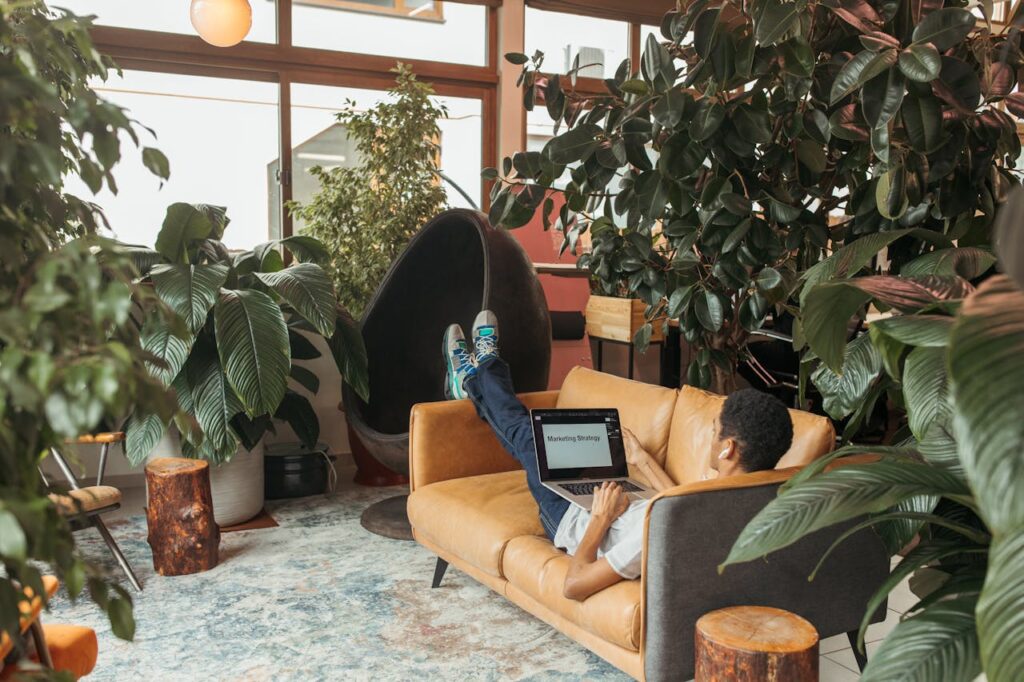
– Introducing plants into office spaces can improve air quality, reduce stress, and create a more inviting atmosphere. Living walls, potted plants, and hanging gardens can all contribute to a biophilic environment.
3. Natural Materials:
– Using materials like wood, stone, and natural fibres can create a sense of warmth and connection to the natural world. These materials can be incorporated into furniture, flooring, and wall coverings.
4. Water Features:
– Incorporating water elements such as fountains, aquariums, or small indoor ponds can add a calming presence to the office. The sound of flowing water can also serve as a natural white noise, reducing distractions.
5. Views of Nature:
– Providing views of natural landscapes, whether through windows or strategically placed screens, can enhance employees’ connection to the outdoors. Even artwork depicting nature can have a positive impact.
Exploring Biomimicry
Biomimicry goes a step further by not just incorporating natural elements but also drawing inspiration from nature’s design principles to solve human problems. It involves mimicking natural processes, structures, and systems to create innovative and sustainable solutions.
Key Applications of Biomimicry in Office Design:
1. Energy Efficiency:
– Building designs that mimic natural structures that naturally regulate temperature, can reduce energy consumption for heating and cooling. This approach can lead to more sustainable and cost-effective office buildings.
2. Ventilation Systems:
– Mimicking the way certain plants or animals manage airflow can lead to more efficient and effective ventilation systems, leading to improved air quality.
3. Water Management:
– Biomimetic designs can enhance water management by mimicking natural processes like the way certain plants capture and filter rainwater. This can lead to the development of more efficient water-saving technologies and green infrastructure.
4. Structural Integrity:
– Nature’s designs can inspire stronger, lighter, and more efficient building materials. These materials can improve the durability and sustainability of office buildings.
5. Workspace Layouts:
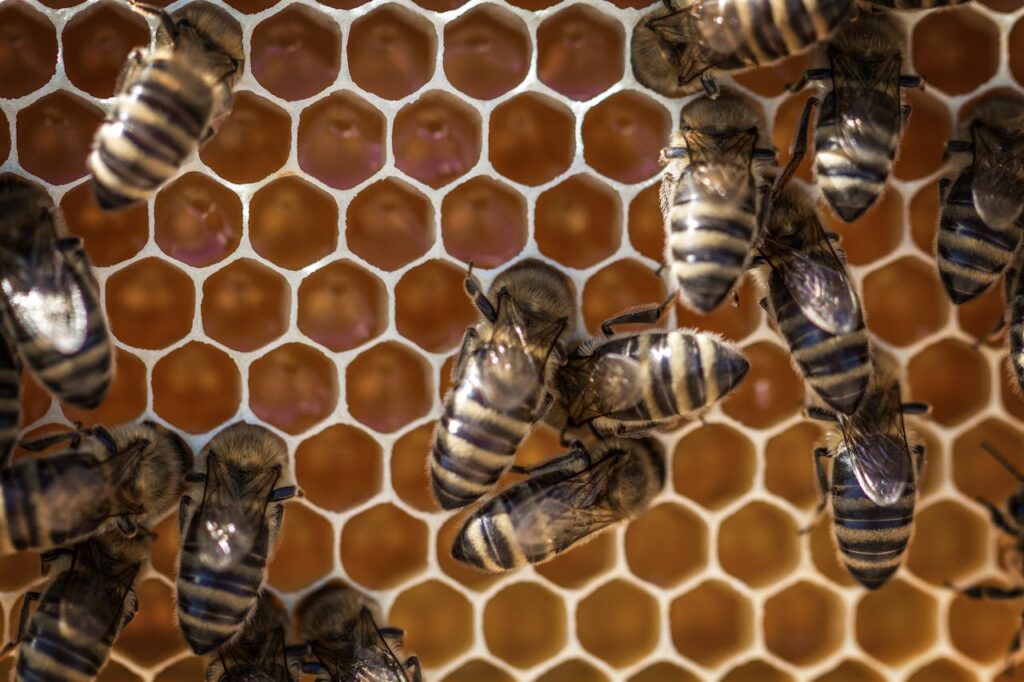
– Designing office layouts based on the organisational patterns found in nature can create more efficient and harmonious work environments.
Benefits of Biophilia and Biomimicry in the Office
Enhanced Well-being: Natural elements and biomimetic designs can reduce stress, improve mood, and increase overall well-being. This leads to happier, healthier employees who are more engaged and productive.
Increased Productivity: Exposure to nature and natural light has been shown to enhance cognitive function, creativity, and concentration. Employees in biophilic environments often experience fewer sick days and higher job satisfaction.
Sustainability: Biomimicry promotes sustainable design practices that can reduce energy consumption, lower operational costs, and minimise environmental impact. This aligns with the growing emphasis on corporate social responsibility and environmental stewardship.
Attraction and Retention of Talent: A well-designed, biophilic office can serve as a unique selling point for attracting and retaining top talent. Employees are increasingly seeking workplaces that prioritise their well-being and offer a connection to nature.
Implementing Biophilia and Biomimicry in the Office
To effectively bring the outside in, consider the following steps:
1. Assessment and Planning:
– Conduct an assessment of your current office environment to identify opportunities for integrating biophilic and biomimetic elements. Work with designers and architects who specialise in these approaches to develop a comprehensive plan.
2. Gradual Integration:
– Start with small changes, such as adding plants, improving natural light, or introducing natural materials. Gradually implement larger changes, such as redesigning ventilation systems or reconfiguring office layouts.
3. Employee Involvement:
– Engage employees in the process by seeking their input and feedback. Create awareness and education programs to help them understand the benefits of biophilic and biomimetic design.
4. Continuous Improvement:
– Regularly evaluate the impact of the changes and make adjustments as needed. Stay updated on new developments in biophilia and biomimicry to continuously enhance your office environment.
Biophilia and biomimicry offer transformative potential for creating healthier, more productive, and sustainable office environments. By bringing the outside in and drawing inspiration from nature, organisations can foster a deeper connection between employees and their workspaces.
This holistic approach not only enhances well-being and productivity but also aligns with broader goals of sustainability and corporate responsibility. As more companies embrace these innovative design principles, the future of office design looks both greener and brighter.