![The [RE]Search Co.](https://re-search.co/wp-content/uploads/2025/02/The-RE-Search-Co-Orange_Grey-png-350x51.avif)

As sustainability continues to be a growing concern for businesses worldwide, the Cradle to Cradle (C2C) design philosophy is gaining traction, including in office and workplace design. This approach, developed by architect William McDonough and chemist Dr. Michael Braungart, aims to create products and environments that are both environmentally regenerative and socially responsible.
By implementing C2C principles, offices can demonstrate corporate responsibility. Here we explore Cradle to Cradle in the context of office and workplace design, discussing its benefits, challenges, and practical applications.
Understanding Cradle to Cradle
“Cradle to Cradle is a holistic design framework that encourages the creation of products and systems with positive impacts on both people and the planet.”
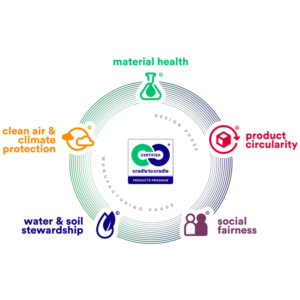
Unlike traditional linear models of production and consumption, which often result in waste, C2C promotes a circular economy where materials are continuously reused, recycled, or safely composted. The framework is built on five key principles:
- Material Health
- Ensuring that materials used are safe for humans and the environment.
- Material Reutilisation
- Designing products for continuous recovery and reuse in either biological or technical cycles.
- Renewable Energy
- Utilising renewable energy sources throughout product life cycles.
- Water Stewardship
- Managing water use responsibly and ensuring water quality.
- Social Fairness
- Upholding ethical and fair practices across the supply chain.
For more information and certification details, visit c2ccertified.org.
Benefits of Cradle to Cradle in Office Design
1. Enhanced Sustainability
C2C principles enable offices to minimise their environmental footprint. By choosing materials that can be endlessly recycled or safely composted, companies reduce waste and reliance on virgin resources. This not only conserves natural resources but also diminishes pollution and greenhouse gas emissions.

2. Improved Employee Health and Well-being
Using non-toxic, safe materials contributes to healthier indoor environments. Employees are less exposed to harmful chemicals and pollutants, leading to improved health outcomes and enhanced productivity. Healthier workplaces can also reduce absenteeism and healthcare costs, benefitting both employees and employers.
3. Corporate Responsibility and Brand Image
Adopting C2C principles showcases a company’s commitment to sustainability and ethical practices. This can enhance corporate reputation, attract eco-conscious clients and investors, and boost employee morale. Demonstrating leadership in sustainability can differentiate a company in a competitive market and build long-term brand loyalty.
4. Economic Advantages
While initial costs of implementing C2C practices may be higher, the long-term economic benefits can be substantial. Efficient use of materials and energy leads to cost savings, and innovative design can open new revenue streams. Additionally, businesses can avoid costs associated with waste management and environmental compliance.
Practical Applications of Cradle to Cradle in Workplace Design
1. Material Selection
Choosing C2C-certified materials is a foundational step in creating sustainable office spaces. These materials are assessed for safety, recyclability, and overall environmental impact. Examples include:
- Furniture: Office furniture made from recycled and recyclable materials, free from harmful chemicals.
- Flooring: Carpets and flooring materials that can be recycled at the end of their life cycle.
- Paints and Finishes: Non-toxic paints and finishes that improve indoor air quality.
2. Modular Design
Modular office designs, which allow for easy reconfiguration and reuse of space components, align well with C2C principles. Modular systems can be adapted to changing needs, reducing the need for new materials and minimising waste. This flexibility supports dynamic work environments and can extend the lifespan of office furnishings and structures.
3. Renewable Energy Integration
Incorporating renewable energy sources, such as solar panels or wind turbines, into office buildings supports the C2C goal of carbon neutrality. Energy-efficient lighting, heating, and cooling systems further reduce energy consumption. By generating and using renewable energy, offices can significantly lower their carbon footprint.

4. Water Management
Implementing water stewardship practices is essential for sustainable office design. This includes:
- Water-Efficient Fixtures: Installing low-flow taps, toilets, and showerheads to reduce water usage.
- Rainwater Harvesting: Collecting and using rainwater for non-potable purposes, such as irrigation and flushing toilets.
- Greywater Systems: Recycling greywater from sinks and showers for use in landscaping and other non-drinking applications.
5. Social Fairness Initiatives
Ensuring that all aspects of the supply chain adhere to ethical standards is a crucial part of the C2C philosophy. This involves:
- Fair Labour Practices: Ensuring fair wages and safe working conditions for all workers involved in the production and supply of office materials.
- Community Engagement: Supporting local communities and fostering positive social impacts through corporate social responsibility programmes.
Challenges and Considerations
While the Cradle to Cradle approach offers numerous benefits, there are challenges to consider:
1. Initial Costs and Investment
The upfront investment required to implement C2C principles can be substantial. Businesses may need to invest in new materials, technologies, and processes, which can be cost-prohibitive for some. However, the long-term savings and benefits often outweigh these initial costs.
2. Supply Chain Complexity
Ensuring that all materials and products used in office design meet C2C standards can complicate supply chain management. It requires thorough vetting of suppliers and continuous monitoring to maintain compliance with C2C principles.
3. Market Readiness
While awareness of C2C is growing, the market for C2C-certified products is still developing. This can limit the availability of suitable materials and products, making it challenging for businesses to fully implement the C2C framework.
4. Technological Limitations
Current recycling and material processing technologies may not always support the ideal outcomes of the C2C approach. Ongoing innovation and investment are needed to develop better solutions for material recovery and reuse.
In Summary
The Cradle to Cradle design philosophy presents a transformative opportunity for creating sustainable, healthy, and efficient office environments. While challenges exist, the long-term benefits of adopting Cradle to Cradle in office and workplace design are substantial.

As more companies recognise the value of sustainable practices, the adoption of C2C principles is likely to increase, driving innovation and generating a more circular economy. For businesses looking to lead in sustainability, implementing Cradle to Cradle principles is a strategic imperative that can yield significant environmental, social, and economic rewards.
For further information on Cradle to Cradle certification and guidelines, visit c2ccertified.org.