![The [RE]Search Co.](https://re-search.co/wp-content/uploads/2025/02/The-RE-Search-Co-Orange_Grey-png-350x51.avif)
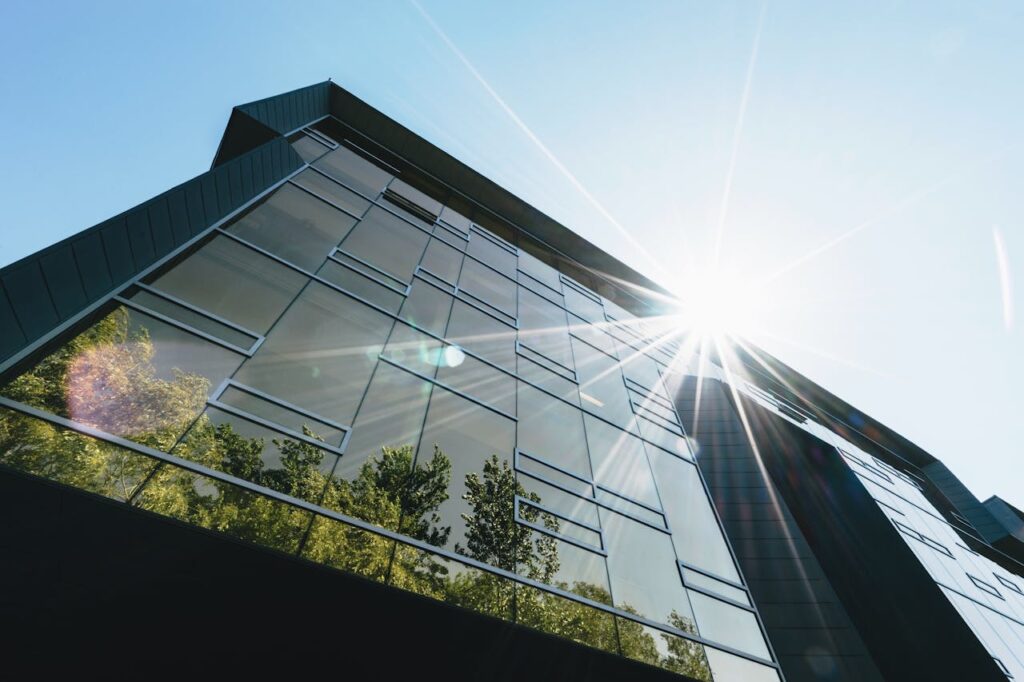
As companies strive to reduce their environmental footprint and meet the demands of environmentally conscious consumers, sustainable office construction practices are gaining traction. However, amidst the evolving landscape of business priorities and economic considerations, the question arises: Does sustainable office construction still make good business sense?
Let’s have a look at the key aspects of sustainable office construction and consider their impact on businesses from financial, environmental, and societal perspectives.
Environmental Benefits:
One of the primary drivers of sustainable office construction is of course its positive impact on the environment. Green building practices focus on minimising resource consumption, reducing waste, and utilising renewable energy sources. From incorporating energy-efficient lighting systems to implementing water-saving technologies, sustainable office buildings aim to lower their carbon footprint.
By investing in sustainable construction practices, businesses can mitigate their environmental impact and demonstrate corporate responsibility. This commitment to sustainability not only aligns with regulatory requirements and industry standards but also enhances the company’s reputation as an environmentally conscious entity. In an era where environmental awareness is on the rise, businesses that prioritise sustainability are more likely to attract environmentally conscious consumers and investors.
Financial Considerations:
While the upfront costs of sustainable office construction may be higher compared to traditional building methods, the long-term financial benefits often outweigh the initial investment. Energy-efficient buildings result in lower operating expenses, as they require less energy for heating, cooling, and lighting. Over time, these cost savings can significantly offset the initial construction expenses, leading to improved financial performance and profitability.
It has also become evident that sustainable buildings tend to command higher rental rates and property values in the real estate market. Tenants are increasingly seeking office spaces that prioritise sustainability, as it not only aligns with their corporate values but also offers tangible benefits such as reduced utility costs and improved indoor air quality. And as a result, sustainable office buildings enjoy a competitive advantage in the leasing market, translating into higher returns for property owners and developers.
Employee Well-being and Productivity:
Beyond the financial and environmental aspects, sustainable office construction also has profound implications for employee well-being and productivity. Green buildings are designed to prioritise occupant comfort and health, with features such as ample natural light, optimal indoor air quality, and ergonomic design elements. Research has shown that employees working in sustainable office environments report higher levels of satisfaction, productivity, and overall well-being.
A healthier and more comfortable work environment not only enhances employee morale but also reduces absenteeism and turnover rates. Businesses that invest in sustainable office construction can thus reap the benefits of a more engaged and productive workforce, ultimately contributing to their bottom line.
Regulatory and Market Trends:
The shift towards sustainable office construction is further fuelled by regulatory mandates and market trends. Governments around the world are implementing stricter building codes and environmental regulations to curb carbon emissions and promote sustainable development. Businesses that fail to comply with these regulations may face penalties and reputational risks, making sustainable construction a strategic imperative.
Along with market dynamics driving demand for sustainable office spaces, we’re also seeing the millennial and Gen Z workforce becomes the dominant demographic in the workforce, with a growing preference for employers that prioritise sustainability and social responsibility. So companies that invest in sustainable office construction gain a competitive edge in attracting and retaining top talent, positioning themselves as employers of choice in a competitive labor market.
Return on Investment (ROI):
When considering sustainable office construction, it’s essential to analyse the return on investment (ROI) over the building’s lifecycle. While upfront costs may be higher, the operational savings and other financial benefits accrued over time can justify the initial investment. Calculating the ROI of sustainable office construction involves assessing factors such as energy savings, reduced maintenance costs, increased property value, and potential tax incentives or rebates for green building initiatives.
Studies have shown that sustainable buildings often yield higher returns compared to conventional structures. For example, a report by the World Green Building Council found that green-certified buildings can deliver a 37% reduction in energy consumption and a 34% decrease in carbon emissions compared to non-certified buildings. These energy savings translate into significant cost savings for building owners and tenants, resulting in a favourable ROI.
Corporate Social Responsibility (CSR):
In addition to financial considerations, sustainable office construction aligns with corporate social responsibility (CSR) objectives. Many businesses today recognise the importance of operating in an environmentally and socially responsible manner. By investing in sustainable construction practices, companies can demonstrate their commitment to addressing global environmental challenges and contributing to the well-being of future generations.
Integrating sustainability into corporate strategies can enhance brand reputation and stakeholder relationships. Consumers, investors, and employees are increasingly holding companies accountable for their environmental impact and ethical practices. Businesses that prioritise sustainability not only differentiate themselves in the market but also foster trust and loyalty among stakeholders, leading to long-term sustainability and success.
Overcoming Challenges:
Despite the numerous benefits of sustainable office construction, challenges remain in implementing green building practices. One common hurdle is the perception that sustainable construction is prohibitively expensive. While initial costs may be higher, advancements in technology and increased market demand have led to more affordable and accessible green building solutions.
Another challenge is navigating complex regulatory frameworks and obtaining green building certifications. However, with proper planning and expertise, businesses can streamline the certification process and ensure compliance with applicable regulations.
Fostering collaboration among stakeholders is essential for scaling sustainable construction practices. By engaging architects, engineers, contractors, developers, suppliers and policymakers early in the project lifecycle, businesses can overcome barriers and drive innovation.
In Conclusion:
So we can comfortably conclude Sustainable office construction remains a sound investment for businesses seeking to balance economic prosperity with environmental stewardship and social responsibility. While upfront costs may pose initial challenges, the long-term financial benefits, environmental impact and both the tangible and intangible positive effects on employee well-being justify the investment in green building practices.
By prioritising sustainability, businesses can enhance their competitiveness, attract top talent, and contribute to a more sustainable future. As regulatory mandates and market trends continue to drive demand for sustainable office spaces, companies that embrace green building practices stand to reap significant rewards in terms of financial performance, brand reputation, and societal impact.