![The [RE]Search Co.](https://re-search.co/wp-content/uploads/2025/02/The-RE-Search-Co-Orange_Grey-png-350x51.avif)

The recent pandemic catalysed a seismic shift in the office furniture industry. As businesses globally transitioned to remote work, the traditional B2B office supply model faced huge challenges for obvious reasons.
To try and offset the decline in B2B sales, office furniture manufacturers and suppliers rapidly pivoted towards B2C e-commerce platforms to participate in the home consumer market. This adaptation involved both proprietary online stores and partnerships with third-party shopping platforms.
The question now arises: has this shift fundamentally altered the business landscape for office furniture suppliers, and is e-commerce poised to supplant physical showrooms in the long term, even for B2B?
The Rise of E-commerce in Office Furniture
Pandemic-Driven Adaptation
When the pandemic forced office closures and necessitated remote working, the demand for office furniture shifted from corporate bulk purchases to individual consumers setting up home offices.
Major office furniture brands, which had traditionally relied on B2B sales, found themselves needing to adapt quickly. Investing heavily in e-commerce and expanding their digital marketing teams, these brands developed or enhanced their online platforms to meet the growing consumer demand.

Investment in Online Infrastructure
The shift to e-commerce required substantial investment in digital infrastructure. Companies revamped their websites to offer a seamless shopping experience, integrated sophisticated supply chain management systems, and utilised data analytics to understand consumer preferences better.
These investments were not just temporary measures; they represent a long-term strategic shift towards a more digital-centric business model.
Changes in Consumer Behaviour
Increased Online Purchases
With the pandemic normalising online shopping, consumers have grown accustomed to purchasing everything from groceries to furniture online. This trend extends to office furniture, where the convenience of browsing, comparing, and buying from home has become a preferred option for many.
The pandemic has thus accelerated a trend towards e-commerce that was already in motion.
Demand for Home Office Solutions
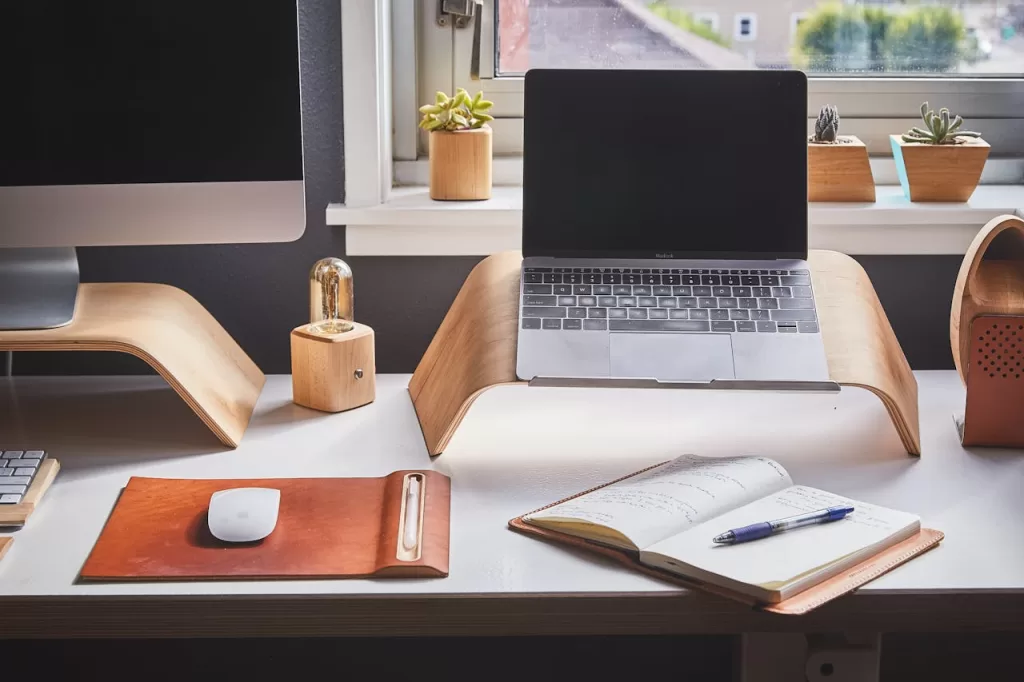
As remote work becomes a more permanent fixture for many companies, the demand for home office solutions continues to rise.
Consumers are seeking ergonomic chairs, adjustable desks, and other furniture that can transform their homes into productive workspaces. This ongoing demand sustains the relevance of B2C e-commerce platforms in the office furniture industry.
Long-term Implications for the Industry
E-commerce as a Staple
The significant investments in e-commerce infrastructure and the sustained consumer demand indicate that online sales are here to stay.
For many office furniture manufacturers and suppliers, e-commerce will likely continue to play a crucial role in their business strategies. The convenience, variety, and often competitive pricing of online shopping make it an attractive option for consumers.
Integration of Digital and Physical Retail
While e-commerce has surged, it does not necessarily spell the end of physical showrooms. Instead, the future of office furniture retail may lie in a hybrid approach that integrates both digital and physical experiences.
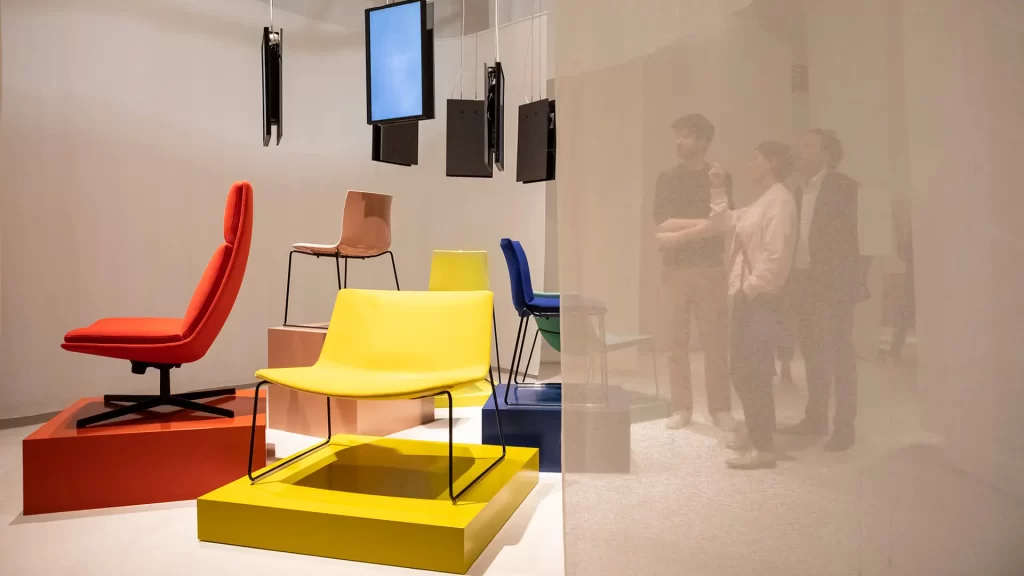
Showrooms can serve as experiential centres where consumers can see and feel the products before making a purchase, either in-store or online.
The Role of Physical Showrooms
Tangible Product Experience
Physical showrooms provide a unique advantage that e-commerce cannot fully replicate: the ability to physically experience a product.
For office furniture, which often involves significant investment and a desire for ergonomic and aesthetic suitability, seeing and trying out products in person remains valuable. Showrooms allow consumers to assess comfort, quality, and design in ways that online descriptions and images cannot.
Enhanced Customer Service
Showrooms also offer a level of personalised customer service that can be challenging to achieve online. Knowledgeable staff can provide expert advice, answer questions, and guide customers through their purchasing decisions. This human interaction can be crucial for customers who need tailored solutions or have specific requirements.
Brand Representation
For manufacturers and suppliers, showrooms serve as branded spaces that can showcase the full range of their offerings and reinforce their brand identity. They provide an opportunity to create immersive environments that highlight the brand’s ethos and design philosophy.
The Future of Office Furniture Retail
Hybrid Retail Models
The future of office furniture retail is likely to be hybrid, combining the strengths of both e-commerce and physical showrooms. Companies can leverage their online platforms to reach a broader audience, offering convenience and extensive product information, while maintaining showrooms to provide a tactile, personalised shopping experience.
Technological Integration
Technological advancements will further blur the lines between online and offline retail. Augmented reality (AR) and virtual reality (VR) technologies are already being used to enhance the online shopping experience.
Customers can use AR to visualise how a piece of furniture will look in their home or office space, bridging the gap between the digital and physical worlds.
Sustainable Practices
Sustainability is becoming increasingly important to consumers, and this trend is influencing the office furniture industry. Online platforms can highlight sustainable products and practices, providing detailed information about the materials and manufacturing processes used.
Physical showrooms can complement this by showcasing sustainable furniture and educating customers on the benefits of eco-friendly choices.
The Symbiosis of E-commerce and Showrooms
The pandemic undoubtedly accelerated the adoption of e-commerce in the office furniture industry, fundamentally changing how business is conducted. However, the rise of online platforms does not necessarily signal the demise of physical showrooms.
Instead, a symbiotic relationship is emerging, where e-commerce and showrooms complement each other.
E-commerce offers unparalleled convenience, extensive product information, and the ability to reach a global audience. It caters to the growing demand for home office solutions and aligns with the shift towards digital shopping habits. Meanwhile, physical showrooms provide the tangible experience, personalised service, and brand immersion that many consumers still value.
So office furniture manufacturers and suppliers are likely to embrace a hybrid retail model, integrating the best of both worlds. This approach ensures that they can meet the diverse needs of customers, offering a seamless shopping experience regardless of the channel.
As technology continues to advance, the lines between online and offline retail will become even more blurred. The integration of AR and VR, and Digital Twinning, along with a focus on sustainability will shape the future of office furniture retail.

Ultimately, the goal is to create a customer-centric approach that leverages the strengths of e-commerce and physical showrooms to deliver value, convenience, and satisfaction.
While e-commerce has transformed the office furniture industry, it is unlikely to replace showrooms entirely but will coexist and enhance the overall purchasing experience.