![The [RE]Search Co.](https://re-search.co/wp-content/uploads/2025/02/The-RE-Search-Co-Orange_Grey-png-350x51.avif)
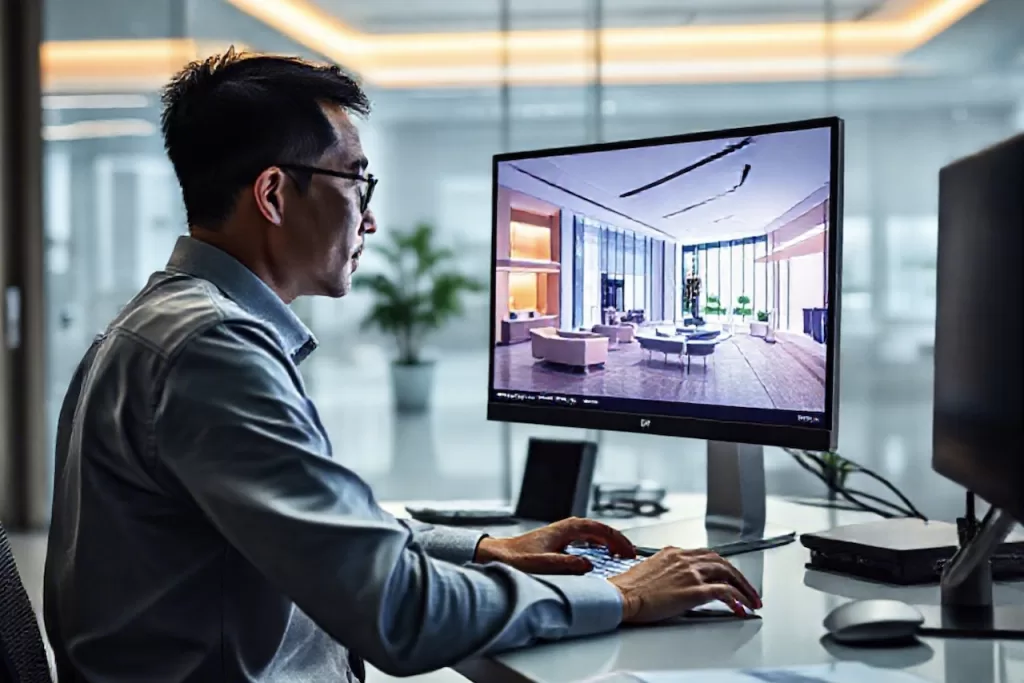
In office planning and design, digital twin technology is making a significant impact. This cutting-edge technology offers innovative solutions that enhance efficiency, sustainability, and the overall user experience.
As organisations strive to create more adaptive and responsive work environments, digital twins are becoming essential. Below we explore how digital twin technology is revolutionising office planning and design, and why it’s gaining traction in the industry.
What is Digital Twin Technology?
Digital twin technology refers to the creation of a virtual replica of a physical object, system, or environment that is continuously updated with real-time data.
In the context of office planning and design, a digital twin represents a detailed, data-driven model of a workspace, encompassing everything from building structures and furniture layouts to lighting and HVAC systems.
This virtual model allows architects, designers, and facility managers to simulate, analyse, and optimise the office environment before any physical changes are implemented.
The Benefits of Digital Twin Technology in Office Planning and Design
1. Enhanced Space Utilisation
Optimising space utilisation is a critical aspect of office planning, and digital twin technology offers unparalleled advantages in this regard.
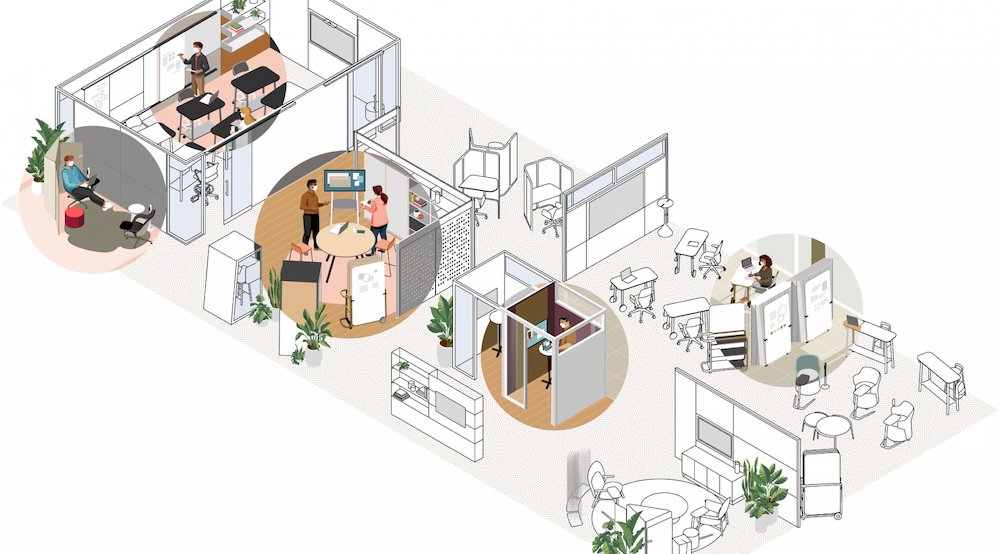
- Optimising Layouts: Digital twins enable planners to experiment with different office layouts in a virtual environment. By simulating how employees interact with the space, designers can optimise the layout for maximum efficiency, comfort, and productivity. This is particularly useful in designing open-plan offices, collaborative spaces, or quiet zones that align with the needs of the workforce.
- Real-Time Data Integration: By integrating real-time data from sensors, such as occupancy levels and movement patterns, digital twins provide insights into how different areas of the office are being used. Facility managers can make data-driven decisions on space allocation, ensuring that the office layout evolves with the changing needs of the organisation.
2. Improved Energy Efficiency
As sustainability becomes a growing concern, digital twin technology plays a pivotal role in enhancing the energy efficiency of office spaces.
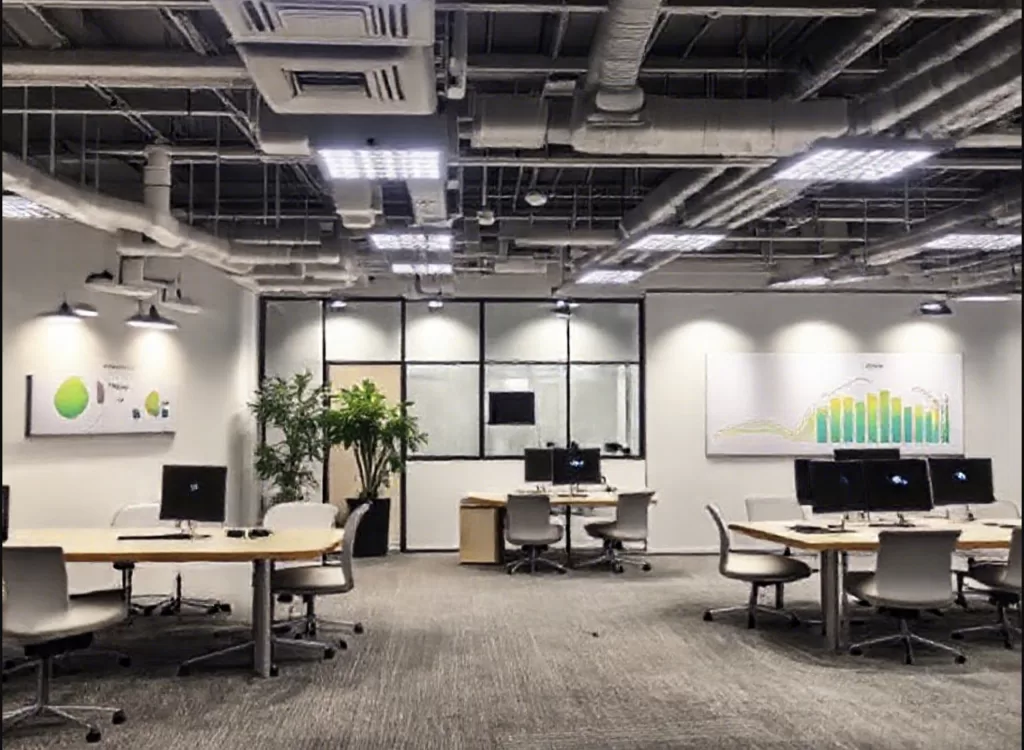
- Simulating Energy Consumption: Digital twins allow designers to simulate energy consumption across different office configurations. By testing various lighting, heating, and cooling scenarios, planners can identify the most energy-efficient solutions and reduce the building’s carbon footprint. This is especially important for companies aiming to achieve sustainability goals or comply with environmental regulations.
- Optimising Building Systems: Digital twins can monitor and analyse the performance of building systems in real-time. For example, they can track the efficiency of HVAC systems and identify areas where energy is being wasted. Facility managers can then adjust settings or schedule maintenance to ensure that the building operates at peak efficiency.
3. Enhanced Collaboration and Communication
Effective collaboration and communication are crucial for successful office planning and design projects. Digital twin technology fosters these aspects by providing a shared platform for all stakeholders.
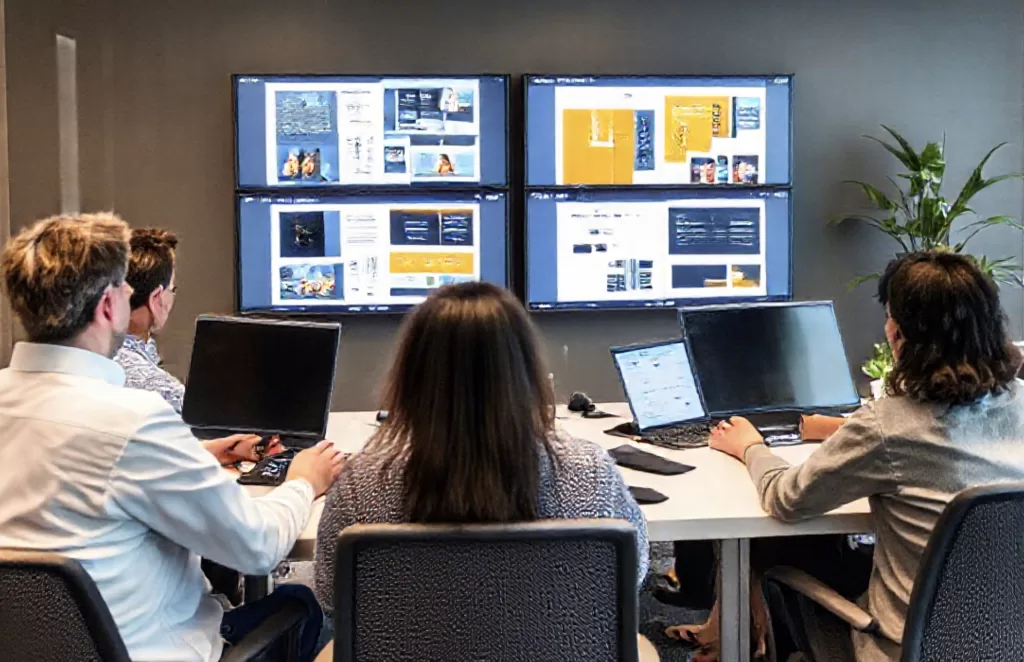
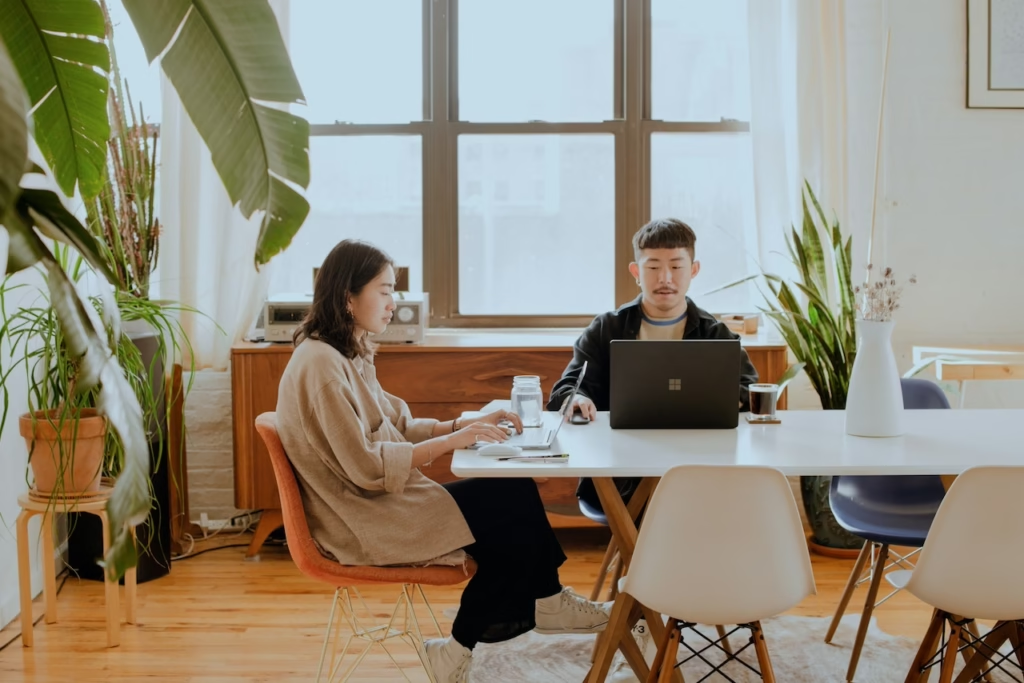
- Virtual Collaboration: Digital twins create a shared platform where architects, designers, engineers, and other stakeholders can collaborate in real-time. This virtual environment allows for better communication, reducing the risk of misunderstandings or errors during the planning and design process. It also enables remote teams to contribute effectively, which is increasingly important in today’s globalised workplace.
- Visualising Design Concepts: Digital twins offer a highly visual representation of design concepts, making it easier for stakeholders to understand and provide feedback. This is particularly valuable when presenting ideas to non-technical stakeholders, such as executives or clients, who may find it challenging to interpret traditional blueprints or CAD drawings.
4. Risk Mitigation and Scenario Testing
Digital twin technology significantly reduces the risk of costly mistakes by allowing designers to test various scenarios in a virtual environment.
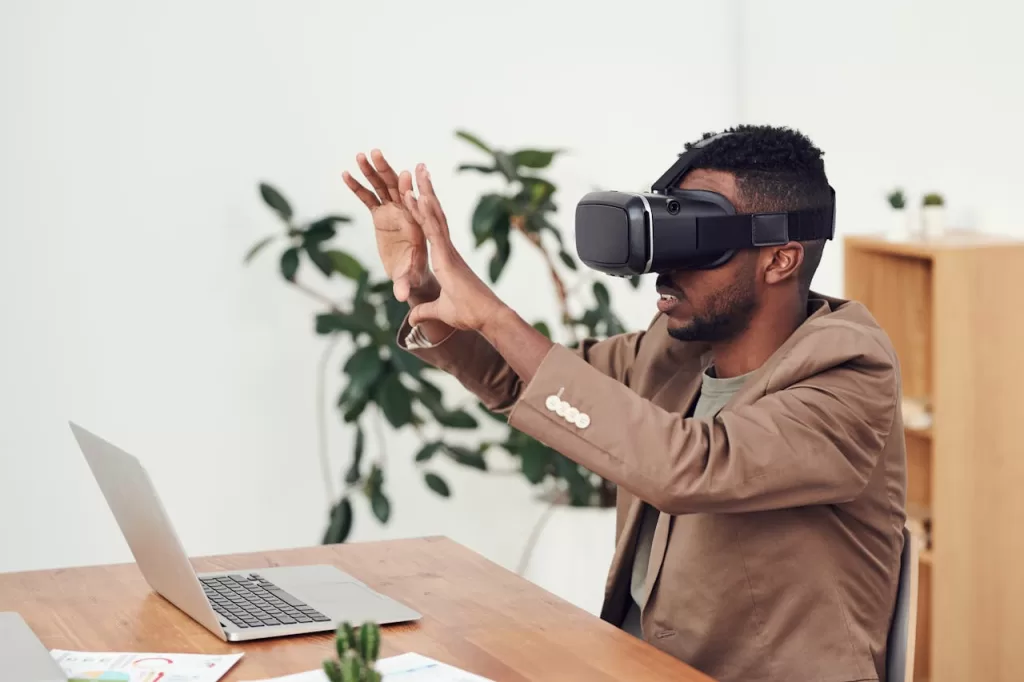
- Testing Design Scenarios: Before making any physical changes, digital twins enable designers to test different scenarios, such as the impact of adding new workstations, adjusting lighting, or modifying ventilation. This ensures that the final design meets the organisation’s needs while minimising the risk of errors.
- Emergency Preparedness: Digital twins can simulate emergency scenarios, such as fire evacuations or power outages. By analysing these scenarios, planners can identify potential risks and optimise the office layout to enhance safety and emergency response times.
5. Supporting Flexible and Adaptive Workspaces
The workplace is constantly evolving, and digital twin technology supports the creation of flexible and adaptive workspaces.
- Dynamic Space Management: Digital twins enable the design of spaces that can be easily reconfigured to accommodate different workstyles, such as hot-desking, remote working, or hybrid work models. This flexibility is crucial for companies looking to attract and retain talent in a competitive job market.
- Predictive Maintenance: Digital twins can predict when building systems or office equipment are likely to fail, enabling facility managers to schedule maintenance proactively. This reduces downtime and ensures that the office environment remains conducive to productivity.
6. Enhanced Employee Experience
A key focus of office planning and design is improving the employee experience, and digital twin technology plays a crucial role in achieving this goal.
- Personalised Workspaces: By integrating data from digital twins with other technologies, such as IoT and AI, companies can create personalised workspaces for employees. For example, digital twins can adjust lighting, temperature, or desk height based on individual preferences, enhancing comfort and well-being.
- Health and Well-being Monitoring: Digital twins can monitor environmental factors, such as air quality or noise levels, and make adjustments to improve the overall office environment. This is particularly important in promoting employee health and well-being, which is increasingly recognised as a key factor in productivity and job satisfaction.
Challenges and Considerations
While the benefits of digital twin technology in office planning and design are significant, there are also challenges and considerations that organisations need to address:
- Data Privacy and Security: Digital twins rely on vast amounts of data, some of which may be sensitive. Ensuring data privacy and security is crucial, particularly when dealing with employee-related information.
- Integration with Existing Systems: For digital twins to be effective, they need to integrate seamlessly with existing building management systems, IoT devices, and other digital tools. This requires careful planning and investment in compatible technologies.
- Cost and Complexity: Implementing digital twin technology can be costly and complex, particularly for large or older buildings. Organisations need to weigh the potential benefits against the investment required to determine if it’s the right solution for them.
- Continuous Monitoring and Updating: Digital twins are most effective when they are continuously updated with real-time data. This requires ongoing monitoring and maintenance, which can be resource-intensive.
The Future of Digital Twins in Office Design
As digital twin technology continues to evolve, its role in office planning and design is likely to expand. Advances in AI and machine learning will enable digital twins to become even more intelligent and predictive, offering deeper insights and more precise simulations. Additionally, as the technology becomes more accessible and affordable, we can expect to see wider adoption across industries and organisations of all sizes.
The technology is revolutionising the field of office planning and design, offering a wealth of benefits that can enhance efficiency, sustainability, and the overall employee experience.
While there are challenges to consider, the potential for creating smarter, more responsive work environments makes digital twins an increasingly attractive option for forward-thinking organisations. As the technology continues to advance, it is set to play an even more significant role in shaping workplaces.