![The [RE]Search Co.](https://re-search.co/wp-content/uploads/2025/02/The-RE-Search-Co-Orange_Grey-png-350x51.avif)

The Leadership in Energy and Environmental Design (LEED) has been a widely accepted green building rating system for the past few decades, but the question remains: is LEED still relevant in today’s sustainability landscape?
LEED was introduced in 1998 and has undergone several revisions, with the latest version being LEED v4.1. Over the years, LEED has become synonymous with green building, and its certification is highly sought after by builders and owners worldwide. However, with the increasing competition from other green building rating systems and the emergence of new codes and standards, LEED’s relevance today is sometimes questioned.
Despite its popularity over the years, LEED has several limitations. It is a voluntary system, and its certification is not mandatory. Moreover, LEED focuses primarily on new buildings, leaving existing buildings, which account for a significant portion of the building stock, largely unaddressed. Additionally, LEED’s certification process can be costly and time-consuming, making it inaccessible to some builders and owners.
LEED has faced criticism for its lack of scientific rigour and its focus on design rather than performance. Some argue that LEED certification can be achieved even if the building is not sustainable in practice. Furthermore, LEED’s emphasis on materials and energy efficiency may overlook other important sustainability factors, such as water conservation and waste management.
Despite its limitations and criticisms, LEED remains a widely recognised and respected green building rating system. Its certification is still highly valued by builders, owners, and occupants. LEED’s emphasis on sustainability and energy efficiency aligns with the global goal of reducing carbon emissions and mitigating climate change. Moreover, LEED’s framework provides a common language and set of standards for the building industry, facilitating communication and collaboration among stakeholders.
LEED is not the only green building rating system in the market. Other popular rating systems include:
– Building Research Establishment Environmental Assessment (BREEAM)
– DGNB
– Green Star
– Green Mark
– CASBEE
These rating systems have their own strengths and weaknesses and are popular in different regions and countries. For example, BREEAM is widely used in the UK and Europe, while Green Star is popular in Australia and South Africa and Green Mark is Singapore’s evolving rating system.
While LEED faces challenges and criticisms, it remains a relevant and important tool in the pursuit of sustainability in the building industry. Its evolution and adaptation to new codes and standards will be crucial in maintaining its relevance in the future. As the building industry continues to grapple with the challenges of climate change, LEED’s certification will remain a valuable asset for builders, owners, and occupants seeking to reduce their environmental footprint.
LEED V5, expected to be released in 2025 is expected to go a long way to addressing current criticisms of the standard.
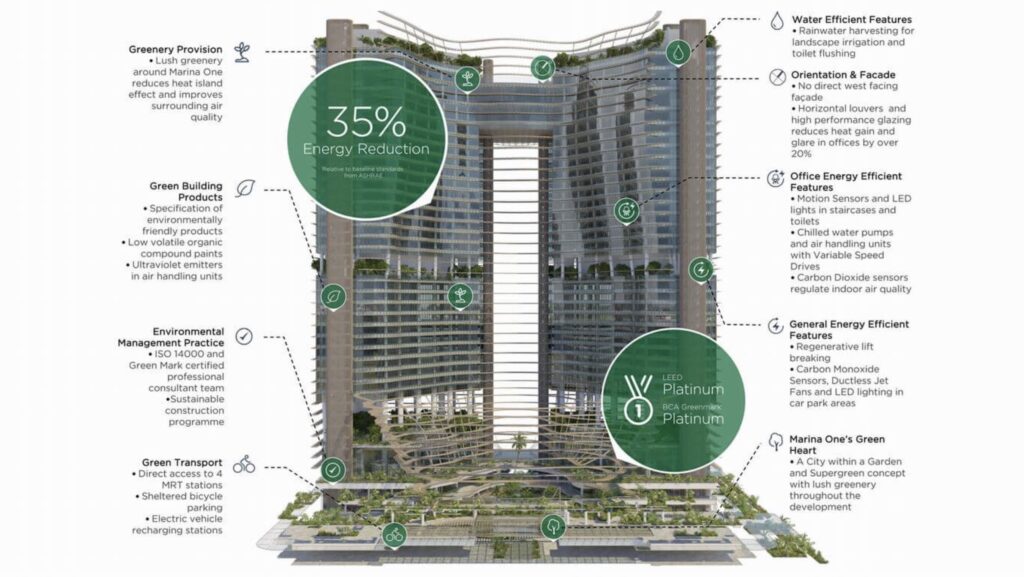
LEED’s relevance can be summarised in the following points:
– LEED should matter to Building Occupants and should still be very relevant to anyone who builds and operates a building, as it provides a sustainability and energy efficiency framework.
– For practitioners, earning a LEED Credential Shows Your Openness to Growth: LEED credentials demonstrate a person’s commitment to personal growth and career development in the field of sustainability.
– We also need to remember that LEED is a Guideline, not a Rule: LEED should be seen as a tool to guide decision-making and provide a framework for sustainability, rather than a set of rigid rules.
– LEED will remain relevant: Despite its limitations and criticisms, LEED will continue to evolve and remain a widely recognised and respected green building rating system.