![The [RE]Search Co.](https://re-search.co/wp-content/uploads/2025/02/The-RE-Search-Co-Orange_Grey-png-350x51.avif)
In recent years, the concept of makerspaces has transcended its roots in education and community settings to become an integral part of corporate environments worldwide. As companies in Asia strive to foster innovation and cultivate collaborative cultures, the implementation of these facilities within corporate offices could well emerge as a strategic move.
Drawing insights from successful cases like Airbnb’s Common Studio, IBM’s Austin MakeLab, and Pinterest’s Workshop, the adaptation of makerspaces in Asian corporate offices may hold promise for driving creativity, engagement, and productivity among employees.
Understanding Makerspaces in the Corporate Context
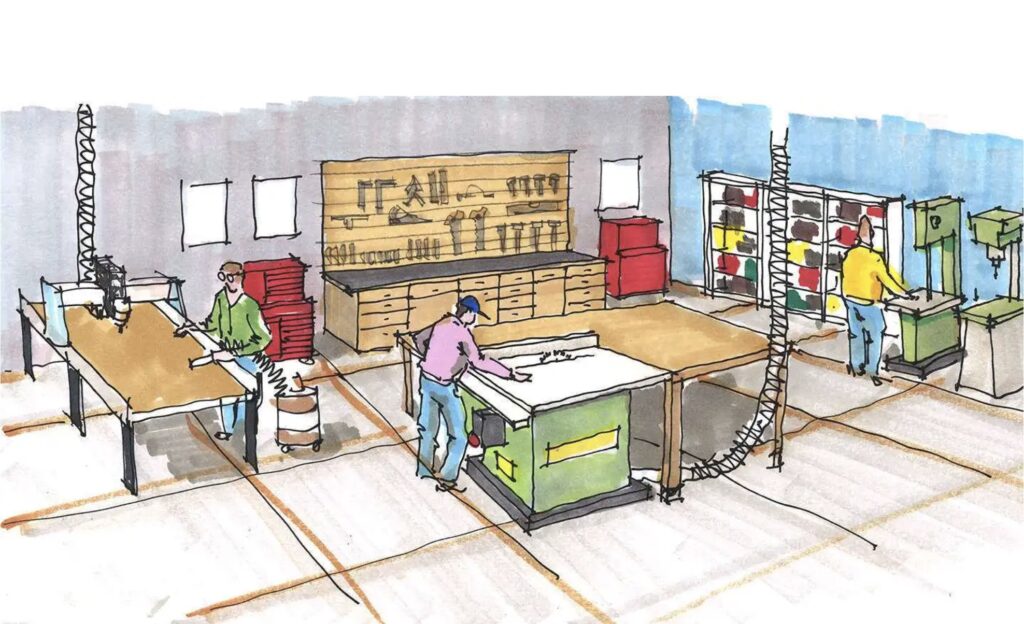
Makerspaces are dynamic environments designed to facilitate hands-on learning, experimentation, and creativity. Equipped with a range of tools, from 3D printers to woodworking equipment, these spaces empower individuals to bring their ideas to life.
While traditionally associated with educational institutions and community centers, makerspaces are increasingly finding their place within corporate settings, driven by the imperative to nurture innovation and collaboration.
Why Would Corporate Offices Need Makerspaces?
In Asia’s corporate landscape, where competition is fierce and innovation is essential, makerspaces offer a unique opportunity to fuel creativity and engagement among employees. By providing a dedicated space for experimentation and collaboration, companies can tap into the diverse skills and talents of their workforce, fostering a culture of continuous learning and innovation. Makerspaces can serve as a platform for team-building activities, fostering camaraderie and collaboration.
Lessons from Successful Corporate Makerspaces
Examining successful corporate makerspaces like Airbnb’s Common Studio, IBM’s Austin MakeLab, and Pinterest’s Workshop offers valuable insights into the potential impact of these spaces in Asian corporate offices. These facilities were championed by passionate individuals within the organisations who recognised the value of fostering creativity and collaboration.
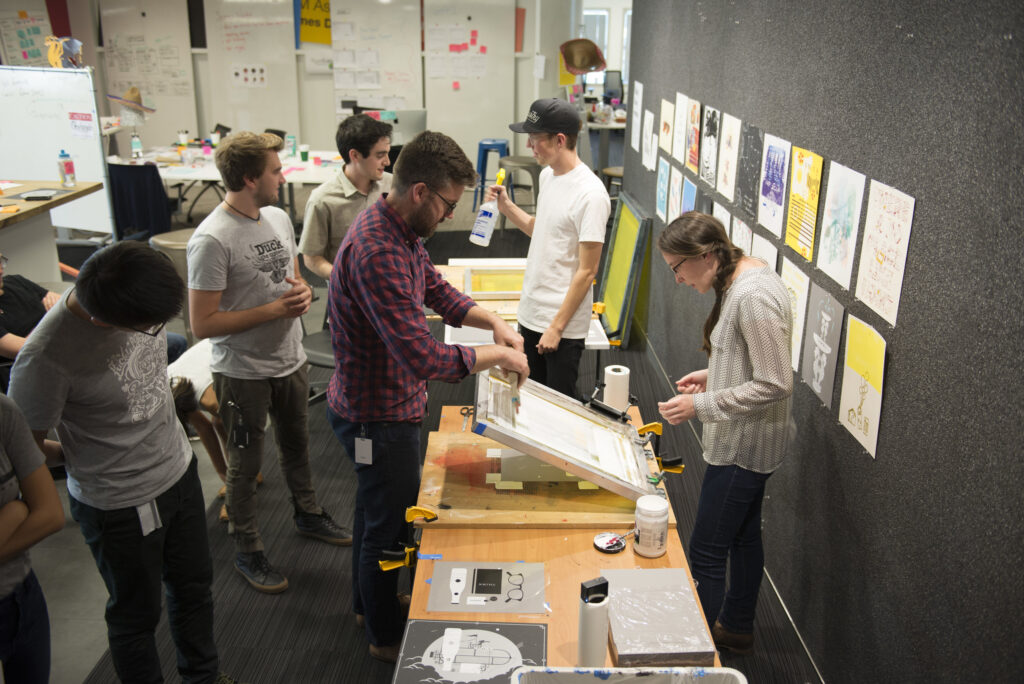
At Airbnb, the Common Studio emerged as a space for designers to engage in hands-on work, aligning with the company’s ethos of creativity and community. Similarly, IBM’s Austin MakeLab provided designers with access to screen-printing and 3D printing equipment, offering a welcome respite from digital work and fostering a culture of creativity within the company. Meanwhile, Pinterest’s Workshop served as a hub for employees to explore new making methods and collaborate on projects, reflecting the company’s emphasis on action and creativity.
For companies in Asia looking to implement makerspaces, there are several key recommendations to increase success:
-
- Define Purpose and Audience: Clarify the objectives and identify the target audience within the organization. Tailor the equipment and programming to meet the needs and interests of employees.
- Ensure adequate Funding and Resources: Advocate for the allocation of resources to support the establishment and operation of a makerspace. Demonstrate the potential impact on employee engagement, productivity, and innovation to secure buy-in from leadership.
- Training and Support: Offer training and resources to familiarise employees with the equipment and tools available. Encourage cross-departmental collaboration and knowledge sharing to maximise the potential of the space.
- Measure Impact and Adapt: Continuously evaluate the impact of the makerspace on employee engagement, collaboration, and innovation. Gather feedback from users and make adjustments to the space and programming as needed to ensure its effectiveness.
The Future of Makerspaces in Asian Corporate Offices
As companies in Asia embed forward-thinking principles around creativity, collaboration, and innovation, makerspaces could well play a pivotal role in shaping the future of work. By providing employees with the resources and space to explore new ideas, experiment with technology, and collaborate with colleagues, it has the potential to untether creativity and innovation across the corporate landscape.
As more companies recognise value in driving employee engagement and innovation, we could see a proliferation of these types of facilities in corporate offices throughout the region – as long as business leaders recognises the value and ROI when it comes to converting valuable real estate to more creative pursuits.