![The [RE]Search Co.](https://re-search.co/wp-content/uploads/2025/02/The-RE-Search-Co-Orange_Grey-png-350x51.avif)
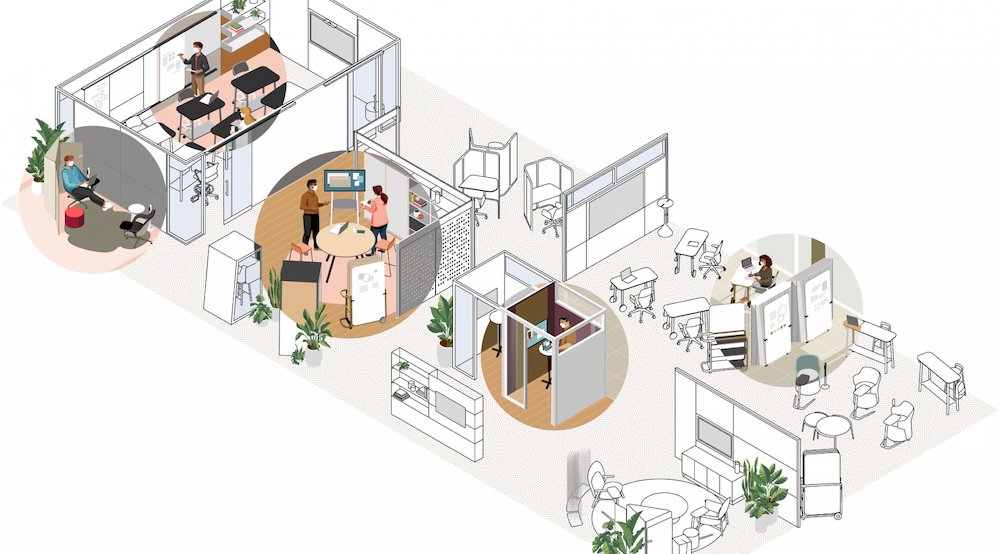
Mock-ups have long been a common practice as part of the bid or tender process, especially on the larger office fit-out projects. The idea is simple: shortlist a number of suppliers and invite them to create sample setups of the proposed products – sometimes in a showroom, sometimes in an office environment, and sometimes even on a construction site, to see how it looks and functions before making a final decision. While this approach seems practical, it often generates many problems vs solutions, particularly for suppliers but is also hugely damaging for the environment.
Here’s why mock-ups are a bad idea and why we can surely do better:
1. Substantial Supplier Costs
Mock-ups impose significant financial burdens on the suppliers. Suppliers invited to participate in a mock-up often have to manufacture or procure products specifically for the mock-up. This process includes considerable logistics and installation costs, all of which can be extremely high. If a supplier is unsuccessful in winning the bid, these investments are lost, resulting in substantial financial strain. This can discourage suppliers from participating or lead to higher costs passed on to clients to mitigate these risks.
2. Airfreight Costs and Environmental Impact
Suppliers frequently face tight deadlines to prepare for mock-ups. This often necessitates the airfreight of large and heavy products to meet the schedule. Airfreighting not only adds substantial cost but also has a significant negative environmental impact. The carbon footprint associated with airfreighting is much higher compared to other transportation methods. This adds another highly unsustainable layer to the mock-up process, countering efforts to promote greener practices in business operations.

3. A Time-Consuming Process
Setting up a mock-up is a time-consuming endeavor. It requires careful planning, coordination with vendors, and the actual setup and teardown processes. This can divert valuable time and resources away from core business activities. For companies with tight schedules and pressing deadlines, the time spent on mock-ups could be better utilized elsewhere, such as in strategic planning or improving operational efficiency.
4. Disruption to Workflow
Mock-ups can disrupt the normal workflow in an office. The process of setting up and evaluating furniture can interfere with employees’ or a department’s work, causing distractions and reducing productivity. In some cases, areas of the office may need to be closed off or reconfigured, leading to inconvenience and potential delays in work processes. This disruption can negatively impact overall efficiency.
5. Limited Real-World Testing
A mock-up only really provides a snapshot of how the furniture will perform in the long run. Real-world testing involves extended use by employees, which is not possible in a short-term mock-up. Ergonomic issues, durability concerns, and practical functionality can only be fully assessed over time. Relying on a mock-up to make a final decision may only result in furniture that does not meet the long-term needs of the office.
6. Negative Sustainability Factors
Mock-ups are often wasteful and environmentally unfriendly. The process involves manufacturing, transporting, and setting up furniture or other products that might not be used long-term. If the mock-up is unsuccessful, the furniture may be eventually be discarded given the item was produced to specific specifications, contributing to waste. Even if repurposed, the carbon footprint associated with the entire process—production, logistics, and disposal—can be substantial. In an era where sustainability is crucial, such wasteful practices are increasingly untenable and at odds with corporate social responsibility goals.
7. Subjective Impressions
Mock-ups often rely heavily on subjective impressions. Employees and decision-makers may have different opinions on the aesthetics and functionality of the furniture based on personal preferences. These subjective assessments can lead to indecision or disagreements, complicating the decision-making process. In contrast, relying on objective criteria such as ergonomics, durability, and cost-effectiveness would result in more informed and rational choices.
The Alternatives:
There are more effective alternatives to mock-ups, especially with the technology available to us today. Virtual reality (VR) and augmented reality (AR) technologies allow businesses to visualise furniture in their office space without the need for physical setups. These technologies provide a realistic and interactive experience, enabling better decision-making without the associated costs and disruptions. VR and AR can simulate different configurations and styles, allowing stakeholders to explore various options seamlessly. Additionally, it means real-time changes can be accommodated, helping visualise the final look quickly and more accurately.

It is however natural that an actual final solution mock-up is necessary given the high stakes involved, but it should only be the successful vendor(s) that produce the actual set-up with the aim of that product being incorporated into the eventual fit-out to avoid unnecessary waste.
Workplace Consultants and Experts are engaged for a reason and can provide insights and recommendations tailored to the specific needs of a client. These professionals can leverage their experience and understanding of supply, design, engineering and also ergonomic principles to develop a more sustainable bid process and suggest the best solutions and options – enabling the client to choose a furniture (or other product) partner without several suppliers being required to expend significant resources to demonstrate almost identical solutions.
While mock-ups might seem like a sensible step in the decision-making process, they can often prove to be highly inefficient and counterproductive.
The high costs, both for clients and suppliers, time consumption, workflow disruption, negative sustainability factors, and environmental impacts make them a a poor solution in the bid process. Instead, businesses should consider leveraging modern technologies and professional expertise to make more informed and effective decisions about their office furnishings.
By adopting VR and AR technologies, clients can visualise potential office setups more accurately and cost-effectively, without the logistical and environmental burdens of physical mock-ups.
Ultimately, these approaches could save time, reduce costs, and promote sustainability, ensuring a better outcome. As an industry it’s time we say ‘no more’ to large-scale, wasteful mock-up exercises – do you agree, and what did I miss?