![The [RE]Search Co.](https://re-search.co/wp-content/uploads/2025/02/The-RE-Search-Co-Orange_Grey-png-350x51.avif)
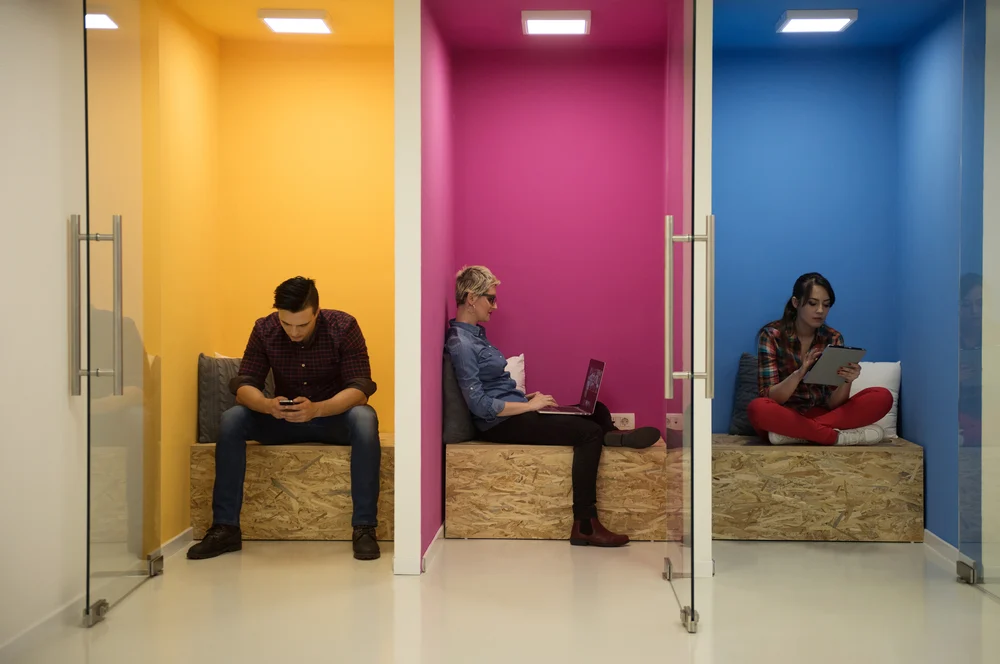
Open-plan offices have long been celebrated as hubs of collaboration and transparency. However, they also bring challenges such as noise, distractions, and a lack of privacy.
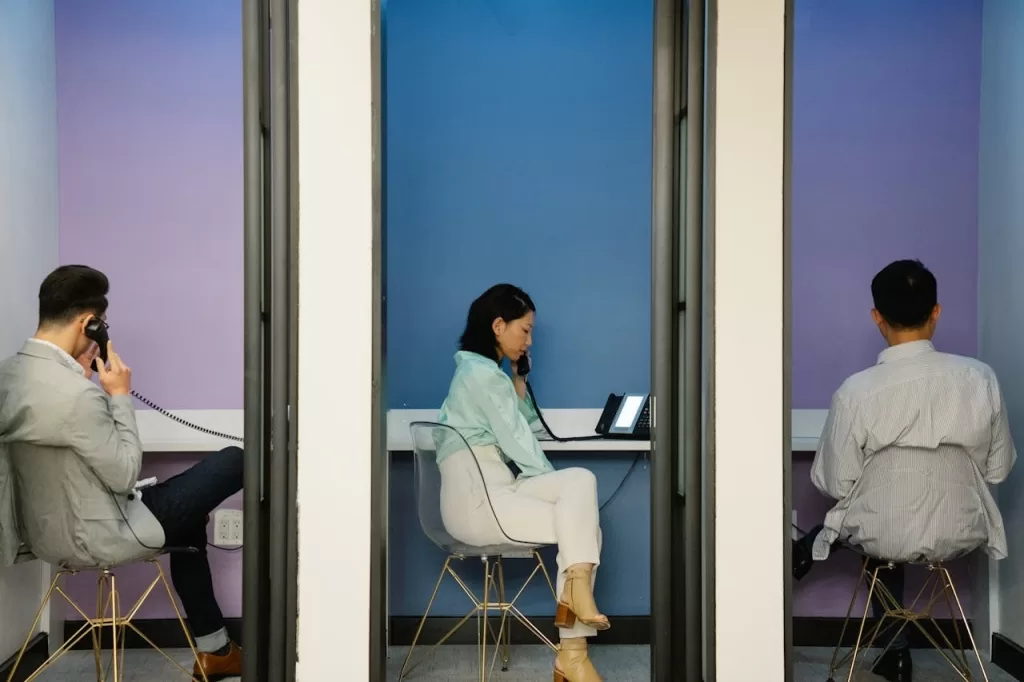
To counteract these issues, many workplaces have introduced the phone booth—a compact, soundproof space designed for phone or video calls.
While these booths effectively reduce disruptions and provide privacy, they are increasingly being misused as long-term workpoints, with employees ‘camping’ in them for hours on end.
This behaviour is often dismissed as misuse or poor etiquette. However, a deeper look suggests that the problem may lie in the overall workplace design. Phone booths, by nature, are not intended for extended occupancy, so why do individuals gravitate towards them?
The following explores how the issue of ‘camping’ in phone booths reveals shortcomings in workplace design, such as a lack of suitable workpoint options, and discusses how organisations can address these issues.
The Purpose of Phone Booths
Phone booths in offices serve a clear purpose: providing a private and acoustically isolated space for calls or short video conferences. They are typically compact, with minimal furniture—often just a stool or a bench—and prioritise function over comfort. Despite their spartan design, phone booths have become a magnet for employees seeking respite from open-plan environments.
This appeal can be attributed to several factors:
-
- Acoustic Privacy: Open offices are notorious for high noise levels. Employees struggling to concentrate may view phone booths as a quiet haven.
-
- Visual Privacy: Beyond noise, open plans often lack visual barriers, making employees feel constantly observed. Phone booths offer a break from this.
-
- Lack of Distractions: With limited space and a singular purpose, phone booths minimise distractions and allow individuals to focus.
While these advantages are significant, they also highlight unmet needs elsewhere in the workplace.
A Symptom of Deeper Problems
‘Camping’—where employees occupy phone booths for extended periods, often using them as personal offices—raises important questions. Is this behaviour a result of misuse, or does it reveal gaps in the office design strategy?
1. Lack of Options
Contemporary workplaces are expected to support a range of work styles, from focused individual tasks to collaborative teamwork. However, many open-plan offices prioritise collaborative spaces at the expense of individual-focused areas. When employees camp in phone booths, it may indicate that other spaces fail to meet their needs.
For example, the absence of quiet zones or comfortable focus rooms can drive employees to repurpose phone booths. Unlike designated focus spaces, which are equipped for longer use, phone booths are not usually ergonomically designed, making them unsuitable for extended work sessions.
2. Inadequate Space Allocation
Open-plan designs often miscalculate the ratio of shared spaces to individual workpoints. If there are too few quiet or semi-private zones relative to the number of employees, competition for these resources increases. In such scenarios, phone booths become a valuable commodity, leading to overuse and misuse.
3. Poor Comfort
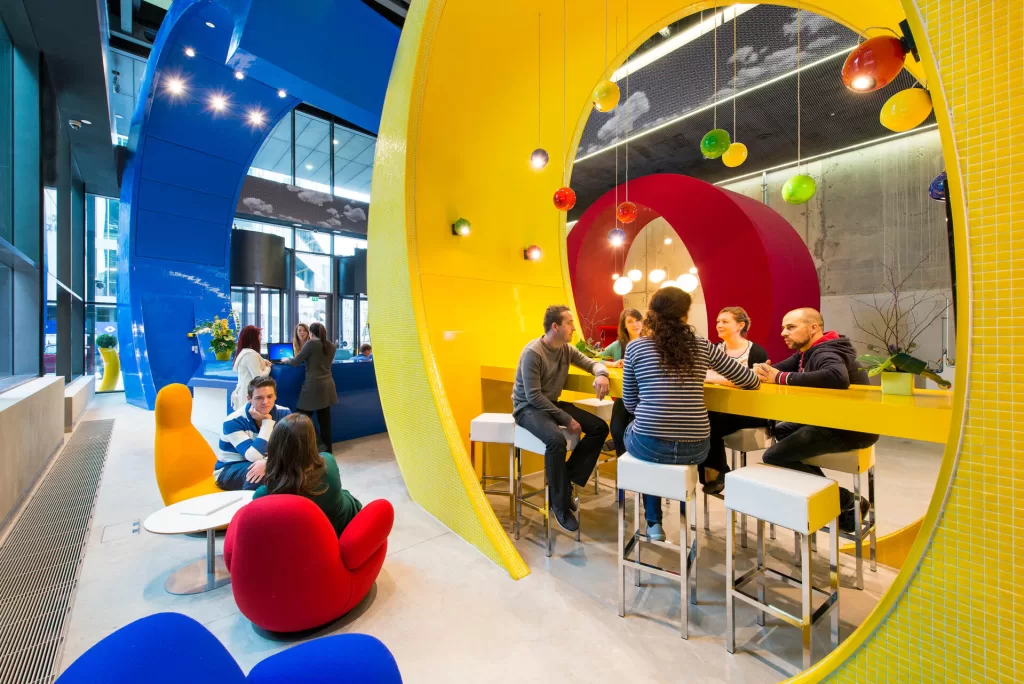
Comfort plays a significant role in productivity. Many open-plan offices rely on standardised desks and chairs that may not suit everyone’s preferences or ergonomic needs. Additionally, breakout spaces designed for relaxation or informal meetings may lack the acoustic and visual privacy needed for focused work. Employees who find shared spaces uncomfortable or distracting may turn to phone booths as an alternative.
4. Underlying Stress
A less obvious but equally important factor is stress. The constant noise, interruptions, and lack of privacy in open-plan offices can heighten stress levels, prompting employees to seek refuge in confined spaces like phone booths. The need for such refuge underscores a failure to address employee well-being in the broader office design.
Moving Beyond the Phone Booth
To discourage misuse of phone booths and enhance workplace functionality, organisations need to adopt a holistic approach to office design. This involves creating a variety of workpoints that cater to different needs and preferences.
1. Introduce Focus Booths
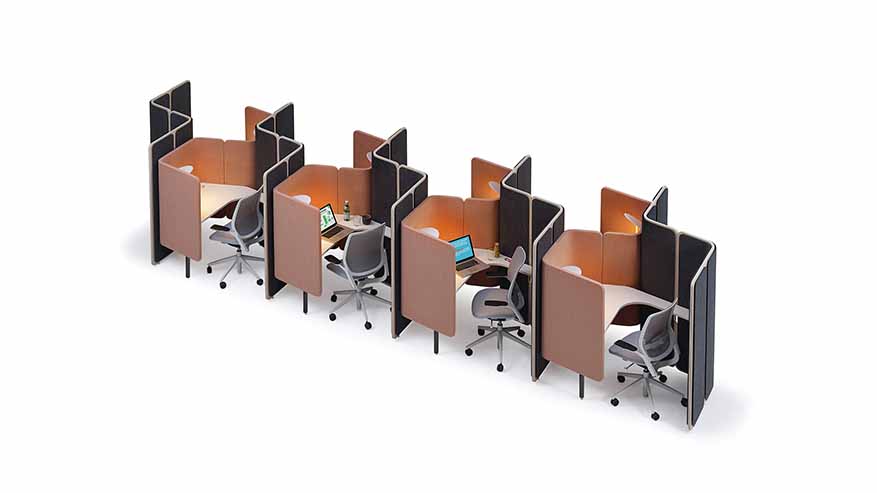
Focus booths are small, enclosed spaces designed for individual work. Unlike phone booths, they are equipped with ergonomic furniture, proper lighting, and adequate ventilation, making them suitable for longer use. They are not designed to provide speech privacy. By providing dedicated focus booths, organisations can reduce the pressure on phone booths and meet employees’ need for quiet workspaces.
2. Incorporate Acoustic Solutions
Noise control is a major challenge in open-plan offices. Incorporating sound-absorbing materials, such as acoustic panels, carpets, and ceiling baffles, can significantly reduce noise levels. By making open spaces more acoustically comfortable, employees may feel less compelled to retreat to phone booths.
3. Offer Variety
A well-designed office should include a mix of workpoints, such as:
-
- Private Pods: Larger than phone booths but smaller than meeting rooms, these pods provide a semi-private space for focused work.
-
- Hot Desks with Screens: Desks with movable screens can offer temporary privacy for individual tasks.
-
- Collaborative Zones: Comfortable and inviting spaces for team discussions.
-
- Breakout Areas: Relaxation zones that are visually separated from work areas.
4. Ergonomics and Comfort
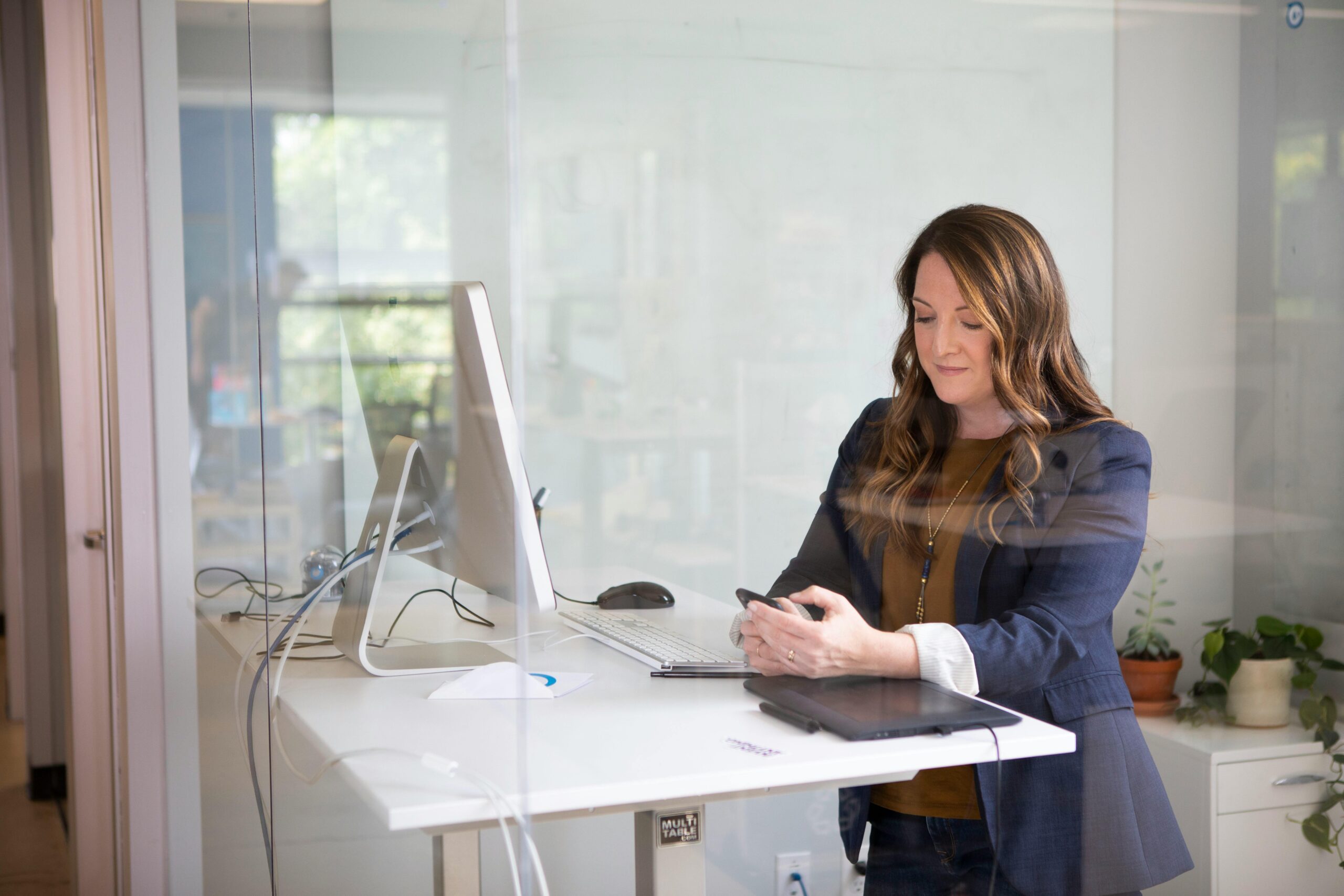
Ensuring that all workpoints are ergonomically sound can enhance employee satisfaction and productivity. Adjustable desks, supportive chairs, and proper lighting are essential investments. Comfort is not a luxury—it is a necessity for fostering a productive work environment.
5. Leverage Analytics
Technology can help identify usage patterns and optimise space allocation. Workplace analytics tools can monitor how often phone booths, meeting rooms, and other spaces are used. This data can inform decisions about redesigning or reallocating spaces to better meet employee needs.
Organisational Culture
Workplace design alone cannot solve the problem of phone booth misuse. Organisational culture plays a crucial role in shaping how employees use office spaces. Clear policies on the appropriate use of phone booths, combined with open communication about available workpoints, can help. Leaders and facility managers should also seek regular feedback to understand employee preferences and pain points.
From Policing to Problem-Solving
It’s easy to view camping in phone booths as a behavioural issue requiring enforcement. However, this perspective overlooks the underlying causes. Instead of policing how employees use phone booths, organisations should focus on addressing the gaps in their office design that drive such behaviour.
By offering a diverse range of workpoints, prioritising comfort and acoustics, and promoting a culture of open communication, companies can create workplaces that genuinely support employee productivity and well-being. Phone booths will then serve their intended purpose—not as long-term refuges but as short-term solutions for calls and video meetings.
The misuse of phone booths in open-plan offices is not the root of the problem—it’s a symptom. By recognising this and addressing the broader issues in workplace design, organisations can create environments that get closer to achieving their desired outcomes.