![The [RE]Search Co.](https://re-search.co/wp-content/uploads/2025/02/The-RE-Search-Co-Orange_Grey-png-350x51.avif)
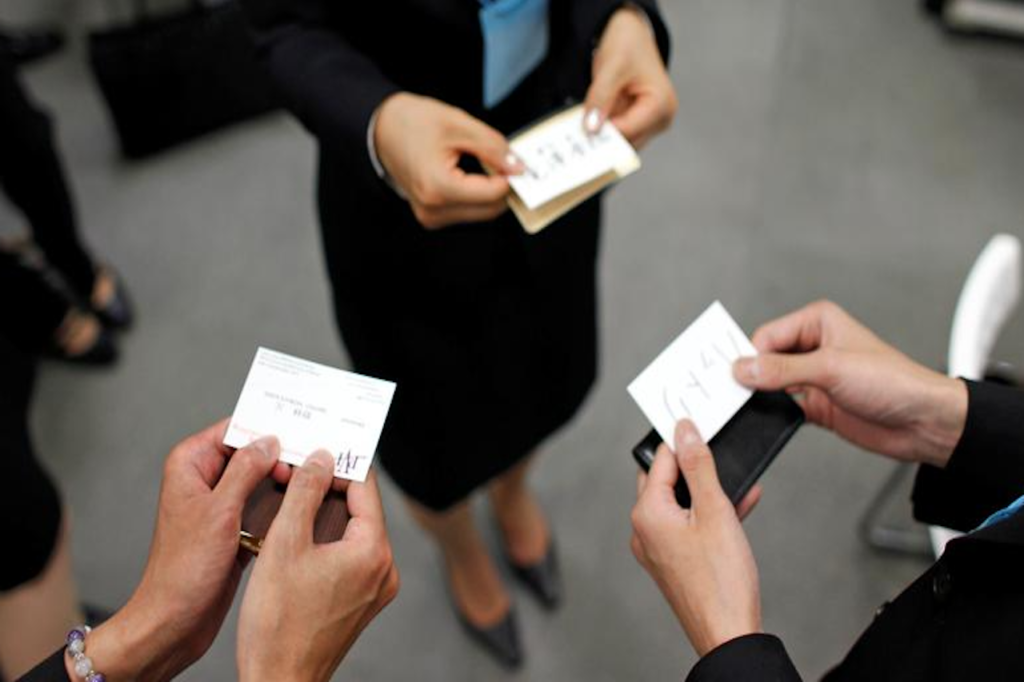
Business cards have long been integral to professional settings globally, but nowhere are they more steeped in tradition and formality than in Asia. The exchange of business cards in countries like Japan, China, and South Korea is not just a casual gesture but a ceremonial act laden with cultural significance. Historically, this practice often led to the amassing of hundreds of cards, carefully stored in filing boxes. However, with the advent of technology and evolving workplace dynamics, how do these traditions adapt?
Traditional Formalities in Asia
In many Asian cultures, the exchange of business cards follows a strict protocol:
1. Presentation: Business cards are presented with both hands, a gesture of respect. The card is held out, ensuring the recipient can read it immediately without having to turn it around.
2. Reception: The recipient also accepts the card with both hands, briefly studying it to acknowledge the details. It is considered polite to comment on the card’s design or information, showing appreciation and respect.
3. Placement: During meetings, business cards are carefully placed on the table in front of the recipient, often arranged according to seating order. This helps in remembering names and titles, and it indicates a serious intent to establish a professional relationship.
Despite the deep-rooted traditions, the rise of digital technology has begun to influence how business cards are managed in Asia. The convenience and efficiency of digital alternatives have led many to integrate modern solutions while still honouring traditional practices.
Digital Alternatives and Respectful Formalities
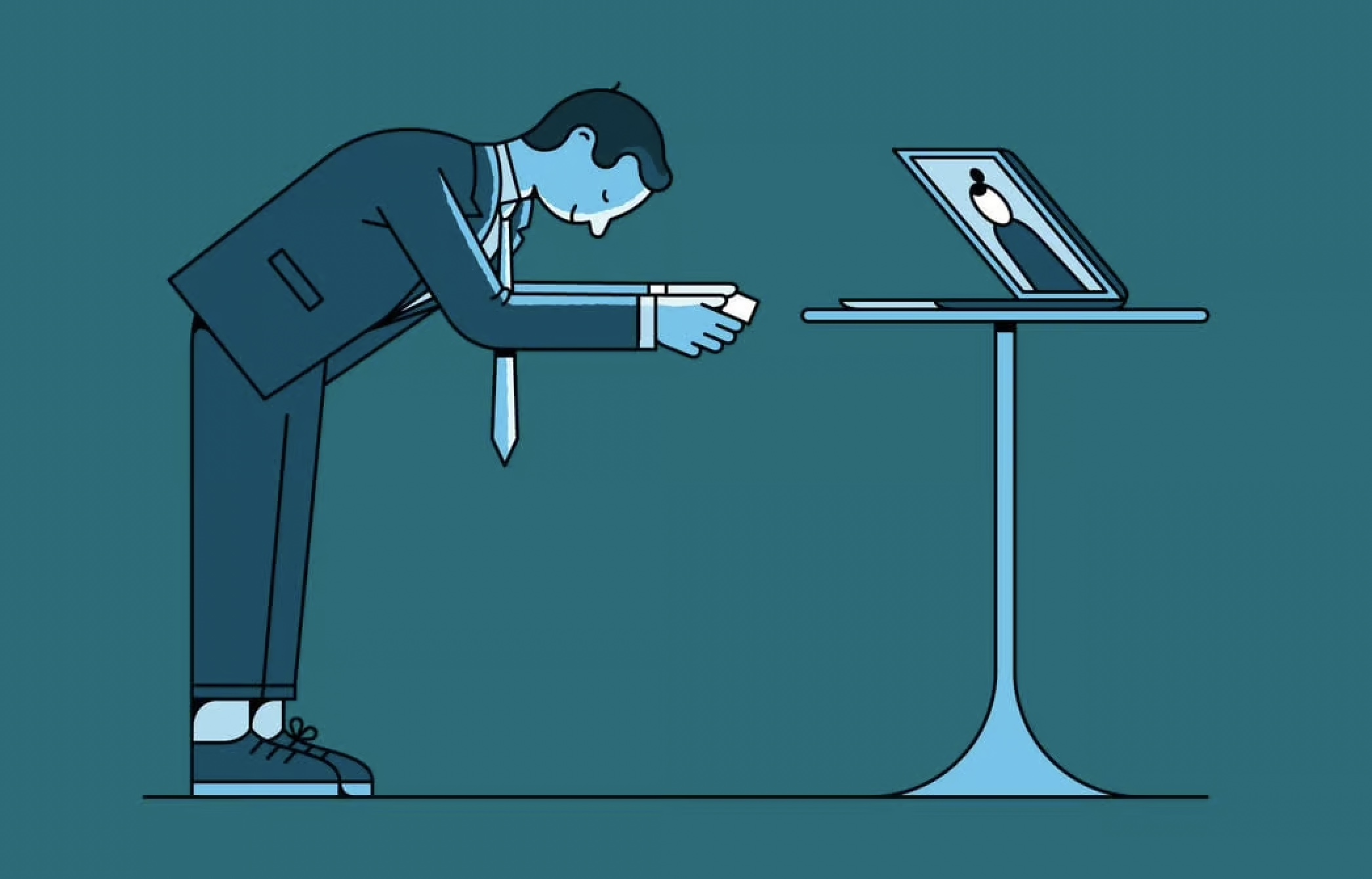
Several digital solutions have emerged that aim to blend technological convenience with cultural respect:
1. Digital Business Cards with QR Codes: Platforms like HiHello, CamCard, and L-Card offer digital business card services that include QR codes. Professionals can still present a physical card embedded with a QR code, combining the traditional exchange with a digital update. This allows recipients to scan the code and store the contact information on their devices, preserving the formality of the exchange while embracing modern technology.
2. E-Business Cards and NFC Technology: Near Field Communication (NFC) technology enables a seamless, respectful exchange of information. An NFC-enabled device can be tapped to share contact details instantly. Some digital business cards now come equipped with NFC capabilities, allowing for a physical gesture that mirrors the traditional exchange.
3. Contact Management Apps with Cultural Sensitivity: Apps like LinkedIn and WeChat offer comprehensive solutions for managing contacts digitally. These platforms can be customised to include respectful greetings and formal titles, ensuring that the cultural nuances of Asian business practices are maintained. WeChat, in particular, is widely used in China for professional networking and includes features that respect formal communication styles.
4. Virtual Meeting Etiquette: In virtual meetings, professionals can share digital business cards through email or in the chat function before or after introductions. To maintain formality, it is recommended to introduce the digital card with a message that mimics the respectful tone used in face-to-face interactions.
Integrating Digital Tools with Tradition
One of the key challenges in adopting digital business cards in Asia is ensuring that the respect and formality associated with traditional exchanges are not lost. To address this, companies are developing hybrid approaches that integrate digital tools with established practices.
For example, some companies provide employees with physical cards embedded with digital elements such as QR codes or NFC chips. This allows for the continuation of the ceremonial exchange while also providing a modern twist that facilitates digital storage and sharing. Additionally, digital business card platforms often include features that allow users to add personalised notes or respectful messages, ensuring that the exchange remains formal and considerate.
The Role of AI and Automation
Artificial Intelligence (AI) and automation are also playing a role in the evolution of business card practices. AI-powered apps can scan physical cards and automatically add the information to contact management systems, saving time and reducing the risk of errors. Furthermore, these apps can recognise cultural nuances and suggest appropriate greetings and titles, ensuring that the digital transition does not compromise on respect and formality.
The Future of Business Cards in Asia
As technology continues to evolve, the balance between tradition and innovation becomes crucial. In Asia, where respect and formality are paramount, the integration of digital business cards must carefully consider cultural values.
The use of business cards in Asia today reflects a harmonious blend of tradition and technology. While the ceremonial exchange of physical cards remains significant, digital alternatives offer new ways to respect and maintain these formalities. As we navigate the digital age, the tools and methods used to connect and network in Asia will continue to evolve, honouring the rich cultural heritage while embracing the future.
By integrating digital advancements with traditional Asian business card etiquette, professionals can navigate the modern business landscape with cultural sensitivity and technological savvy. The future promises exciting possibilities, where technology enhances and preserves the respectful exchanges that are at the heart of Asian business culture.