I’ve been in commercial interiors since the mid 1990s, working for global office furniture brands through what I’d genuinely call three or four distinct eras of the workplace.
I remember the mock-up displays we had to assemble for each major pitch. Facility managers would walk the showroom floor, stop at a desk or cabinet, and give it a shake, sometimes hard! And if it rattled, our pitch was in trouble. The demo sets needed to prove the steel was good, the laminate wouldn’t chip, the cable management could handle one more phone line than the competitor’s system.
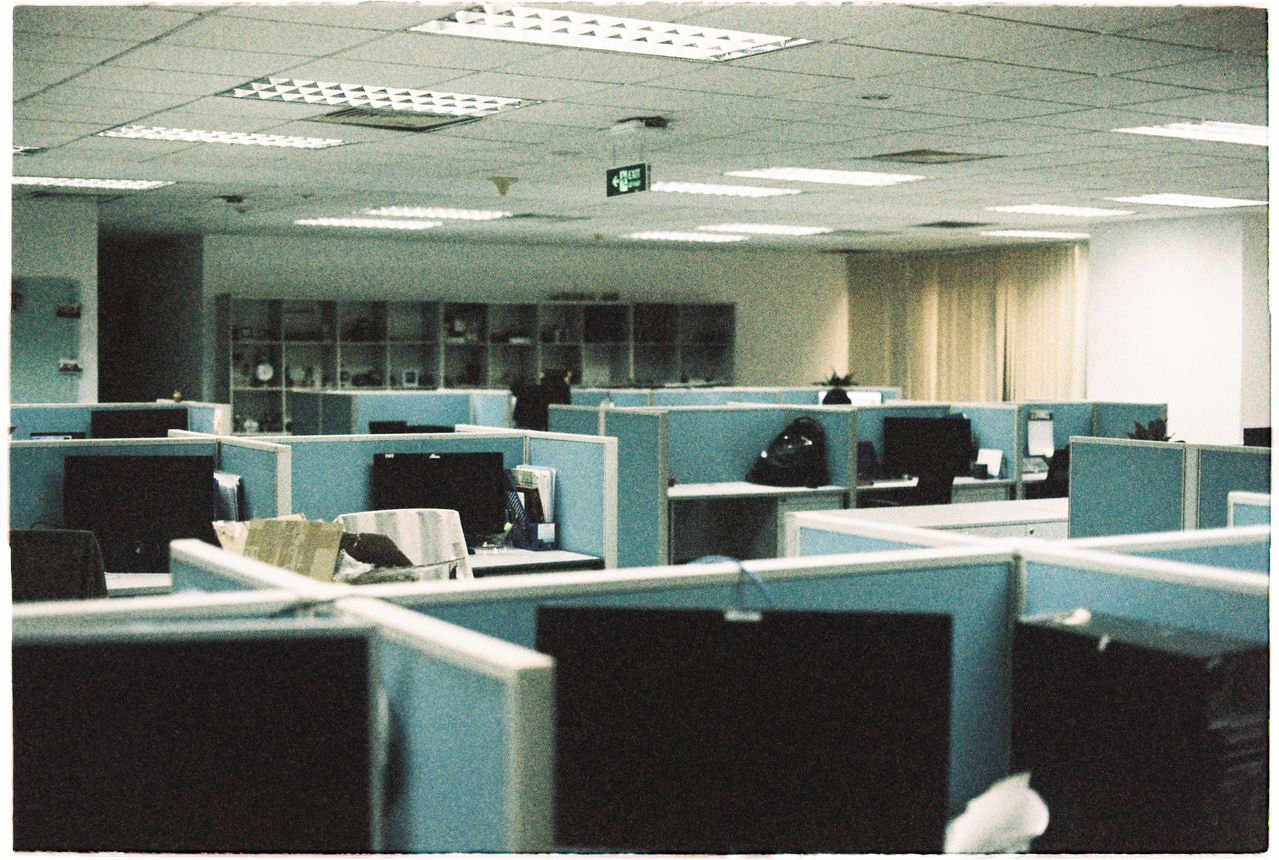
Then came the 6×6 cubicle giving way to “radical” 120-degree clusters. Sleek glass toppers on panel systems, that competed on how much cable capacity you could cram behind them. Each shift felt significant at the time.
And it’s very different again today. But looking back, they were all the same game played with a different board, ie. how do we allocate square footage efficiently, and how do we signal status through the height of a panel?
It was good business. And the people who thrived in it had a very specific skillset: product knowledge, spec accuracy, durability, relationship-based selling. You won by being trustworthy and technically sharp about physical goods.
But what I think was missed while it was happening was that the jobs in that space were evolving so gradually that nobody stopped to notice the profile of “good” had completely changed underneath us.
Today, sales consultants sit in rooms with not just FM or CRE leaders but also the CHRO’s and the CTO’s. Helping them to build a business case for space and inteior solutions as a retention lever. Be fluent in workforce data, change management, hybrid-work policy, employee experience design, and increasingly, how AI and technology reshape what a floor even needs to do.
The physical craft, knowing good joinery from bad, understanding acoustics and ergonomics, hasn’t gone away, it’s just no longer sufficient on its own. It’s now one competency among five.
And this is where I think a lot of organisations are quietly stuck, in that they seems to be still writing JD’s for the old roles and hoping someone with the new skillset applies.
It requires a hybrid profile: product expert, organisational strategist, (and futurist!), which didn’t really exist as a job 15 to 20 years ago. And I see companies hiring using a job spec that was written in 2010.
That gap is exactly why I think workplace has become one of the most interesting (and hardest) talent problems in real estate right now. It’s not that good people aren’t out there, it’s that the industry hasn’t caught up to the fact that “workplace” stopped being a facilities function and became a business function, and the hiring criteria haven’t been rewritten to match.
The furniture got smarter, the floor plates got more thoughtful, and the strategy got a seat at the table. It’s time the JD’s caught up too 😉

Andy Willett
Founder of re-search, writing on leadership, sales and the workplace industry across Asia Pacific.