![The [RE]Search Co.](https://re-search.co/wp-content/uploads/2025/02/The-RE-Search-Co-Orange_Grey-png-350x51.avif)
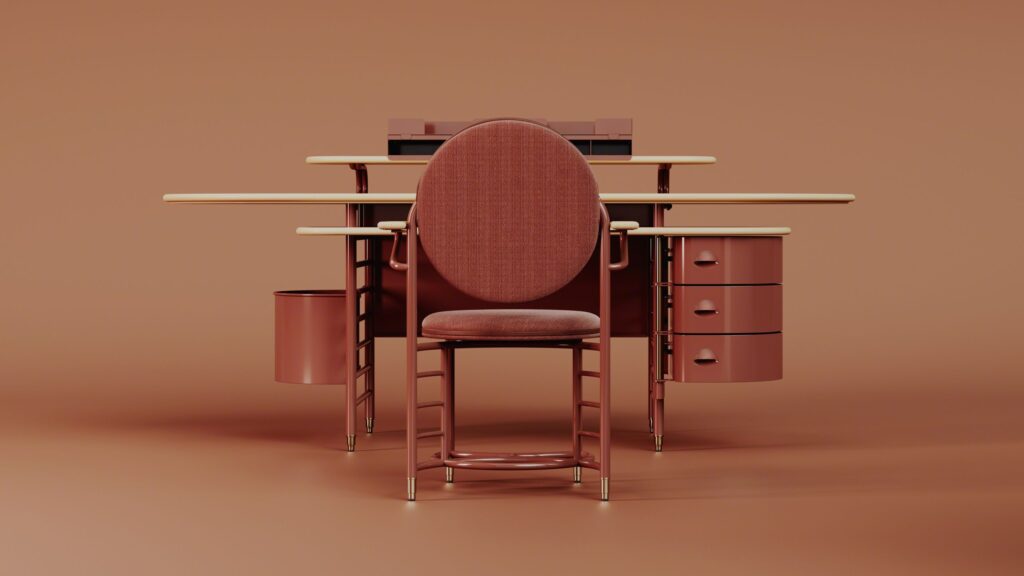
Frank Lloyd Wright, one of America’s most iconic architects, left an indelible mark on both architecture and furniture design. Among his many contributions, the modular furniture designed for the SC Johnson Administration Building in Racine, Wisconsin, stands out as a paragon of functional artistry.
Central to this collection is the Racine Desk, a masterpiece that epitomises Wright’s philosophy of organic architecture and integrated design.
The SC Johnson Administration Building
The SC Johnson Administration Building, completed in 1939, is one of Wright’s most celebrated projects. Commissioned by Herbert “H.F.” Johnson Jr., the third-generation leader of the SC Johnson company, this building was envisioned as a state-of-the-art office environment that would reflect the innovative spirit of the company.
Wright’s design for the building incorporated his signature elements—open spaces, natural light, and an organic connection between the interior and exterior.
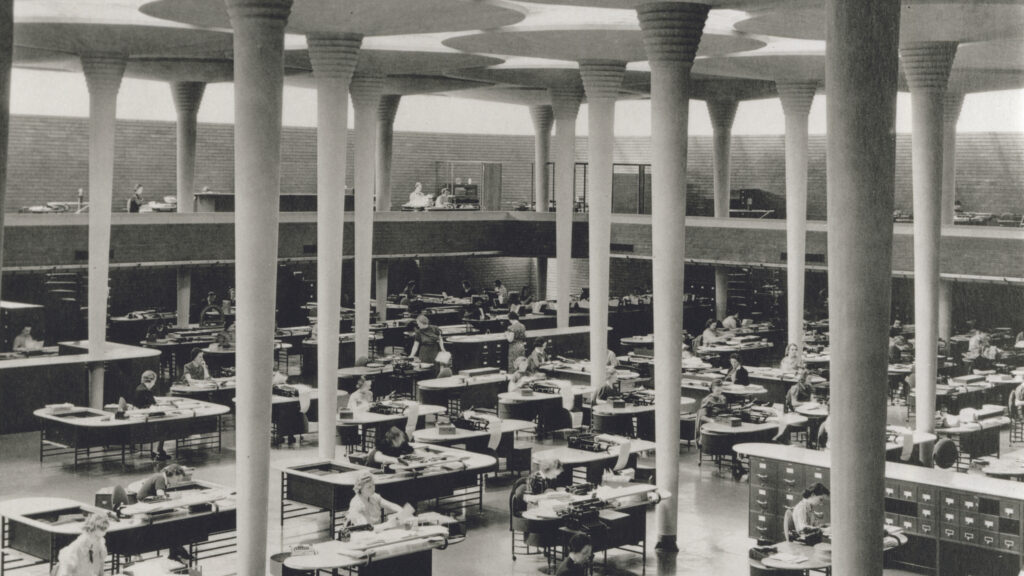
One of the revolutionary aspects of the SC Johnson building was Wright’s holistic approach to its design. He didn’t just create the structure; he meticulously designed the interiors, including the furniture. This level of attention to detail ensured that every element worked in harmony, contributing to the overall aesthetic and functional goals of the project.
The Genesis of the Racine Desk
The Racine Desk, named after the city where the SC Johnson headquarters is located, was a key component of Wright’s furniture design for the building. Wright’s goal was to create a workspace that was not only functional but also beautiful and conducive to productivity. He believed that the environment in which people worked could significantly influence their well-being and efficiency.
The desk, along with other pieces of modular furniture, was designed to be flexible and adaptable. This modular approach was quite ahead of its time and resonated with Wright’s philosophy of creating dynamic spaces that could evolve with the needs of the user. The Racine Desk was part of a broader system of furniture that included chairs, tables, and storage units, all designed to be easily reconfigured.
Design and Features
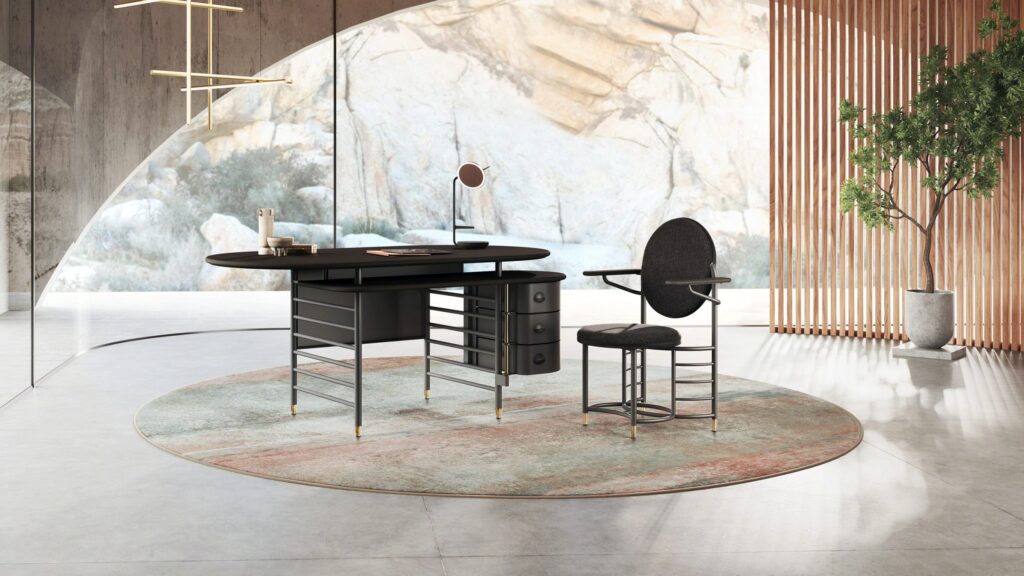
The Racine Desk is characterised by its sleek, modern lines and the use of innovative materials. Wright employed lightweight, durable materials like steel and plywood, which allowed for the production of furniture that was both sturdy and easy to move. The desk’s top was often made of a smooth, resilient material such as linoleum or Formica, which was practical for daily use and easy to maintain.
One of the most distinctive features of the Racine Desk is its modularity. The desk was designed with interchangeable parts, allowing users to customise their workspaces according to their needs. For instance, the desk could be fitted with various storage units, drawers, and extensions, making it highly versatile. This concept of modularity was revolutionary in the 1930s and has since become a standard in office furniture design.
The design also incorporated ergonomic principles, a relatively new consideration at the time. Wright paid attention to the height and layout of the desk to ensure it was comfortable for long hours of work. The seamless integration of technology, with provisions for typewriters and other office equipment, further underscored the desk’s forward-thinking design.

Impact and Legacy
The Racine Desk and the broader collection of furniture designed for the SC Johnson Administration Building were not just functional objects; they were expressions of Wright’s vision for a new kind of workplace. The emphasis on modularity, flexibility, and ergonomics reflected a deeper understanding of how office environments could enhance productivity and well-being.
Wright’s furniture designs for SC Johnson had a profound influence on modern office furniture. The concepts of modularity and ergonomic design, which were groundbreaking at the time, have since become standard in the industry. Companies around the world have adopted these principles, creating workspaces that can adapt to changing needs and technologies.
The Racine Desk, in particular, remains an iconic piece of design. It is celebrated not only for its aesthetic appeal but also for its innovative approach to functionality. Museums and design enthusiasts continue to study and showcase the desk as a prime example of Wright’s genius.
Wright’s Racine Desk range, including an expanded range of sizes and finishes pallet, is made available today through Steelcase who have a long-standing relationship with the Frank Lloyd Wright Foundation.