![The [RE]Search Co.](https://re-search.co/wp-content/uploads/2025/02/The-RE-Search-Co-Orange_Grey-png-350x51.avif)
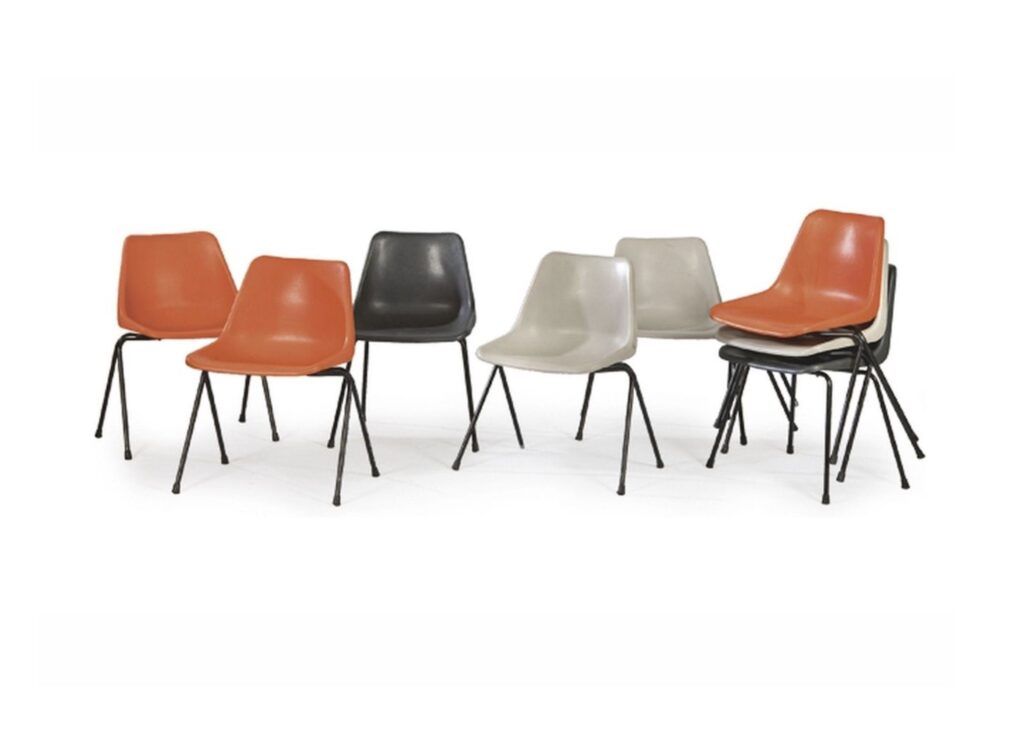
This might be the most overlooked chair ever in terms of design, manufacturing and it’s impact on institutional and commercial spaces. Certain creations stand as icons, not just for their aesthetics but for their transformative impact. And one such masterpiece is the Poly Chair, crafted by the visionary Robin Day.
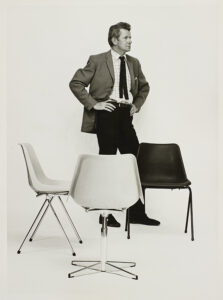
Born from a pursuit of simplicity, functionality, and sustainability, the Poly Chair redefined the very essence of seating, earning its place as a symbol of modern design.
Robin Day, alongside his wife Lucienne Day, played pivotal roles in the mid-century modern design movement. In 1963, Day embarked on a mission to create a chair that would be affordable, durable, and adaptable—a chair for the masses.
The result was the Poly Chair, a triumph of design ingenuity and engineering. Crafted from a single piece of injection-moulded polypropylene, this innovative manufacturing technique allowed for mass production on an unprecedented scale, making the Poly Chair accessible to people from all walks of life.
What set the Poly Chair apart was its minimalist yet functional design. With clean lines, an ergonomic shape, and a lightweight construction, the chair epitomised the ethos of modernism. It was stackable, facilitating efficient storage and transport—an essential feature for commercial spaces and public venues. Its simple yet elegant form made it a timeless addition to any environment, from bustling offices to chic cafes.
 Beyond its aesthetic appeal, the Poly Chair was also a feat of engineering. Day’s meticulous attention to detail resulted in a chair that was not only visually striking but also incredibly robust and comfortable. The contoured seat and backrest provided ample support, while the slight flex in the polypropylene offered a degree of flexibility rarely found in traditional seating designs. This combination of strength and suppleness made the Poly Chair a joy to sit in for extended periods—an essential quality for any chair destined for widespread use.
The Poly Chair was also a pioneer in sustainability. By utilising a single material and a streamlined manufacturing process, Day minimised waste and maximised efficiency—a departure from the wasteful practices prevalent in the furniture industry. Furthermore, polypropylene was highly recyclable, ensuring that at the end of its long lifespan, the chair could be repurposed into new products, closing the loop on its lifecycle.

The impact of the Poly Chair was immediate and far-reaching. It swiftly became a staple in offices, schools, public spaces ad even homes worldwide, solidifying its status as a design classic. Its affordability and durability made it a favourite among budget-conscious consumers and design enthusiasts alike. Architects and interior designers lauded its versatility and adaptability, incorporating it into a wide array of projects.
Yet, the most enduring legacy of the Poly Chair lies in its democratisation of design. Day’s vision challenged the notion that good design was the exclusive domain of the wealthy elite. He believed that everyone deserved access to well-crafted products—a belief that resonates today more than ever.
In the decades since its inception, the Poly Chair has inspired countless imitations, but none have surpassed the original. Its timeless design, unparalleled comfort, and eco-friendly credentials ensure its relevance in the 21st century. The Poly Chair stands as a testament to the transformative power of design, demonstrating its ability to enrich lives, elevate environments, and shape the world.
The Poly Chair by Robin Day is more than just a piece of furniture—it is a symbol of innovation, accessibility, and sustainability. From its humble beginnings in the 1960s to its enduring popularity today, the Poly Chair has left an indelible mark on the world of design, earning its rightful place as a true icon of modernity.