
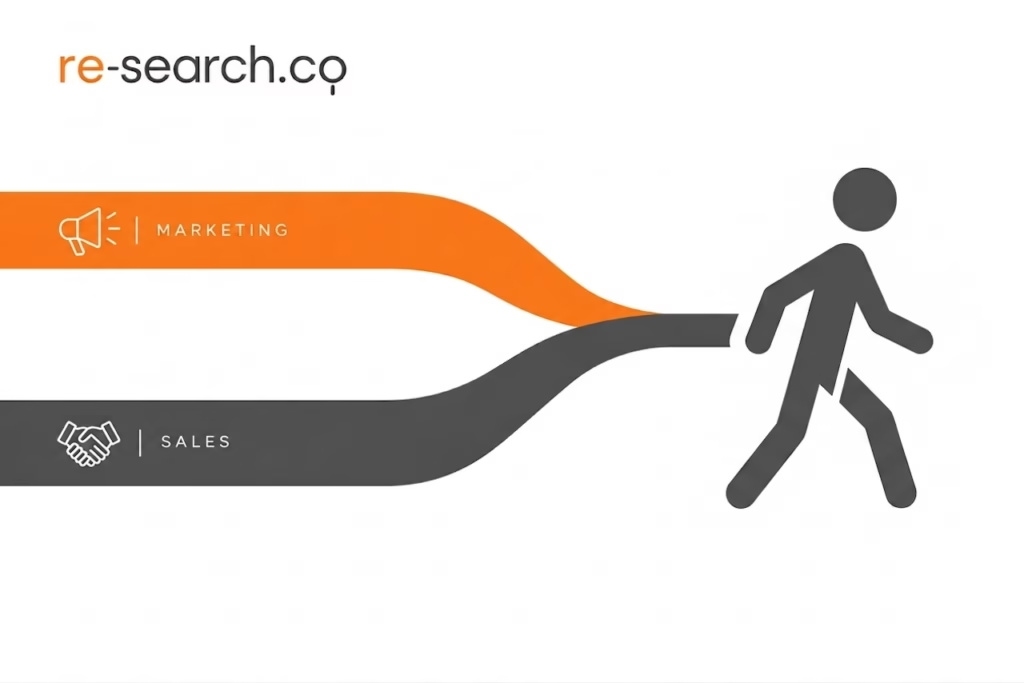
I came across a vacancy for a Sales & Marketing Manager recently and realised I hadn’t seen that job title in a long time. Years ago it was fairly common, particularly in B2B businesses, where one person was responsible for developing the market, generating opportunities and winning work.
Today the two functions are far more likely to be treated as separate disciplines. That makes sense in larger organisations, where both can justify teams of specialists, but the same separation has found its way into much smaller businesses and startups where every hire counts. It’s not unusual to see a founder bring in a marketing professional before employing a first salesperson.
Part of the explanation is the way customers now discover and evaluate businesses. Online channels offer access to audiences that were once difficult or expensive to reach, but using them well takes specialist skill. Understanding how to reach the right audience, generate relevant enquiries and measure what works is a discipline in its own right, and rightly so.
At the same time, the growing specialisation of marketing may have distanced it from the sales process. A business can invest heavily in its brand, website and digital campaigns without that activity translating into revenue. Some customers can discover a product online and buy it without speaking to anyone, but in relationship-led B2B businesses, winning work still depends on identifying the right prospects, building trust and developing opportunities over time. Marketing makes that process more effective, but it doesn’t replace the need for someone who can sell.
Commercial interiors and Design & Build show this clearly. A studio might have an excellent portfolio, a polished website and an active LinkedIn presence, all of which help establish credibility. Winning the next project, however, may depend on knowing which organisations are planning a move or refurbishment, who influences those decisions and how to build relationships well before a tender appears. Digital reach has its place, and so does the personal work of business development, so the challenge is making sure the two complement each other.
I covered this a previous article, but this is where Go-to-Market, or GTM, becomes relevant. At its simplest, GTM is how a business takes its offering to market and wins customers: which customers and sectors to target, how to position the business, how to reach those customers and how to turn opportunities into revenue. Sales and marketing are both important parts of that process, but neither necessarily owns the whole picture.
In an owner-led business, the managing director often decides which sectors to pursue, which clients to target and what sets the company apart. Marketing communicates that proposition and creates opportunities to engage, while business development builds the relationships that turn those opportunities into projects. That arrangement works well provided everyone is pursuing the same commercial objectives, and it breaks down when the functions become silos, each focused on its own activity with no clear link to the wider strategy.
This has direct implications for hiring. A business recruiting a Marketing Manager, Business Development Manager or Head of Sales needs to be clear about what that person is there to achieve. If the strategy is already established, the need is for someone to execute it, but if the business is still deciding where to focus and how to compete, it needs someone who can help shape that direction. These are different roles, and the distinction matters both in defining the job and in finding the right person.
So the Sales & Marketing Manager hasn’t really disappeared. We have become more specialised in how we organise the work, while the underlying task remains finding the right customers, giving them a reason to choose us and turning that interest into profitable business. The job titles have changed, but the need for a joined-up approach has not.