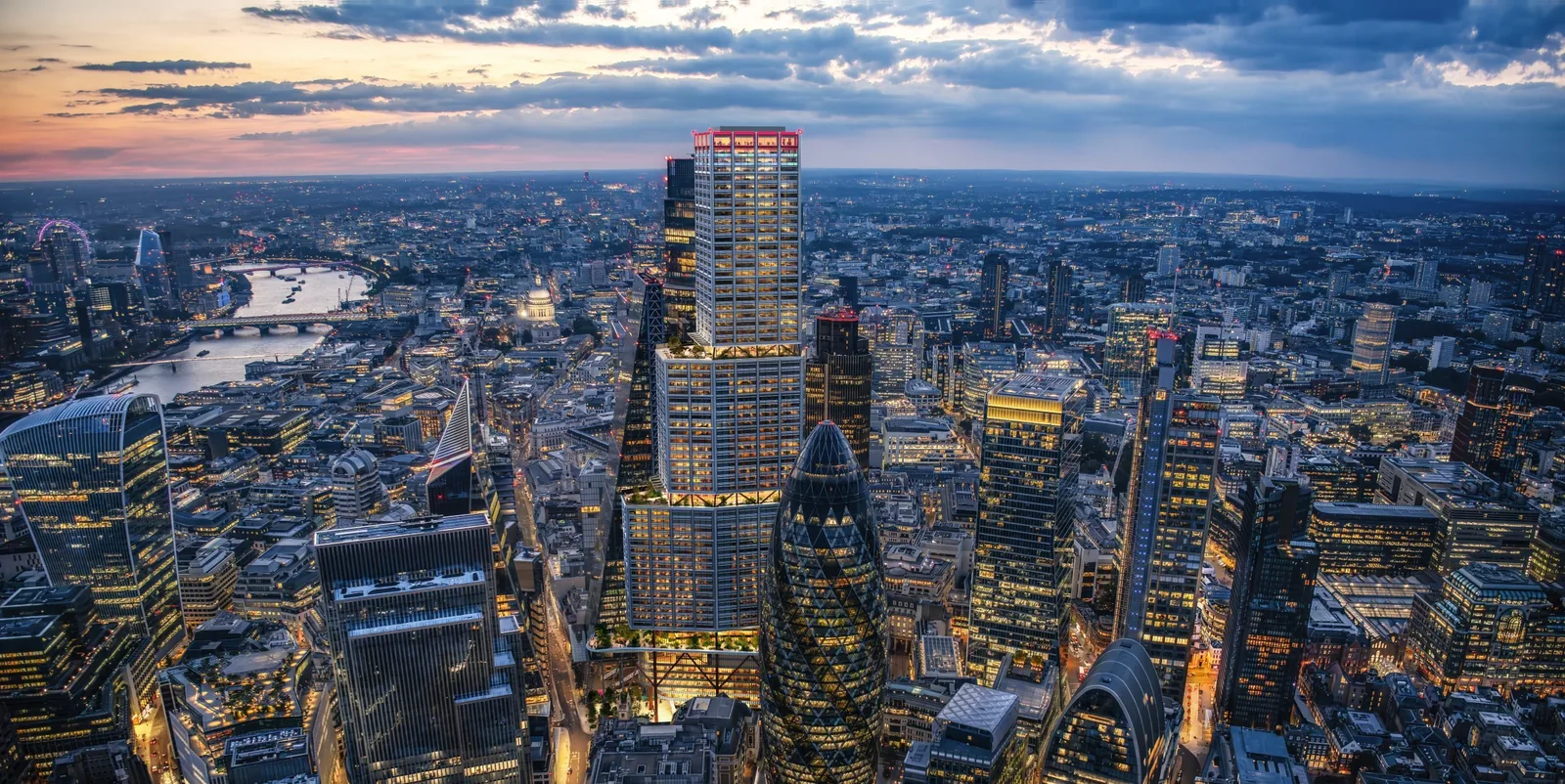
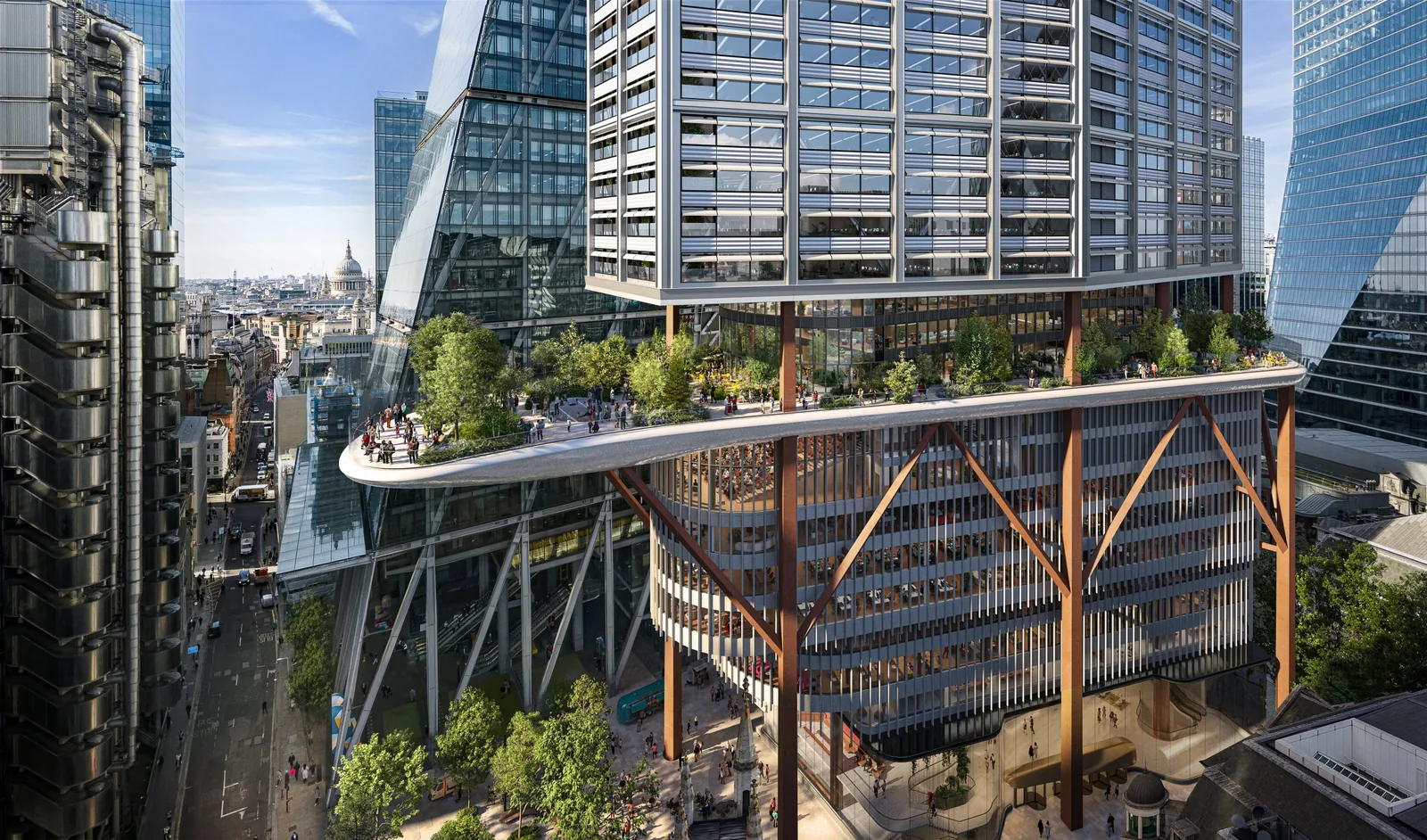
One London, City of London. Image © One London / Eric Parry Architects
London’s tallest new tower is a £1bn vote of confidence in the office. Across Asia the picture is more selective, with prime workspace in Tokyo and Singapore in short supply while Shanghai contends with record vacancy.
When you’ve spent as long as I have in and around commercial fit-out and construction, it’s hard not to be drawn in by landmark developments. So when The B1M (a YouTube channel on construction and landmark buildings, well worth following) released its feature on One London this week, I found myself wondering whether, if anyone needed a signal that the office isn’t dead, this might be it.
One London, the tower formerly known as 1 Undershaft, will rise 309.6 metres, matching The Shard to become London’s joint tallest building and the joint tallest in Western Europe. It will deliver 1.2 million sq ft of office-led space at a cost of more than £1bn. Construction is due to start in 2028 with completion in 2033, so it is a long-range commitment rather than a finished building, but that is rather the point. Developers and their financiers don’t sign up to a project of that scale and timeline unless they believe in the future of the workplace.
It made me ask the same question closer to home: are Asia’s city hubs showing that same confidence?
Not every office, the best office
The people behind One London have been clear that London doesn’t lack office space in general, but it is short of exceptional workplaces that help businesses attract talent and encourage collaboration. That distinction matters, because the office debate has often been framed as all or nothing, when what the market is actually telling us is far more selective.
Asia shows the same pattern. Knight Frank estimates that top prime Grade A offices in core Asia-Pacific cities command rent premiums of 15 to 20 per cent over Grade B space, and CBRE expects stricter return-to-office mandates and a continued flight to quality to keep demand for Grade A space strong. Companies are still voting for the office, but they are voting for the good ones.
Tokyo: building Japan’s next tallest tower
Tokyo is perhaps the closest parallel to One London. Mitsubishi Estate’s Torch Tower, rising next to Tokyo Station, will reach 385 metres when it completes in 2028, making it Japan’s tallest building and overtaking Azabudai Hills Mori JP Tower, which only opened in 2023. That is two supertall office-led towers in central Tokyo within about five years.
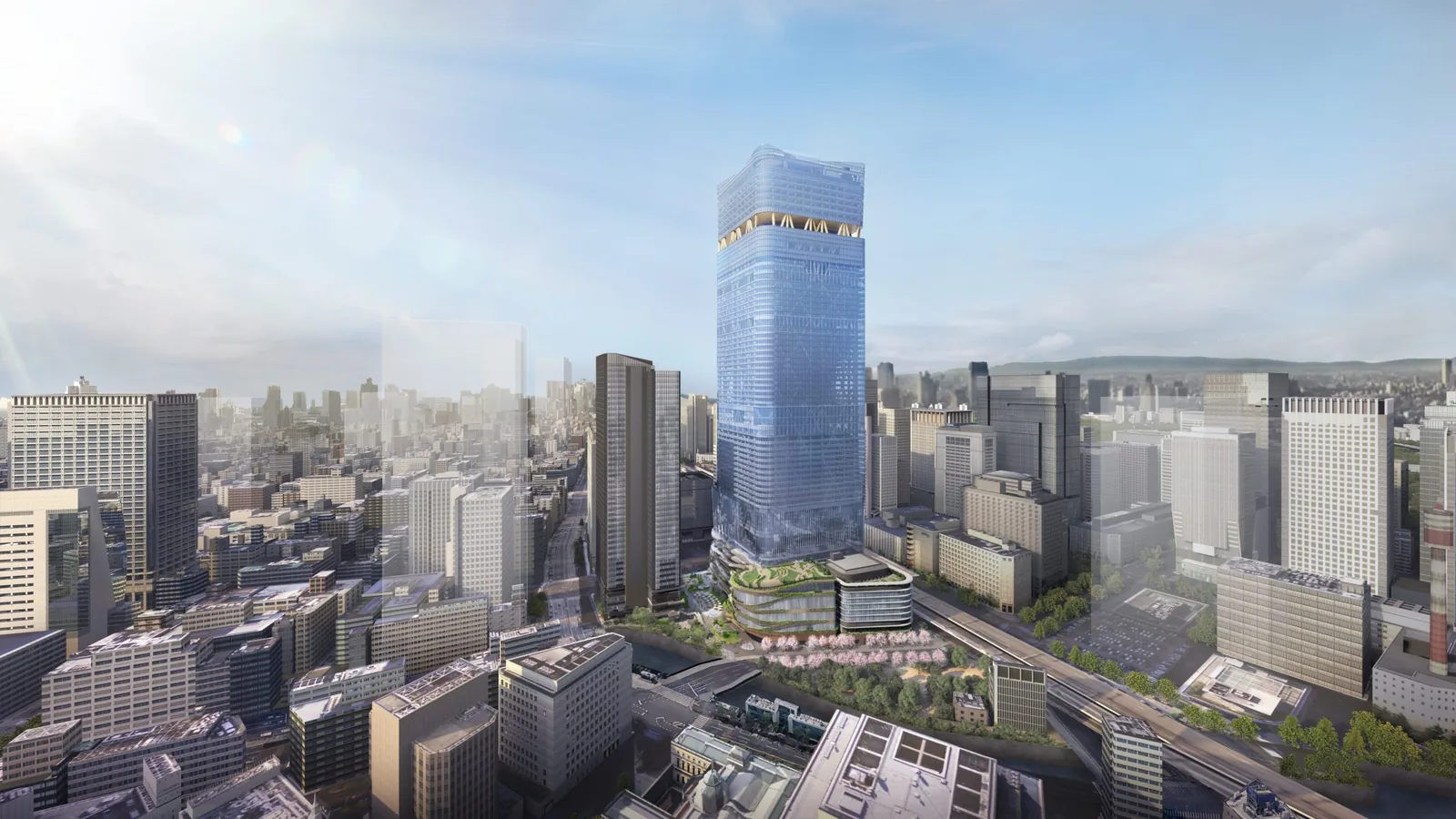
The demand appears to be there to support them. JLL put Tokyo’s Grade A vacancy at just 0.8% in Q2 2026, and Savills reports that new completions are being met with strong pre-leasing, with firms such as Yamada Consulting Group already committed to moving their headquarters into Torch Tower.
Singapore: too little supply, not too much
Here in Singapore, the challenge is the opposite of the empty office narrative. CBRE reported Core CBD Grade A vacancy at a record low of 3.3% in Q2 2026, and JLL describes the current run of CBD rent growth as the longest upward cycle on record, now in its sixth year.
Shaw Tower was the only major completion this year and Newport Tower is the only significant one due in 2027, so the next real wave arrives from 2028 with The Skywaters, The Clifford, One Comcentre and Union Square Central. Tellingly, CBRE notes that pre-commitments for buildings not due until 2028 or 2029 are already a meaningful part of the leasing pipeline. Occupiers planning their workplaces years ahead is hardly the behaviour of businesses that have given up on the office.
The honest counterpoint
It would be misleading to suggest every Asian city is powering ahead. Shanghai’s office vacancy reached 24.5% in Q2 2026, the highest of the 20 global cities tracked by CBRE, as overseas companies have slowed their spending in China. Shenzhen has faced a similar glut after years of rapid building.
Hong Kong sits somewhere in between. Kowloon East vacancy stood at 20% in mid-2026, yet Central is enjoying its strongest recovery in years, with Knight Frank forecasting rent growth of 8 to 12% there in 2026. Even within a single city, the gap between the best buildings and the rest is widening.
What this means for commercial interiors
For those of us in commercial interiors, the takeaway is encouraging, but it comes with a condition. Premium buildings bring premium fitouts, and with them the workplace design, furniture and building product specification our industry depends on. The opportunity is real, but it is concentrated in projects where clients expect more and where suppliers have to win against strong competition.
That has implications for talent too. The businesses that do well in a flight-to-quality market tend to have business development people who get in early, build relationships with developers, landlords and occupiers well before a fitout is tendered, and sell on value rather than price. In my work helping clients hire for these roles, that is increasingly the profile in demand.
So to my mind, One London is a signal that the office isn’t dead, though perhaps more accurately a signal that the average office is under pressure while the exceptional one is thriving. Asia’s strongest markets are telling the same story, and for anyone building, fitting out or furnishing the workplaces of the next decade, that is where the opportunity lies.
Sources
- One London press release, Eric Parry Architects
- CoStar: One London construction timeline
- The Structural Engineer: One London
- Knight Frank: Asia-Pacific Real Estate 2026
- Real Estate Asia: CBRE 2026 APAC outlook
- Housing Japan: Torch Tower
- JLL: Tokyo Q2 2026
- Real Estate Asia: Tokyo office moves
- CBRE: Singapore Q2 2026
- JLL: Singapore Q2 2026
- JLL: Singapore Q3 2026
- The Edge Singapore: pre-commitments
- Digg / Nikkei Asia: Shanghai vacancy
- JLL: Hong Kong Q2 2026
- Real Estate Asia: Hong Kong Central outlook

Andy Willett
Founder of re-search, writing on leadership, sales and the workplace industry across Asia Pacific.