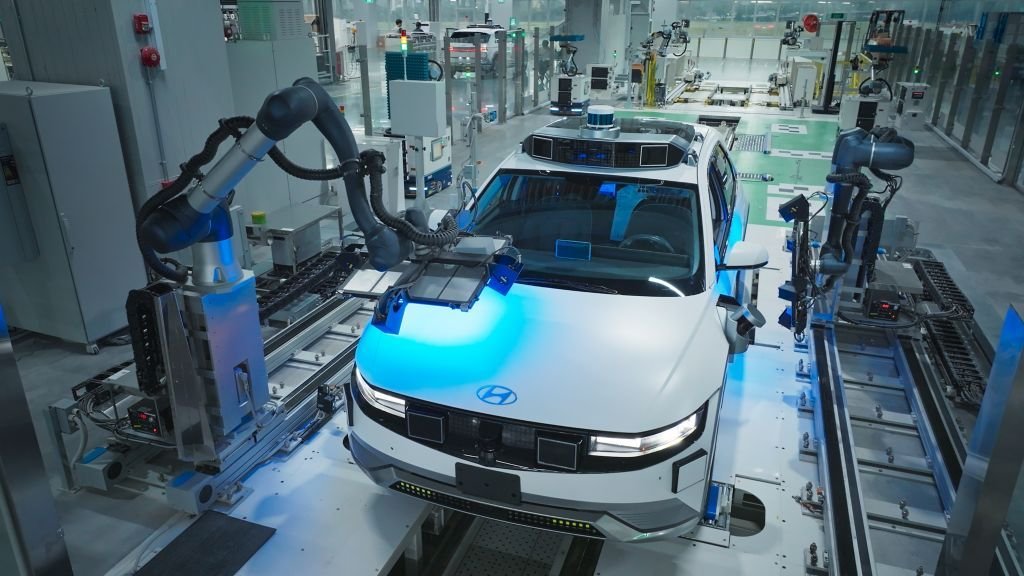
In the last few months there has been much discussion about self-driving taxis or ‘Robotaxis’ in the motoring press. And here in Singapore too, although the local government is not quite ready to unleash self-driving cars onto the roads just yet, they are more than happy to see Singapore-built Hyundai Ioniq 5 Robotaxi’s being shipped to the U.S. for real-world testing over there. Rumour has it that Uber Eats may be the first to deploy the Hyundai-led technology in Los Angeles.
This has me thinking about the main reason so many employees push back against going back to the office following an extended period of working from home – the commute.

The frustration of crowded public transport, or as drivers wasting hours a week sitting in traffic. Many don’t mind being present in the office so much, they just dread that uncomfortable daily grind at both ends of their workday.
A Robotaxi essentially gifts us quiet, comfortable time and when we probably need it the most – first thing in the morning as we plan for the day ahead and at the end of the day when we might need to make return a call, or tie up a few loose ends, or finish off that task we have been trying to get done all day.
But how is this any better than a regular, human-driven taxi? Some may even miss that human connection. I can think of a few advantages to a driverless taxi, assuming we have complete trust in the technology:
-
- Consistent driving style – let’s face it, we have all been extremely nervous at one time or another in the back of a cab.
-
- Safety – humans aren’t able to maintain concentration 100% of the time.
-
- Quiet time – no chatty driver (although sometimes we might actually like that).
-
- Lower trip cost – not guaranteed, just an assumption given the cost of a driver is removed from the equation.
So if we eventually find ourselves with the wonderful option to travel to and from our place of work each day, providing us with another hour or two of productivity, what else changes? Do we just get even more done on top of the ‘8 hours’ we are committed to? Or could employers potentially give back that commute time to the employee within the contracted working day given the new-found productivity gain during travel time. And just maybe an employer could cover the cost of a driverless commute as a strategic investment, on the understanding this is now productive company time?
Personally, I like the idea of an empty, comfortable and quiet electric vehicle pulling up outside my residence each day to whisk me into the city. Knowing I have 30-40 minutes of relaxed private time to plan and organise myself ahead of that 9 o’clock. How about you?

Andy Willett
Founder of re-search, writing on leadership, sales and the workplace industry across Asia Pacific.